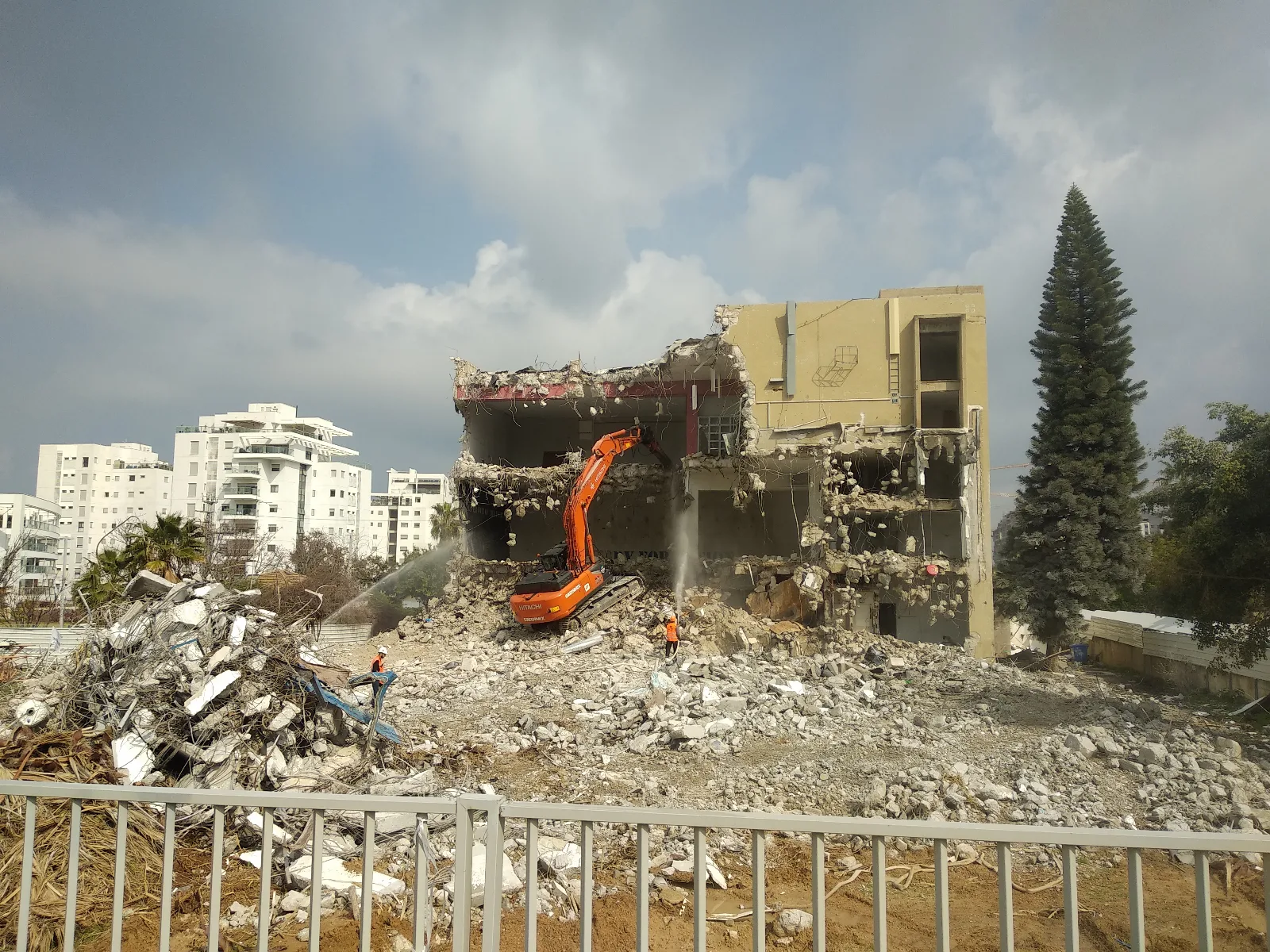
Urban renewal in Israel: about 80% of pinui-binui programs reportedly no longer viable
At the Eilat developers' congress, on November 5, 2026, the diagnosis reported by Globes is severe: about 80% of pinui-binui programs would no longer be economically viable and about 300,000 approved homes would be blocked. Infrastructure, betterment tax, rates: the three bottlenecks, and what they change for you.
The figure had the effect of a cold shower at the Eilat developers' congress, on November 5, 2026: according to speakers, about 80% of pinui-binui programs would no longer be economically viable — i.e. about 300,000 homes yet approved that would remain blocked. And Rafi Elmaliach added an even larger order of magnitude: 1.3 million urban renewal homes would be blocked by infrastructure deficits. Reported by Globes, this diagnosis sheds harsh light on announcements of new zones — including the 6 zones declared in Tel Aviv-Jaffa that same week. What is happening, and what should be retained when you are an owner or buyer in an urban renewal project?
The diagnosis made in Eilat
| Item | Order of magnitude |
|---|---|
| Pinui-binui programs that would no longer be viable | about 80% |
| Approved homes blocked (pinui-binui) | about 300,000 |
| Urban renewal homes blocked by infrastructure (Elmaliach) | 1.3 million |
| Kadesh project in Eilat | 162 existing homes → 487 new, not viable without subsidy |
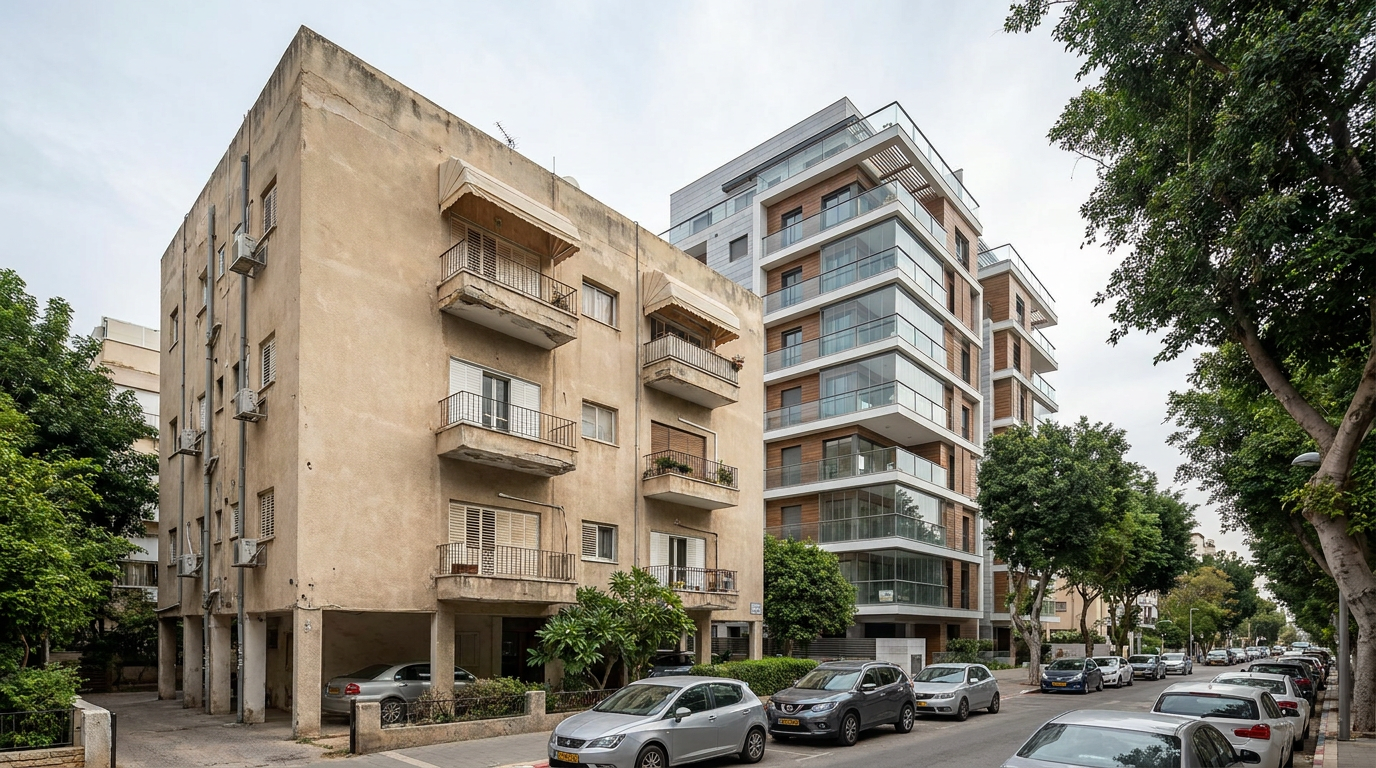
The mechanics of the blockage are known but have worsened. A pinui-binui is financed by the gap between the total cost of the operation — demolition, reconstruction, relocation of occupants, taxes — and the revenue from additional homes sold. When prices fall, construction costs rise and financing remains expensive, this gap closes. At some point, the coefficient of new homes needed to balance the operation exceeds what the plan allows: the project becomes mathematically impossible, whoever the developer is.
The Eilat case gives the local illustration: in the Kadesh project, 162 existing homes must make way for 487 new homes, and the project is not viable without subsidy — under the reference called “standard 21.1”, the benchmark used to judge the economic balance of these operations. In other words, even multiplied by three, the project does not pencil out at local prices.
Infrastructure: the blockage behind the blockage
The figure cited by Rafi Elmaliach — 1.3 million urban renewal homes blocked by infrastructure deficits — changes the picture. Even viable on paper, a project assumes roads, water and sanitation networks, transport and public facilities sized for new residents. Where this infrastructure does not follow, planning bodies slow down or refuse. Urban renewal is therefore not only a developer equation: it is about a city's collective capacity to absorb whole neighborhoods rebuilt more densely.
For co-owners engaged in a project, the consequence is direct: a signed agreement and a filed plan are no longer enough. The state of the sector's infrastructure and the municipality's position must be treated as part of the equation, on the same level as the coefficient or the choice of developer.
The Arbiv proposal: replace the betterment tax with a levy on sales
Among the responses mentioned at the congress, Benny Arbiv's stands out: replace, in urban renewal, the betterment tax — heital hashbasha, this tax on the added value created by the plan, whose general functioning is explained in our Mas Rechisha guide for purchase taxation and the site's tax pages — with a levy calculated as a percentage of the developer's sales. The idea: align the charge on the project's real revenue rather than on a theoretical added value calculated at plan time, which can finish off an already marginal project.
One important clarification: this is a proposal under study, at a preliminary stage — not a decision, nor even a text. It adds to a moving fiscal landscape, between the project of taxing rents from the first shekel and debates on the investor scale. No owner should therefore base a decision on this proposal; but any owner in negotiation should know it exists, because it can change the terms of agreements where this tax is what blocks signing.
The rate factor: no relief before end of 2027
Remains the variable developers do not control: the cost of money. At the congress, Chen Schreibman's message was clear: no significant cut in the policy rate is to be expected before the end of 2027, with a horizon in the fourth quarter of 2027. The Bank of Israel rate therefore remains at 3.25%, and construction financing as well as buyers' loans continue to weigh on the math. To test the impact of a rate scenario on your own project, the financing simulator and the payment schedule simulator let you price both ends of the chain: your monthly payment as a buyer, and the sensitivity of an off-plan purchase to a slipping timetable.
This context sheds light on the week's series of announcements — plans approved in Dimona, framework agreement in Safed, densification in Hod Hasharon: the pipeline of future homes continues to fill while its base, urban renewal of existing neighborhoods, seeks its economic model. The two movements are compatible: building where land is free costs less than rebuilding where people already live.
What this means for you, in practice
If you are an owner in a pinui-binui: ask your developer for a written update of the project's economic balance, sign no amendment that reduces what you receive without verifiable compensation, and keep track of the state of local infrastructure. If you are buying off-plan in an urban renewal: check the project's real stage — agreement, plan, permit, guarantees — and read delay clauses with a lawyer who is not the seller's, checking the land situation via the Tabo. The full week's summary is in the market review.
Urban renewal remains the largest reservoir of homes in Israeli cities — that is precisely why its paralysis is a national issue, not just a topic for a congress.
Sources
- Globes — Eilat developers' congress, November 5, 2026: about 80% of pinui-binui programs not viable, about 300,000 approved homes blocked, 1.3 million homes blocked by infrastructure according to Rafi Elmaliach, Benny Arbiv proposal, Kadesh case in Eilat, rate outlook from Chen Schreibman (media homepage, exact article URL not available)
Sources
- Source 1