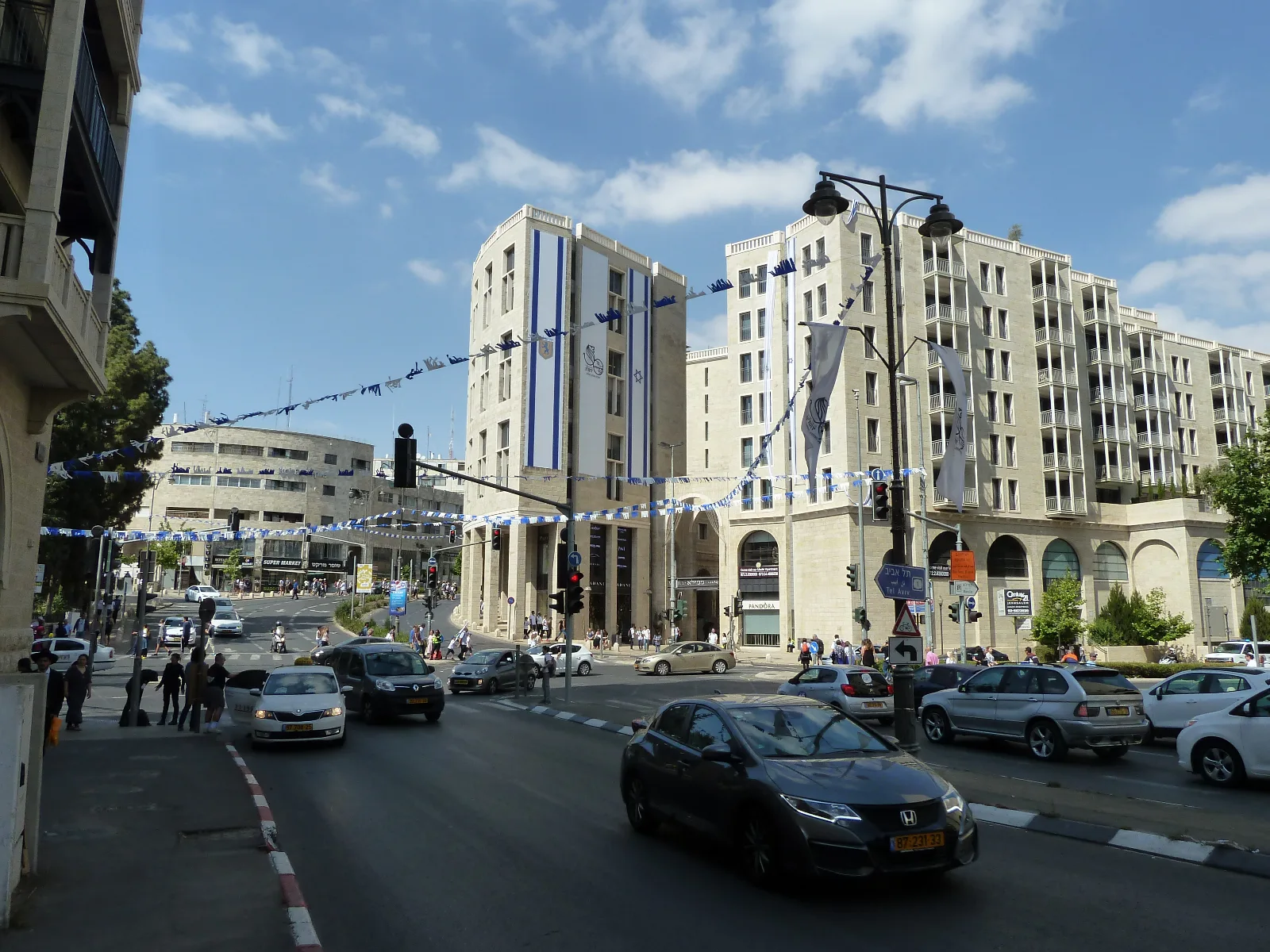
Jerusalem: NIS 28M compensation for the Pl-Kal building on King David Street
After 20 years of proceedings and 68 hearings, compensation for the 'Pl-Kal' building at 19 King David Street, in Jerusalem, is set at NIS 28,086,338. Reinforcement is ordered, without demolition: a saga that tells buyers of older buildings what to check before signing.
Twenty years of proceedings, 68 hearings, and a decision that fits in three lines: the 'Pl-Kal' building at 19 King David Street, in Jerusalem, is awarded compensation of NIS 28,086,338; its reinforcement is ordered; it will not be demolished. The information was reported on November 5, 2026. Behind this out-of-the-ordinary case, there is a very concrete lesson for anyone buying an apartment in an old building in Israel: a building's structural and legal condition is a verifiable fact — provided you verify it before buying, not after.
The case in figures
| Item | Value |
|---|---|
| Building | 'Pl-Kal', 19 King David Street, Jerusalem |
| Duration of proceedings | 20 years |
| Hearings | 68 |
| Compensation set | NIS 28,086,338 |
| Decision on the building | reinforcement ordered, no demolition |
King David Street is one of Jerusalem's central addresses, between the Old City and the western districts. That a building located there should be the subject of two decades of litigation over its soundness says everything about what is at stake: the construction method known as 'Pl-Kal' — concrete slabs of a particular type — was at the heart of the dispute, between fear for occupants' safety and a battle of expert opinions over the necessary works.
Reinforcement ordered, demolition ruled out
The decision settles the heaviest point: the building will be reinforced, not demolished. For owners and occupants, this is the outcome that preserves the property and its value, at the price of major structural works. The compensation of NIS 28,086,338, set at the end of 68 hearings, measures the cost of the loss and the works linked to this case.
It took twenty years, in other words, to reach a solution that expert assessments carried out early on might have made possible in a fraction of that time. This is the case's first lesson: in a construction dispute, time is the biggest cost — in fees, in uncertainty, and in blocked value for owners who can neither sell with peace of mind nor refinance a property tied up in litigation.
What 'Pl-Kal' should remind every buyer of an older property
The name of this construction method has become, in Israel, synonymous with vigilance. Not all buildings of an era present the same risks, and an old building is not a dangerous building. But the buyer of an apartment in a building several decades old must treat the structural question as a systematic checkpoint, on the same level as the title of ownership.
In practical terms, before buying: have the property inspected by an independent structural engineer when the building's age or construction method requires it; check the building's history — proceedings, municipal orders, reinforcement decisions already taken or still to come; and price the share of works that could fall to the owners' association. An apartment bought cheaper in a building that will have to be reinforced can cost, works and years of litigation included, much more than a sound property paid at market price. Jerusalem's old districts of Jerusalem, highly sought after for their character, concentrate exactly this type of question.
The seller, too, has every reason to lay their cards on the table: a transparent technical record — engineer's reports, owners' association decisions, works history — reassures the buyer and protects the transaction. Conversely, a structural problem discovered after signing almost always becomes litigation, and the King David Street case shows how far this type of litigation can go when no amicable solution was found early. Between co-owners, the question of financing reinforcement works is the other sticking point: who pays, on what basis, and with what possible assistance — all answers to obtain in writing before committing, because they determine the apartment's real cost well beyond its purchase price.
The legal side: lawyer and land registry
The second pillar of verification is legal. The buyer's lawyer checks the property's registration at the land registry (the Tabo), that the property sold matches the property registered, the attached rights — parking, cellar, share of common areas — and the charges or procedures weighing on the building. Our guide on the Tabo details these checks, which also apply to mas rechisha and the other taxes calculated on the transaction.
The King David case shows what happens when a building problem becomes a legal problem: sixty-eight hearings. At the scale of an individual buyer, the objective is not to avoid all risk — it is to know, before signing, those that exist: the state of any ongoing proceedings affecting the building, works approved by the co-ownership, litigation between co-owners and developers. This information exists; it only requires a lawyer who looks for it and an engineer to complete the picture.
In conclusion: a building's price includes its past
The building at 19 King David Street emerges from twenty years of proceedings with compensation of NIS 28,086,338 and reinforcement ordered: a rather happy ending, obtained at the price of a generation of litigation. For the buyer visiting an old apartment today in Jerusalem or elsewhere in Israel, the calculation is simple: a few days of verifications — engineer, lawyer, land registry — are always worth more than years of litigation. This is also why buying an older property cannot be improvised from a distance.
Are you looking at an apartment in an old building? Ask for the list of verifications to carry out before an offer: we will send it to you with a first estimate of the watch points for the property you are targeting.
See also: the real-estate roundup of the week of 1 November and, another long-running case, the cancellation of the Keren HaYesod pinui-binui in Ra'anana.
Sources
- Globes — Jerusalem: compensation of NIS 28,086,338 for the Pl-Kal building at 19 King David Street, reinforcement ordered (05/11/2026)
Sources
- Source 1