Ra'anana: owners cancel their pinui-binui, developer claims NIS 85M
At Keren HaYesod 25-35 (96 homes), owners cancelled their pinui-binui agreements; developer Bonei HaTihon claims NIS 85M in arbitration, case undecided. In the same city, a betterment tax claimed at around NIS 2M settles at NIS 300,000.
Urban renewal is negotiated first between owners and developers — and sometimes, the negotiation ends in a breakdown. In Ra'anana, the owners of the Keren HaYesod 25-35 project, 96 homes, have cancelled their pinui-binui agreements. Developer Bonei HaTihon is claiming NIS 85M in arbitration. The case has not been decided, and it must be said from the outset: at this stage, there is a claim, not a judgment. But this case, together with an interesting tax compromise in the same city, sheds light on the most delicate part of any urban renewal project: the balance of power between those who own the land and those who develop it.
The case in figures
| Item | Detail |
|---|---|
| Project | Keren HaYesod 25-35, Ra'anana — 96 homes |
| Owners' decision | Cancellation of the pinui-binui agreements |
| Developer's claim | Bonei HaTihon: NIS 85M, in arbitration (undecided) |
| Same city, another case | Betterment-tax compromise: NIS 300,000 (developer Kedar) |
Keren HaYesod 25-35: owners take back control
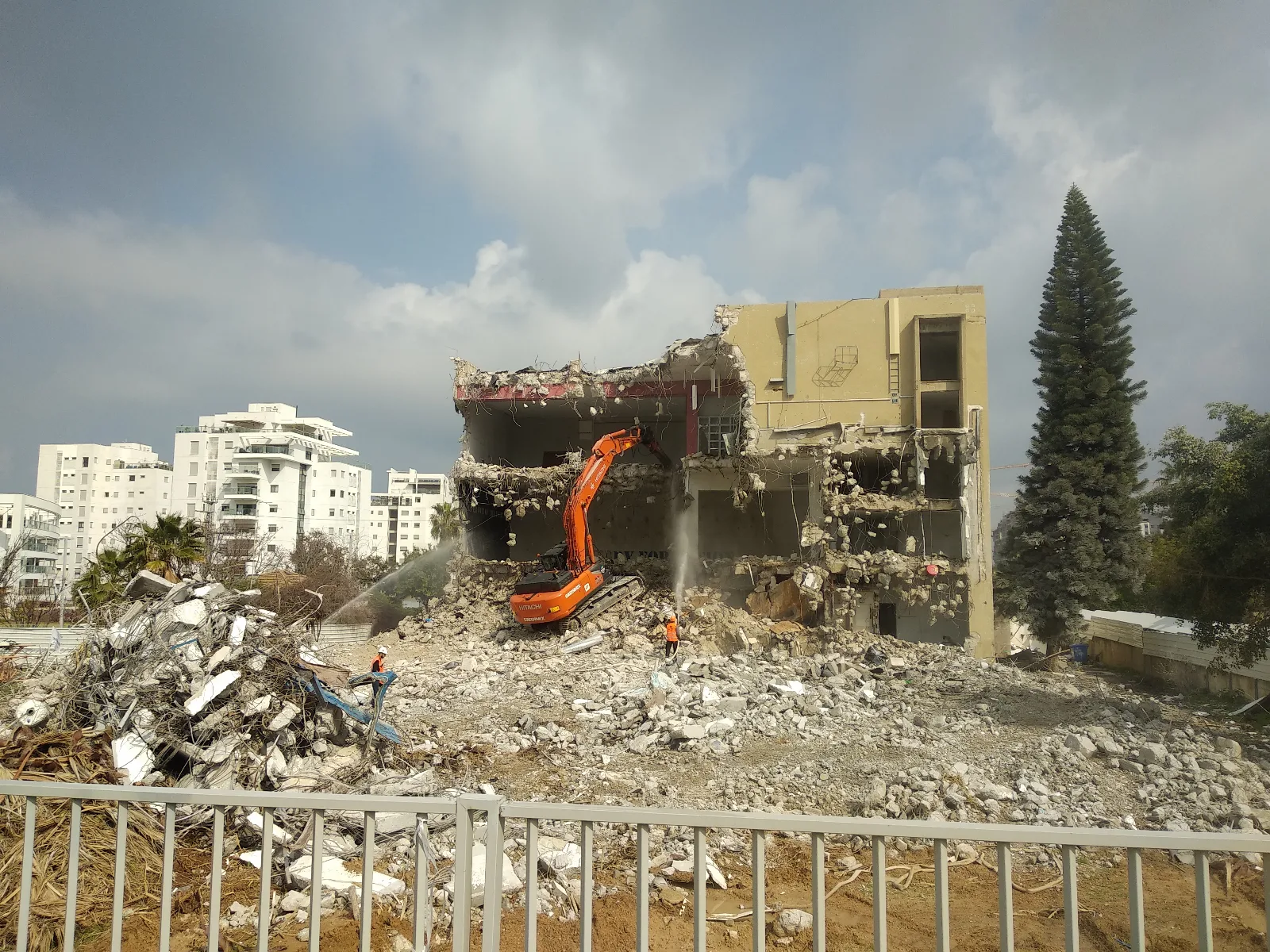
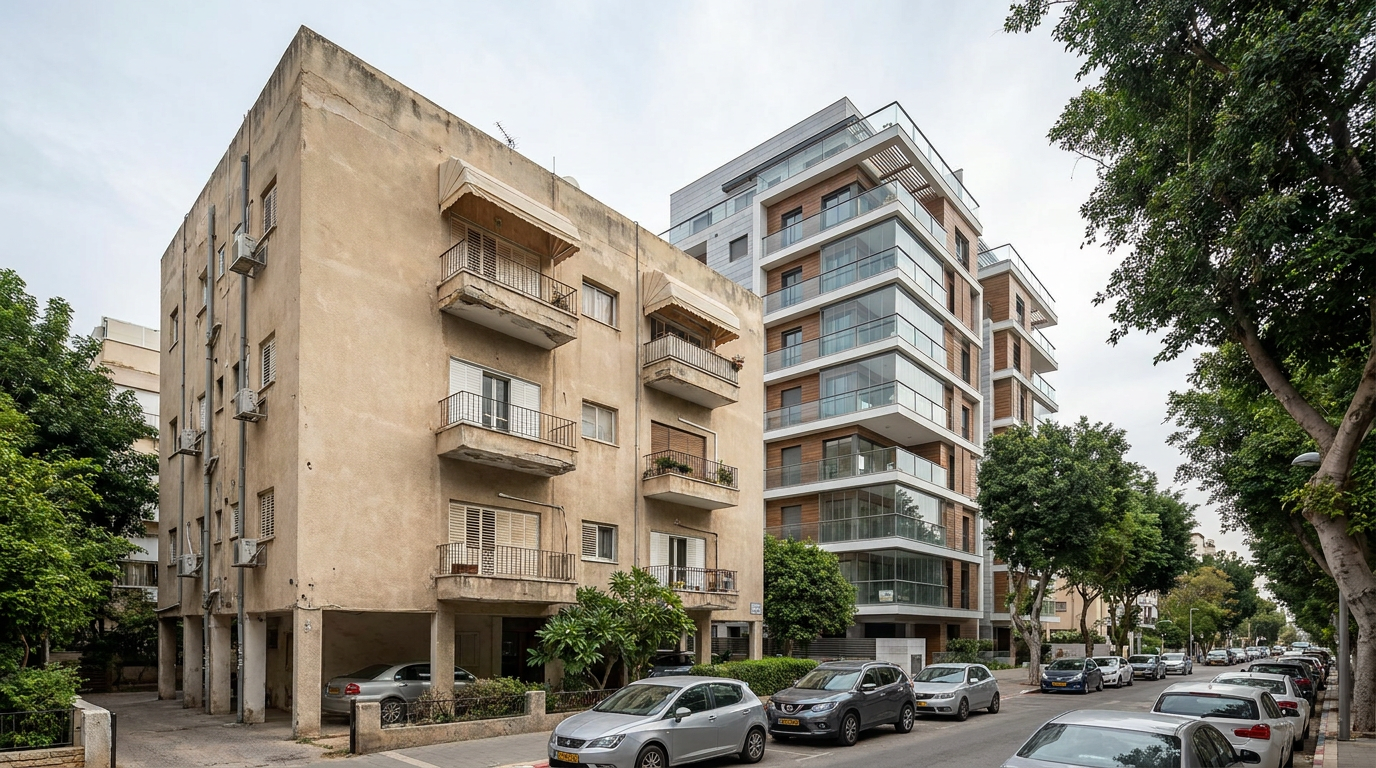
The project concerns numbers 25 to 35 of Keren HaYesod Street, in Ra'anana, for 96 homes. The owners chose to cancel the pinui-binui agreements binding them to the developer. In the pinui-binui model, owners transfer their rights to the land in exchange for a larger new apartment in the rebuilt building; the developer finances the operation through the sale of the additional homes created.
Cancelling such agreements is never a trivial step. It implies, on the owners' side, the conviction that the conditions obtained no longer correspond to the value of their property, or that the project is not advancing on the agreed terms. On the developer's side, it means years of work and costs incurred on a project that stops.
NIS 85M claimed in arbitration: a claim, not a verdict
Bonei HaTihon, the developer, is claiming NIS 85M in arbitration. This amount — considerable at the scale of a 96-home project — measures the extent of the loss the developer estimates it has suffered: study and planning costs, commitments taken, and alleged lost earnings.
It is essential to keep this stage of the proceedings in proportion: arbitration has not yet decided. The sum claimed is one party's demand, not the amount an arbitrator will necessarily award. This case will in any event remind owners and developers alike that the exit clauses, deadlines and guarantees of a pinui-binui agreement are not formalities: they are what will decide, on the day of disagreement, who pays what.
Arbitration, rather than the courts, is also the dispute-resolution route provided for by many of these contracts: a faster, confidential procedure, but whose outcome binds the parties in the same way. For the 96 homes concerned, the immediate stake is simpler and harder: the project is at a standstill, the apartments are aging, and neither reconstruction nor the sale of rights can move forward until the dispute is settled. Each year of standstill erodes the value the two camps are fighting over — it is often this observation, more than the law, that ends up bringing the parties back to the negotiating table.
Same city, another lesson: the compromise on the betterment tax
Ra'anana offers this week a second lesson, a tax one. In another case, developer Kedar reached a compromise on the betterment tax (heital hashbasha): it will pay NIS 300,000, against around NIS 2M initially claimed — i.e. around 15% of the starting amount.
Heital hashbasha is the tax levied on the gain created by a planning change. Its calculation rests on valuations, and valuations are debatable: between the authority's estimate and the taxpayer's, the gap can be massive. This compromise makes the point concretely: a claimed amount is not an amount due, and an independent expert valuation is an investment, not an expense. Our analysis of the taxes and fees simulator and ongoing urban renewal cases, such as the six pinui-binui zones declared in Tel Aviv, show how much this tax weighs on project economics.
Why this case goes beyond Ra'anana
The context gives this cancellation a national scope. At the Eilat developers' congress, the industry delivered a harsh assessment of the viability of urban renewal programs: high construction costs, betterment tax, approval delays — the economic equation of many projects no longer holds. When the developer's margin tightens, what was promised to owners becomes the first point of friction, and fragile projects are the first to unravel.
For an owner approached by a developer, the lessons are practical. Have your property valued before signing, and do not just accept what is offered in return. Check the developer's experience and financial soundness. Negotiate guarantees: execution deadlines, penalties, replacement housing during works, exit clauses. And above all, never sign without a lawyer specialised in urban renewal, independent of the developer.
For an off-plan buyer in a pinui-binui project, the same vigilance applies: an agreement signed by owners is not a building permit, and a project can still fail at each stage. The project's history, the share of owners who have signed and the state of the proceedings are part of due diligence just as much as the price.
In summary
Ra'anana concentrates in one week the two faces of Israeli urban renewal: conflict, when the Keren HaYesod owners take back their rights at the price of arbitration with NIS 85M claimed, and negotiation, when a betterment tax claimed at around NIS 2M settles at NIS 300,000. In both cases, the same rule: in Israeli real estate, the amounts that count are those that are written, valued and defended by professionals.
Owner approached for a pinui-binui, or buyer in a renewal project? Have the agreements and valuations reread before you commit.
Sources
- Globes — Ra'anana: cancellation of the Keren HaYesod 25-35 pinui-binui agreements, Bonei HaTihon claims NIS 85M in arbitration
- Globes — Betterment tax in Ra'anana: compromise at NIS 300,000 for developer Kedar
Sources
- Source 1
- Source 2