Mamad and Building Regulations in Israel: What Will Change
The Mamad, this reinforced concrete safe room found in new Israeli homes, has become a key buying criterion. In October, the National Planning and Building Council is set to review four amendments to construction regulations that directly affect these protected spaces, as well as the lifespan of buildings and changes in usage. These proposals have not yet been approved. However, they outline how homes will be designed in the coming years, and are of interest both to buyers from abroad and to Israelis already in Israel comparing off-plan projects.
The Four Amendments Submitted to the National Council
According to Nadlan Center, the National Planning and Building Council is set to review the following changes in October.
| Amendment | Proposed Content | Impact for the Buyer |
|---|---|---|
| Stacked Mamad | The enclosed space under the columns of stacked Mamad would no longer be counted in the buildable area | Makes it easier to add Mamad to existing buildings |
| School Shelters | Unified protected spaces for up to 4 classes (60 m² net), maximum 2 floors, site limit of 180 m² maintained | Neighborhood facilities easier to integrate |
| Change of Use | 4 consulted bodies (Health, Environment, Firefighters, Home Front Command); 10 days for the municipal engineer, 15 days for the bodies, silence equals approval, final decision within 30 days | More predictable procedures |
| Structural Calculations | Housing designed for 50 years lifespan, public buildings and critical infrastructure for 100 years, temporary constructions for 10 years; seismic and fire resistance; European standards accepted if no Israeli standard exists | Clarified technical reference |
Mamad: What the Surface Area Rule Changes
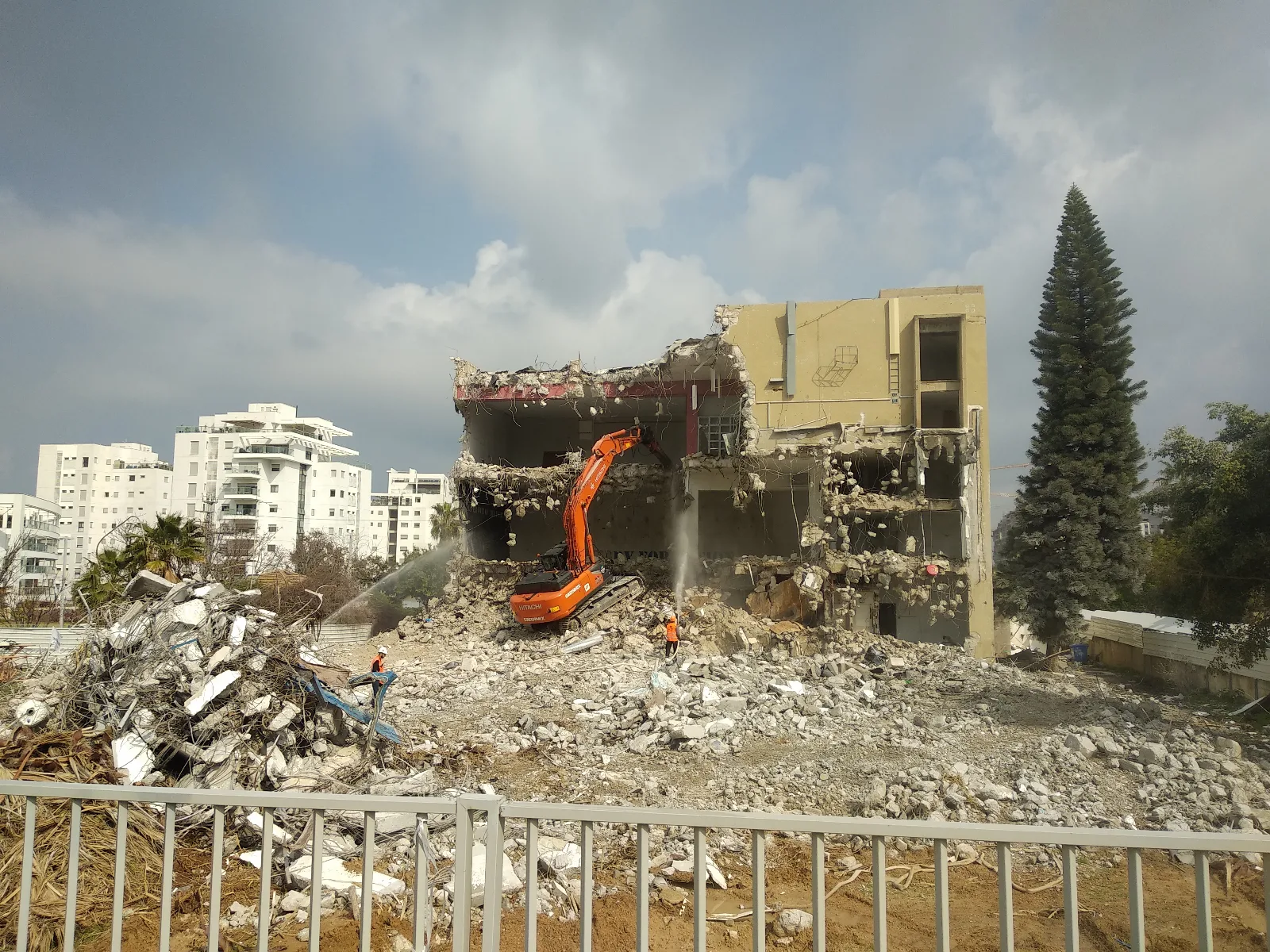
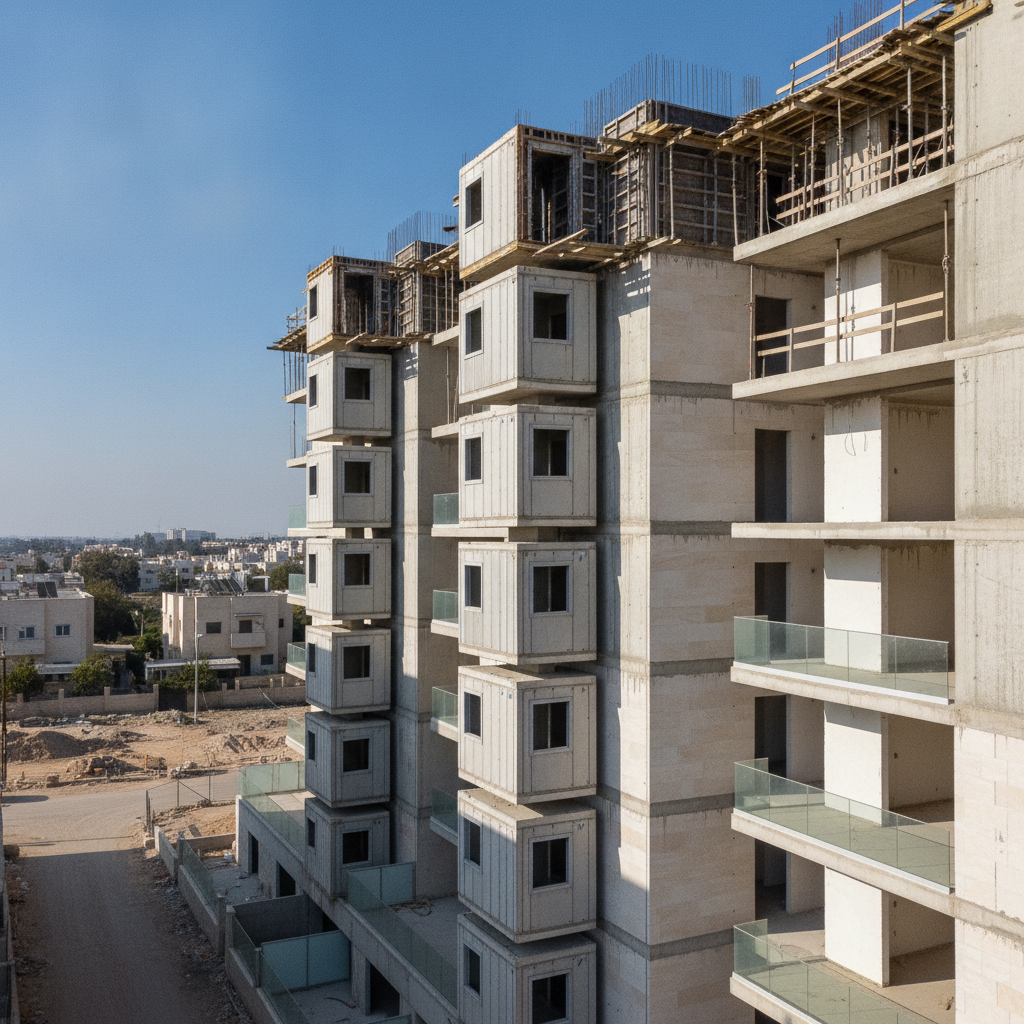
Today, adding a Mamad to an existing building is often done by stacking secure rooms one above the other, attached to the facade. The closed void that forms at the base of this column can be counted in the buildable area, which uses up building rights and complicates projects. The proposed amendment, according to Nadlan Center, would exclude this space from the calculation.
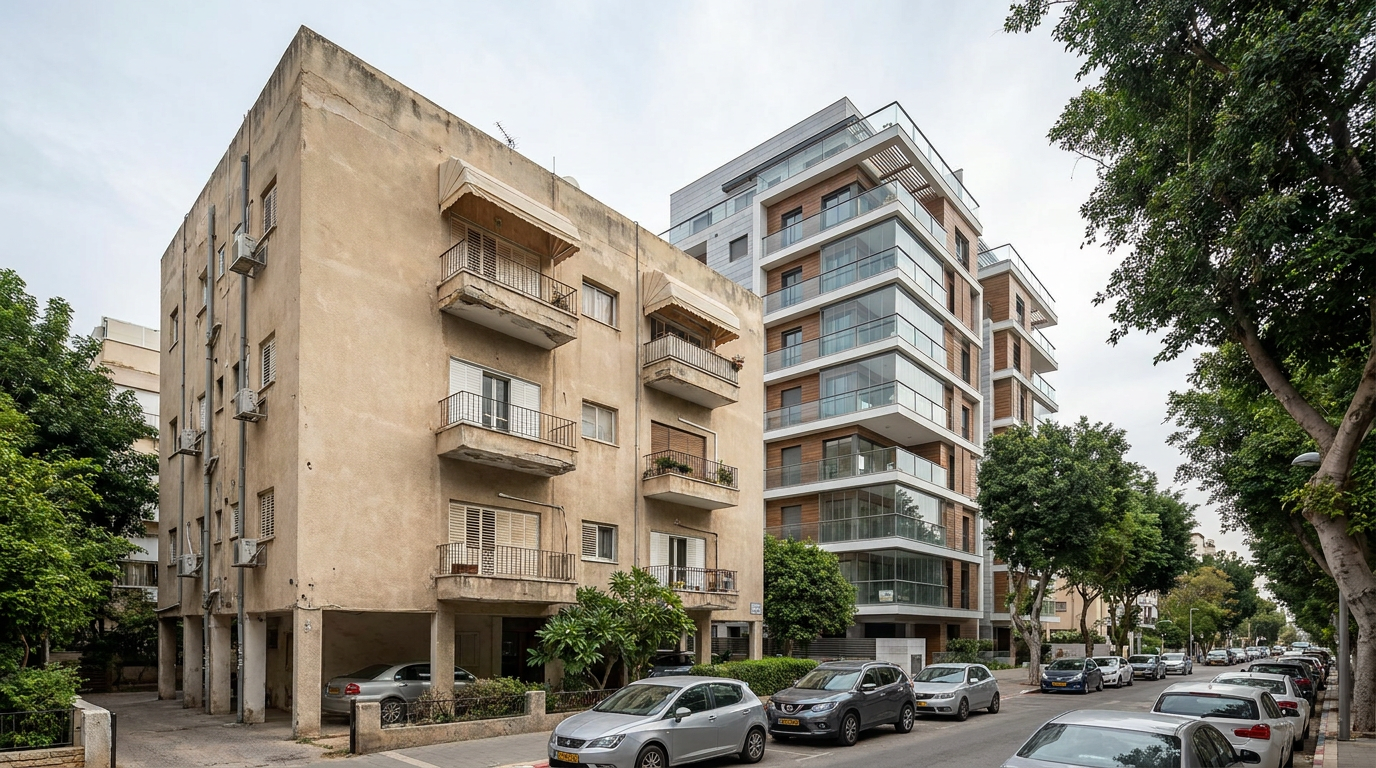
For owners of older apartments, this could make it easier to add a secure room, whether through Tama 38 or a condominium initiative. For buyers of older properties, it's a potential value-adding factor, provided the project is technically and legally feasible. Our article on building permit case law reminds that compliance with the permit remains crucial.
Building lifespan: 50 years for housing
The fourth amendment is less visible but structural. Housing units would be designed for a reference lifespan of 50 years, compared to 100 years for public buildings and critical infrastructure, and 10 years for temporary constructions. Seismic and fire resistance requirements are included, and European standards may apply in the absence of an Israeli standard.
In practice, this does not mean that a new building will become unusable after 50 years: it is a calculation basis. But this reference gives architects a clearer framework to compare the technical specifications of projects.
Sukkah Balconies: Another Design Feature That Adds Value
The design of a home is not limited to safety standards. Nadlan Center dedicated an analysis to sukkah balconies—balconies not covered by the upper floor, allowing the construction of a sukkah. These are highly sought after in areas with a large Haredi population, such as Bnei Brak or certain neighborhoods of Beer-Sheva, as well as among religious-Zionist or traditionalist residents, for example in Raanana or Givatayim.
According to the same source, this type of balcony can add hundreds of thousands of shekels in value where there is demand, while having almost no effect in Tel Aviv or Kiryat Ono, and may even be viewed negatively. In Ramat Gan, the local committee required about sixty sukkah balconies in a project. Their integration presents real architectural challenges: staggered facades, varying depths.
How the Architect Helps You Understand a Project
For Buyers from Abroad
Without regular site visits, you need to rely on floor plans and the specifications booklet. The architect checks the location of the Mamad in the property, its size, ventilation, possible use as a bedroom or office, and the orientation of the balcony.
For Israelis Already in Israel
Residents can visit projects delivered by the same developer, but must also ensure that the signed plans comply with the regulations in force at the time the permit was issued. The October amendments, if adopted, will not necessarily apply to projects that have already been authorized.
What to Validate Before Signing
A purchase off-plan relies on three complementary perspectives: lawyer · broker · architect. The architect analyzes the plans, the Mamad, and the standards; the lawyer checks at signing that the specifications are attached to the contract and that any deviations are regulated; the broker ensures that financing follows the construction schedule. Remember, the 18% VAT is included in the price of a new property. To estimate a realistic budget by city, use our city budget simulator and browse the catalog.
IsraelStart lists 300+ new projects across Israel. Request a personalized review, with no obligation, to compare the design of the properties that interest you.
Sources
- Nadlan Center — Four amendments to construction standards before the National Council (28/09/2026)
- Nadlan Center — Sukkah balconies, a value that varies by city (25/09/2026)
Sources
- Source 1
- Source 2