New Build Property in Meitar: Developments & Areas 2026
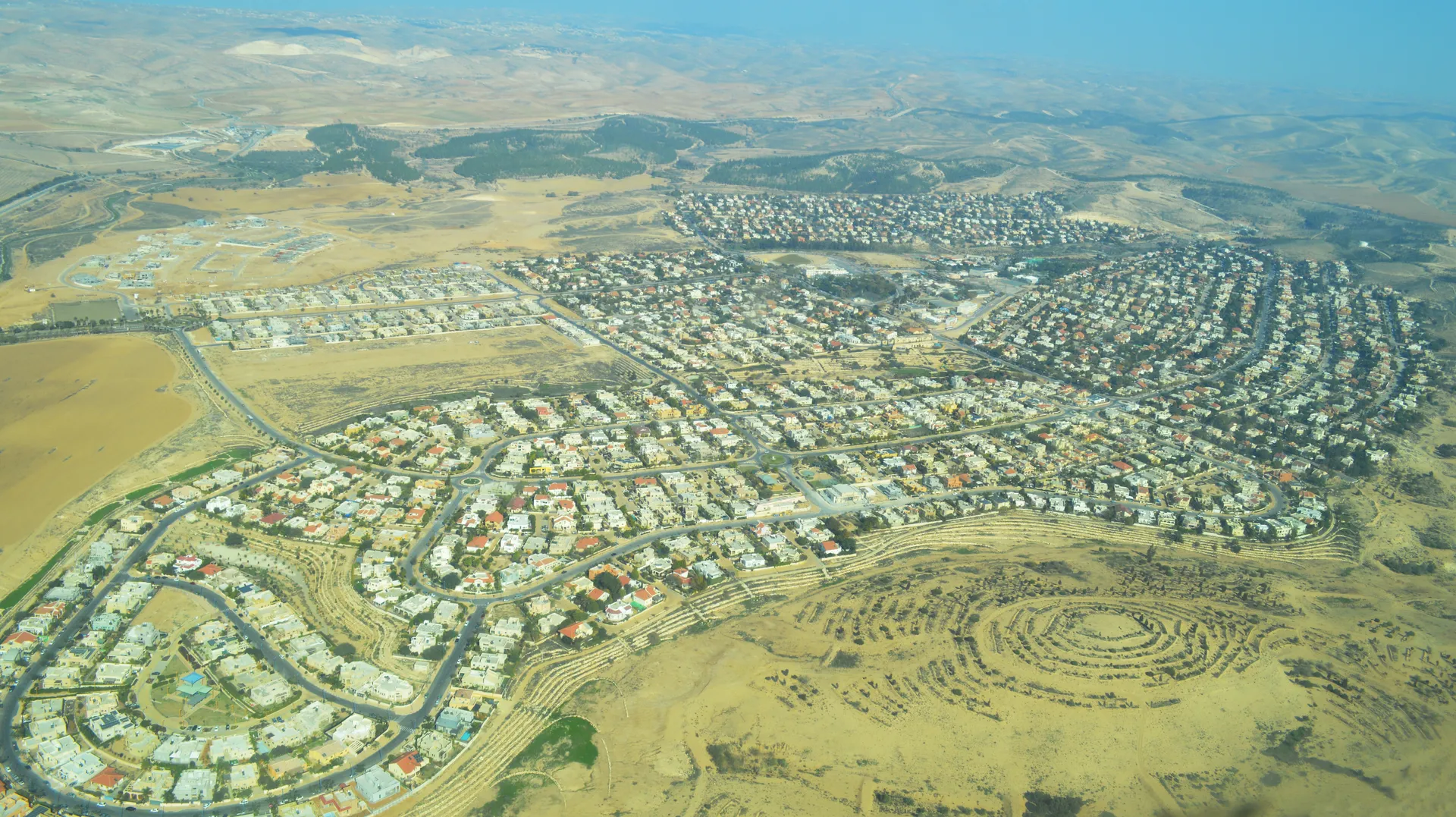
Meitar is a local council in the northern Negev, 19 kilometres north of Beersheba on Highway 60, on the southern edge of the Mount Hebron hills and beside the Yatir Forest. Founded in 1984 by Bezalel Geber and a local council since 1987, the town had 11,608 residents at the end of 2024, according to the Central Bureau of Statistics (CBS). Its name means “string” — the string of a tent, echoed in the town logo — and it captures its character well: a residential, family-oriented and leafy town, set between the desert and the forest. Meitar scores 9 out of 10 on the socio-economic index, one of the highest in Israel, and its population has more than doubled since 2008. Buyers here look mainly for detached houses with a garden, in a quiet setting about twenty minutes from Beersheba.
Population: 11,608
Why invest in Meitar
Meitar was founded in 1984, north of Beersheba, when Israel was working to strengthen the northern Negev. The chosen site lies on Highway 60, south of the Green Line, at the edge of the Mount Hebron hills, right next to the Yatir Forest, the largest planted forest in the country. Three years after its founding the locality became a local council, and it grew fast: 4,700 residents in 1995, 6,100 in 2008, 11,207 in 2022, then 11,608 at the end of 2024. That steady, unbroken growth is the story of a town that attracts families looking for space, schools and calm, while staying close to the Negev metropolis. Housing in Meitar is almost entirely detached houses, often with a garden, on leafy residential streets. The town centre holds the local shops, municipal services and schools, while the neighbourhoods spread towards the forest in the north and the hills in the south. Local life revolves around the schools — Psagot and Amit primary schools and the Meitarim high school — and the town sports club. For a buyer, Meitar is first and foremost a place to live: people come here to settle, not to speculate. No new development is currently listed in the IsraelStart catalogue for Meitar, so this page is a buying guide. The personalised property search covers both new and resale homes, in the town and in neighbouring towns, with support in English and French, and the resale buying guide explains the steps of a second-hand purchase. Costs and taxation, including the purchase tax (Mas Rechisha), can be prepared with the tax and fees simulator, without any numbered tax scale reproduced here, and financing can be estimated with the financing simulator (mashkanta).
- Buy through the personalised search: No new development is currently listed in the IsraelStart catalogue for Meitar, so the personalised property search is the right way in. It follows new and resale homes, in Meitar and in neighbouring towns, with a dedicated search agent and support in English and French.
- Resale, a real way in: Most houses in Meitar sell on the resale market, often with a garden and sometimes after renovation. The resale buying guide explains the checks to make before signing: the state of the property, land rights, charges and surveys.
- Plan for costs and taxation: Before any offer, allow for the purchase tax (Mas Rechisha), notary and registration fees and agency fees. The tax and fees simulator lets you cost them, and the taxation guide explains the tax without reproducing any numbered scale.
- Finance with a mashkanta: Most purchases use an Israeli mortgage, the mashkanta. The financing simulator gives a first idea of the monthly payment based on the deposit and the term, before talking to a broker or a bank.
Key advantages
- Twenty minutes from Beersheba: Highway 60 links Meitar to Beersheba in about twenty minutes: the Negev metropolis holds the jobs, Soroka hospital, Ben-Gurion University, the railway stations and the shops. You live quietly, at the edge of the forest, without giving up the city.
- A green setting between desert and forest: Meitar sits beside the Yatir Forest, the largest planted forest in Israel: hiking, cycling trails and desert air a few minutes from home. Its residential streets, lined with trees and gardens, give the town the feel of a garden village.
- One of the highest socio-economic scores: With a socio-economic index of 9 out of 10 according to the CBS, Meitar ranks among the best-placed localities in the country. Its population is family-oriented, stable and well educated, and demand for houses has stayed strong for twenty years.
- Houses with gardens, not towers: Housing in Meitar is almost entirely detached houses, often with a garden and a terrace. For a family leaving a flat in the centre of the country, it is the clearest possible change of life, without leaving Israel or moving away from services.
Infrastructure & Transport
- Highway 60: The historic road that runs through Meitar: south to Beersheba in about twenty minutes, north to the Mount Hebron hills and Jerusalem. It is the backbone of the town's travel, by car and by bus.
- Buses to Beersheba: Regular bus lines link Meitar to Beersheba, its railway stations, Soroka hospital and Ben-Gurion University, as well as to neighbouring towns in the northern Negev. Timetables follow the working and school day.
- Schools in the town: Psagot and Amit primary schools and the Meitarim high school take the town's children from primary school to the end of secondary school, with no daily trip to Beersheba. That is one of the reasons families move to Meitar.
- Meitar Sports Club: The town sports club (Metar Sports Club) is where residents meet: pitches, activities and community life. It complements the green spaces and playgrounds of the neighbourhoods.
Investment profile
- Families looking for a house: The typical buyer in Meitar is an Israeli family — or a diaspora family making aliyah — that wants a house with a garden, schools in the town and a quiet setting, less than half an hour from a large city.
- People working in Beersheba: Many residents work in Beersheba, in services, healthcare, the university or Negev high-tech, and come home in the evening to a greener, quieter town. Highway 60 makes that daily rhythm possible.
- A primary residence above all: Meitar is a town of owner-occupiers: people buy here to live, for the long term. No price per square metre, rental yield or growth forecast can be stated here without a reliable source — the figures on this page stick to sourced facts.
Neighborhoods of Meitar
Town centre
North neighbourhood
South neighbourhood
East neighbourhood
West neighbourhood
Yatir Forest edge
New build or resale in Meitar
In Meitar, you can compare the new developments listed in our catalogue or entrust us with the search for an existing property. The choice depends on your timeline, overall budget and target neighbourhood.
For resale, we define a brief with you — neighbourhood, number of rooms, mamad, lift, parking, outdoor space — then consult several sources and present an explained selection, with trade-offs and points to confirm.
Search in Meitar Buying resale property: the guideFrequently asked questions about Meitar
Are there any new developments in Meitar?
No: no new development is currently listed in the IsraelStart catalogue for Meitar. This page is therefore a buying guide, not a catalogue. The personalised property search covers new and resale homes, in Meitar and in neighbouring towns, with support in English and French from the first visit to the signature.
Where is Meitar?
Meitar lies 19 kilometres north of Beersheba, on Highway 60, on the southern edge of the Mount Hebron hills and beside the Yatir Forest, the largest planted forest in Israel. It is a local council in the Southern District, in the Beersheba sub-district.
How many people live in Meitar?
Meitar had 11,608 residents at the end of 2024, according to the Central Bureau of Statistics (CBS). The population has more than doubled since 2008, when it was 6,100, and it keeps growing steadily.
Are there schools in Meitar?
Yes: Psagot and Amit primary schools and the Meitarim high school are in the town, from primary school to the end of secondary school. Children do not need to travel to Beersheba every day, which is one of the reasons families settle in Meitar.
Can I buy in Meitar from abroad?
Yes, it is possible, including for a diaspora buyer who does not live in Israel. Buying from a distance needs support: power of attorney, title checks, financing and taxation. The personalised property search and the resale buying guide are designed for exactly that.
Similar cities
Discover other nearby cities or in the same price range.