New Build Property in Lehavim: Developments & Areas 2026
Lehavim is an affluent residential town in the northern Negev, 15 kilometres north of Beersheba. Founded in 1983, it has 8,028 residents (CBS, 2024) and attracts buyers with its detached villas set in gardens, its direct train station and its quiet way of life, minutes from the capital of the Negev.
Population: 8,028
Why invest in Lehavim
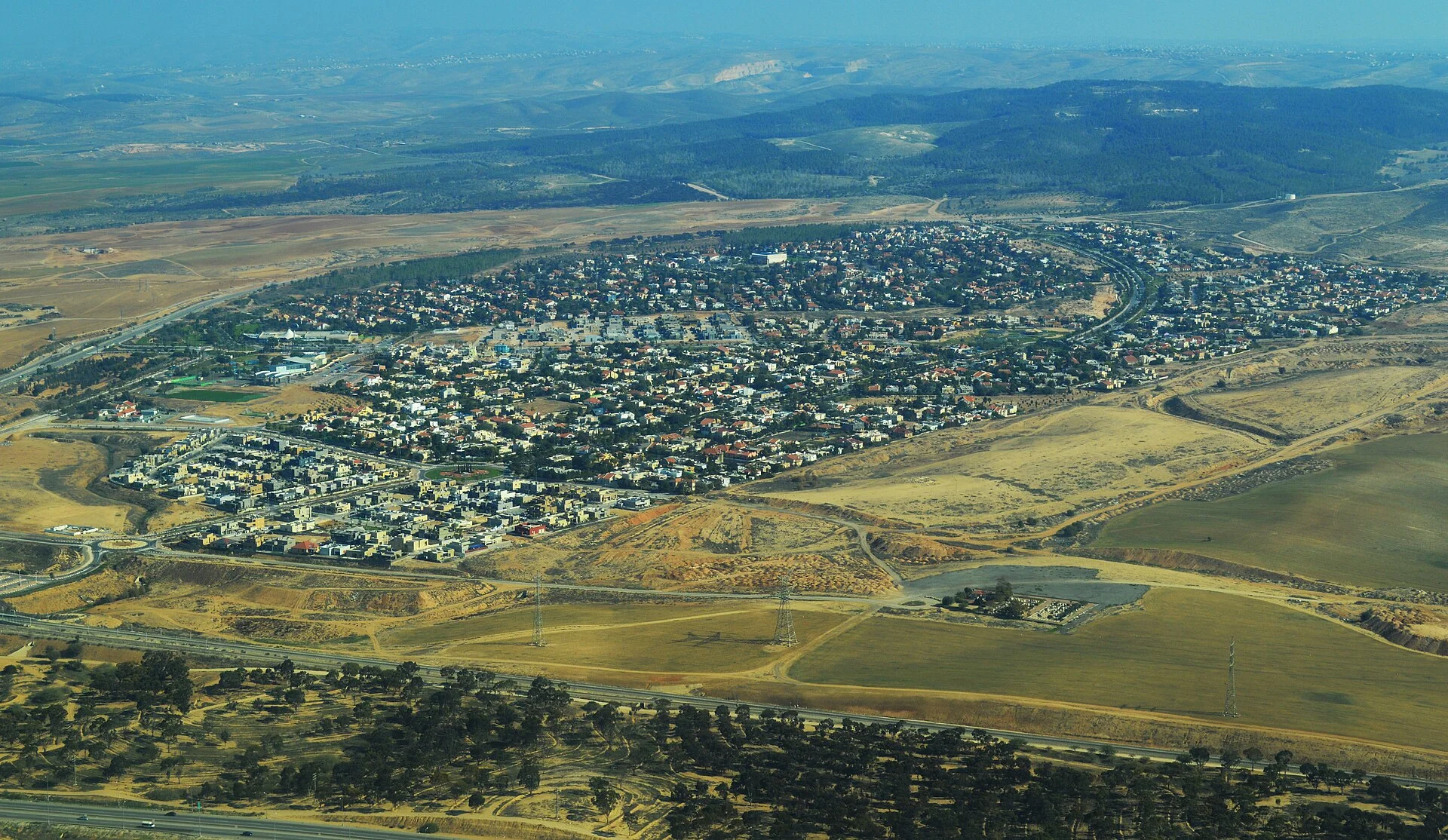
Lehavim (Hebrew: להבים) is one of Beersheba's three satellite towns, alongside Omer and Meitar. Located in the northern Negev, about 15 kilometres north of the regional capital and some 300 metres above sea level, the town has 8,028 residents according to the Israel Central Bureau of Statistics (CBS, 2024). Founded in 1983 as Givat Lahav, it became a local council in 1988. Its area covers 2,525 dunams, about 2.5 square kilometres, occupied almost entirely by detached houses surrounded by palm trees and well-kept gardens. Lehavim is an affluent town: in 2017 it was one of only four municipalities in the country ranked 10 out of 10 on the CBS socio-economic index, together with Omer, Kfar Shmaryahu and Savyon.
Lehavim's population has tripled in a generation: 2,500 residents in 1995, 5,700 in 2008, 7,686 in 2022 and 8,028 in 2024. This steady growth reflects the appeal of a town where you live in a house with a garden while working in Beersheba, at Ben-Gurion University, Soroka Hospital or in the Negev's business parks. Most residents commute to Beersheba, and the town also attracts doctors, business owners and executives looking for calm without moving away from their workplace. Its streets are lined with villas, green spaces are plentiful, and neighbourhood life revolves around the library, the country club, the kindergartens, the local school and the town's two synagogues.
Lehavim's great asset is its transport. The town sits at the junction of Highway 40, which links Beersheba to Tel Aviv, and Highway 31 towards Arad, at Lehavim Junction. Highway 6 runs nearby. Above all, Lehavim station, opened in 2007 on the Lod–Beersheba line, puts the town on the direct rail axis between Tel Aviv and Beersheba: the regional capital is minutes away and the centre of the country is reachable without a car. This accessibility has made Lehavim a sought-after address for commuters, and it shapes a local market made up almost entirely of detached houses, with very few apartment blocks.
Buying in Lehavim therefore means buying a detached house in a small residential town, not a flat in a tower. Supply is limited by the very size of the town, and properties often change hands off-market: IsraelStart's personalised property search can target available houses in Lehavim as well as in neighbouring Beersheba, Omer, Meitar and Ofakim, new build and resale alike. IsraelStart currently lists no new development in Lehavim, so this guide describes the market as it is, with no price per square metre shown, for lack of a reliable public source. To prepare a purchase, the taxes and fees simulator estimates the purchase tax (mas rechisha), whose amount depends on the price of the property and the buyer's status, and the financing simulator helps size a mortgage (mashkanta). The resale buying guide and the per-city budget simulator complete the preparation.
- Living in the Negev without giving up the city: Beersheba, its jobs, its university and its hospital are fifteen minutes away, yet in the evening you come home to a calm, green town.
- A house with a garden, not a flat: Lehavim means villas surrounded by palm trees and gardens: the right choice for a family that wants space and privacy.
- The train instead of traffic jams: Lehavim station links directly to Tel Aviv and Beersheba: you can live here and work in the centre of the country without depending on a car.
- A family-friendly, peaceful setting: A school, kindergartens, a library, a country club and parks: the town is designed for families, in a homogeneous and well-kept residential environment.
Key advantages
- Fifteen minutes from Beersheba, without the city: Lehavim offers the best of both worlds: the jobs, Ben-Gurion University, Soroka Hospital and the shops of Beersheba a quarter of an hour away, and in the evening, the calm of a small residential town surrounded by gardens.
- One of the highest living standards in the country: Ranked 10 out of 10 on the CBS socio-economic index in 2017, Lehavim is an affluent town, with well-kept streets and detached houses. This profile attracts demanding buyers and keeps demand steady in a small market.
- A direct train to Tel Aviv and Beersheba: Lehavim station, opened in 2007 on the Lod–Beersheba line, links the town to both hubs without a car. For commuters, this is a decisive advantage, rare for a town of 8,000 residents.
- A town on a human scale: With 8,028 residents, a school, kindergartens, a library and a country club, Lehavim works like an organised village: people know each other, services are close by, and children grow up in a green and peaceful setting.
Infrastructure & Transport
- Trains and roads: At the junction of Highways 40 and 31, close to Highway 6, with Lehavim station on the Lod–Beersheba line: the town is linked to Beersheba, Tel Aviv and Arad by rail and by road.
- Schools and community life: Kindergartens, a local school, a municipal library and two synagogues shape daily life. Secondary schools are in Beersheba, a few minutes away by car or bus.
- Shops, sport and nature: A neighbourhood shopping centre covers daily needs, the country club offers sport and relaxation, and the parks and the nearby Lahav forest provide green space steps from the houses.
Investment profile
- A villa market with limited supply: Lehavim is almost entirely made up of detached houses: supply is structurally short, and buyers are families and professionals who work in Beersheba. No price per square metre is published here, for lack of a reliable source: a property's value is judged house by house, with the help of a property hunter.
- A commuter address: The station and the roads make Lehavim a commuter town: demand comes from working people who want a house with a garden without leaving Beersheba's orbit. For a purchase, IsraelStart's personalised search covers new homes in neighbouring towns as well as resale homes in Lehavim itself.
Neighborhoods of Lehavim
Original core — Givat Lahav
Recent residential extensions
Around Lehavim station
Shopping centre and services
Country club and parks area
Wooded edges towards Lahav forest
New build or resale in Lehavim
In Lehavim, you can compare the new developments listed in our catalogue or entrust us with the search for an existing property. The choice depends on your timeline, overall budget and target neighbourhood.
For resale, we define a brief with you — neighbourhood, number of rooms, mamad, lift, parking, outdoor space — then consult several sources and present an explained selection, with trade-offs and points to confirm.
Search in Lehavim Buying resale property: the guideFrequently asked questions about Lehavim
Where is Lehavim and how many people live there?
Lehavim is in the northern Negev, about 15 kilometres north of Beersheba, at the junction of Highways 40 and 31. Founded in 1983, the town has 8,028 residents according to the Israel Central Bureau of Statistics (CBS, 2024). It is a residential local council, made up almost entirely of detached houses.
How do you get from Lehavim to Tel Aviv or Beersheba?
By train: Lehavim station, opened in 2007 on the Lod–Beersheba line, serves Tel Aviv and Beersheba directly. By road: Highway 40 links Beersheba to Tel Aviv, Highway 31 leads to Arad, and Highway 6 runs nearby.
Can you buy a detached house in Lehavim?
Yes, it is the dominant form of housing: Lehavim is almost entirely made up of villas with gardens. Supply is limited by the size of the town, and properties often sell off-market. IsraelStart's personalised property search tracks available houses in Lehavim and neighbouring towns, new build and resale alike.
What fees and taxes should I expect when buying in Lehavim?
As everywhere in Israel, a purchase is subject to purchase tax (mas rechisha), whose amount depends on the price of the property and the buyer's status, plus lawyer and registration fees. IsraelStart's taxes and fees simulator estimates these costs before you make an offer, and the financing simulator helps prepare the mortgage (mashkanta).
Similar cities
Discover other nearby cities or in the same price range.