New Build Property in Hod HaSharon: Developments & Areas 2026
Hod HaSharon, a town in the Sharon, has 66,398 residents (CBS 2024). Born in 1990 from the merger of four historic moshavim — Magdiel, Ramatayim, Hadar and Ramat Hadar — it kept from its rural origins tree-lined streets, large plots and a majority of villas, while becoming a sought-after family town some twenty kilometres north-east of Tel Aviv. IsraelStart lists four new developments here — Ishuron Garden, Ramat Serene, Har Hadr Heights and Migdiel Vineyards — and this guide presents the town, its neighbourhoods and its developments, with the buying process, taxation and finance.
Population: 66,398
Why invest in Hod HaSharon
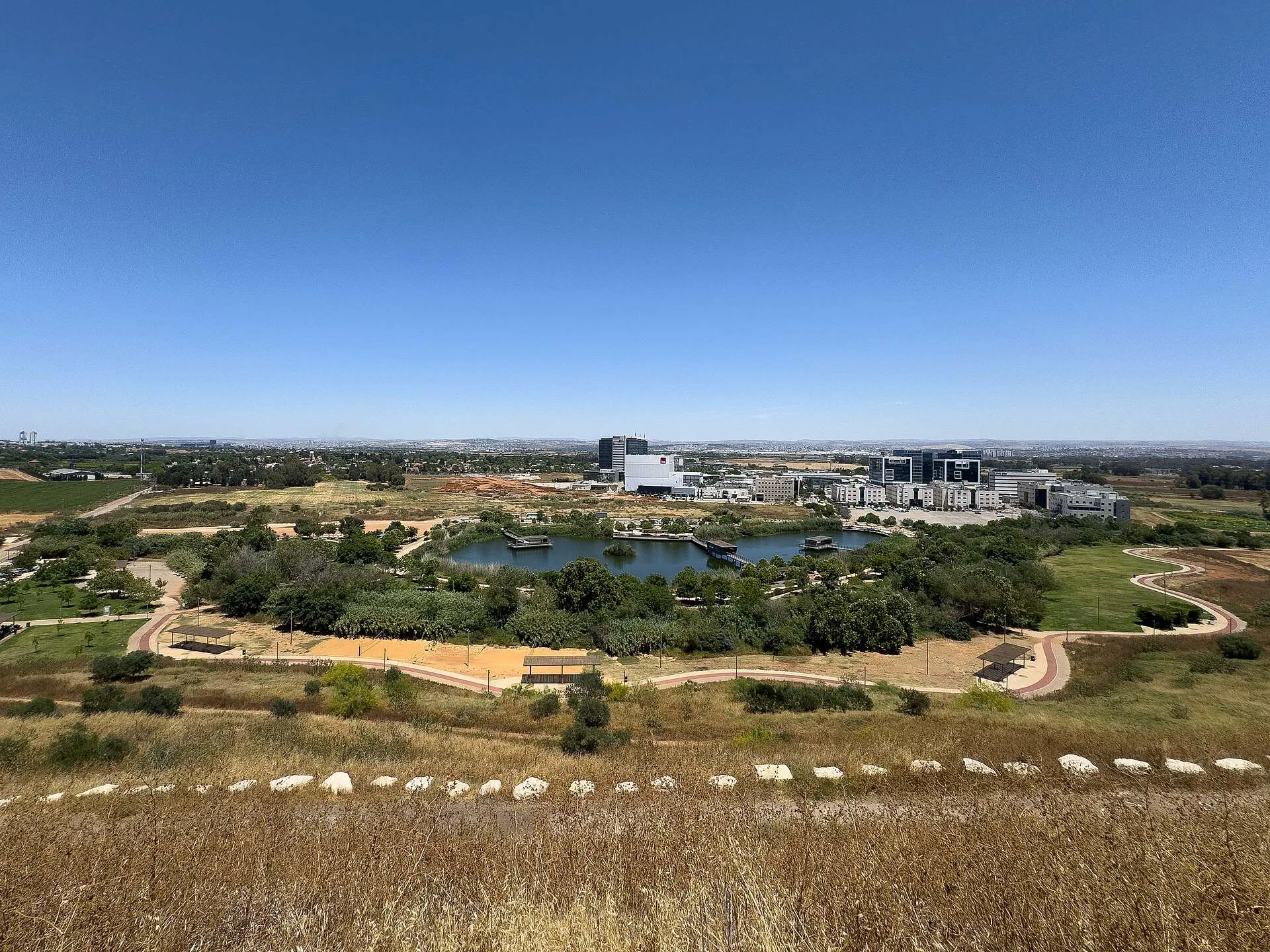
The history of Hod HaSharon can be read on its map. The four founding moshavim, created in the 1920s, merged in 1990 to form a single town, and their old centres — Magdiel, Ramatayim, Hadar, Ramat Hadar — became the town's historic neighbourhoods. They hold villas on large plots, tree-lined streets and, in places, orchards. Since the 2000s, the town has grown denser in some areas, with residential buildings and towers, notably in Giv'at Hen and Neve Neeman. The result is a varied stock: dominant villas, large 4-to-5-room apartments, rare studios. A 20,000-home extension project, considered in the late 2010s, was cancelled in 2020 by the National Planning Council: it belongs to the town's history, not to its current offer.
Four new developments are listed by IsraelStart in Hod HaSharon. Ishuron Garden, Ramat Serene, Har Hadr Heights and Migdiel Vineyards offer new apartments and villas in the town's residential neighbourhoods. Each development's page, linked from this one, gives layouts and availability: no prices are repeated here, because no sourced price per square metre can be published on this page. To learn the price of a development or a home, consult the project page or start a personalised search, which compares the developments and the older villas in town.
Life in Hod HaSharon is family life. The neighbourhoods are organised around schools, parks and local shops, with a strong presence of tech workers, the Sharon's technology zone — Kfar Saba and Hod HaSharon — concentrating international employers. The town is served by Routes 4 and 531, and the nearest stations are those of Kfar Saba and Ra'anana. The town guide — on the Sharon within reach of families — is linked from this page, along with the neighbouring towns: Kfar Saba, Ra'anana, Ramat HaSharon and Herzliya.
On taxation, Mas Rechisha applies as everywhere in Israel, according to the buyer's status and the property, and its bands change over time. This guide copies no tax table: it points to IsraelStart's tax guide and the tax and fees simulator, which calculates the tax for a specific case. Finance runs through the Mashkanta, whose terms can be simulated online before being confirmed by a broker. For a villa purchase, new or resale, the personalised search targets the right neighbourhood — Magdiel, Ramatayim, Neve Neeman or Giv'at Hen — according to the budget, the size of the family and the schools wanted.
- Villas, not towers: In Hod HaSharon, the villa still dominates the housing stock: large plots, gardens, tree-lined streets. For a family wanting a house with a garden near Tel Aviv, this is the town's first argument.
- Four original neighbourhoods, four atmospheres: Magdiel, Ramatayim, Hadar, Ramat Hadar: each historic neighbourhood has its character, its streets and its houses. Buyers often choose a neighbourhood as much as a home.
- The Sharon, without Gush Dan's density: Some twenty kilometres from Tel Aviv, Hod HaSharon offers the calm and greenery of the Sharon, with tech jobs within reach and the shops of Kfar Saba and Ra'anana close by.
- English-speaking support, end to end: Personalised search, lawyer, finance, taxation: IsraelStart supports English-speaking buyers at every step, for a new development as for an older villa, checking every home viewed.
Key advantages
- A town born of four moshavim: Magdiel, Ramatayim, Hadar and Ramat Hadar, four moshavim of the 1920s merged in 1990: Hod HaSharon kept from its origins tree-lined streets, large plots and a majority of villas, an identity rare in the Sharon.
- Four new developments listed: Ishuron Garden, Ramat Serene, Har Hadr Heights and Migdiel Vineyards: four new developments in the IsraelStart catalogue, apartments and villas in the town's residential neighbourhoods. The project pages give layouts and availability.
- The family Sharon, green and leafy: Parks, schools, local shops, quiet streets: Hod HaSharon is a town of families, some twenty kilometres north-east of Tel Aviv, with a green living environment and human-scale neighbourhoods.
- Close to tech jobs: The Sharon's technology zone, between Kfar Saba and Hod HaSharon, concentrates international employers and tech workers. Many residents work in the area, without driving to Tel Aviv every day.
Infrastructure & Transport
- Routes 4 and 531: Hod HaSharon is served by Route 4 and Route 531, which link the town to Tel Aviv, Kfar Saba and Ra'anana. The car remains the dominant mode, with short drives to the Sharon's main roads.
- Neighbouring stations of Kfar Saba and Ra'anana: The town has no station of its own: the nearest stations are those of Kfar Saba and Ra'anana, a few minutes' drive away, with direct trains to Tel Aviv and Haifa.
- Schools, parks and shops: The neighbourhoods are organised around schools, kindergartens, parks and local shops. Families find most of daily life on site, with sports and cultural facilities spread across the town.
Investment profile
- Investing in the family Sharon: The villas and large apartments of Hod HaSharon attract investors looking for a family home in the Sharon, with rental demand driven by tech executives and families. No yield is stated here: it is calculated home by home, with the budget-by-city simulator.
- Buying a villa for your family: For a family, Hod HaSharon offers villas on large plots, gardens and quiet neighbourhoods, as well as new 4-to-5-room apartments. The personalised search targets the right neighbourhood for the budget and the schools wanted.
Neighborhoods of Hod HaSharon
Magdiel
Ramatayim
Hadar
Ramat Hadar
Giv'at Hen
Neve Neeman
New build or resale in Hod Hasharon
In Hod Hasharon, you can compare the new developments listed in our catalogue or entrust us with the search for an existing property. The choice depends on your timeline, overall budget and target neighbourhood.
For resale, we define a brief with you — neighbourhood, number of rooms, mamad, lift, parking, outdoor space — then consult several sources and present an explained selection, with trade-offs and points to confirm.
Search in Hod Hasharon Buying resale property: the guideFrequently asked questions about Hod HaSharon
Which new developments are there in Hod HaSharon?
IsraelStart lists four developments in Hod HaSharon: Ishuron Garden, Ramat Serene, Har Hadr Heights and Migdiel Vineyards. Their pages, linked from this one, give layouts and availability. Prices are not repeated here: consult each development's page or start a personalised search to compare the offers.
What is the price per square metre in Hod HaSharon?
No reliable, sourced price per square metre can be published on this page. To learn the price of a development or a home, consult the project page or use the personalised search: the estimate is made case by case.
Does Hod HaSharon have a station?
No, the town has no station of its own. The nearest stations are those of Kfar Saba and Ra'anana, a few minutes' drive away, with direct trains to Tel Aviv and Haifa. The town is served by Routes 4 and 531.
Why is Hod HaSharon a town of villas?
The town was born in 1990 from the merger of four moshavim — Magdiel, Ramatayim, Hadar and Ramat Hadar — whose large plots and detached houses shaped the housing stock. Villas still dominate the offer, even though buildings and towers appeared in some areas from the 2000s.
Which taxes should I expect when buying in Hod HaSharon?
As everywhere in Israel: the purchase tax (Mas Rechisha), whose amount depends on the buyer's status and the property; lawyer's fees; registration fees and, where applicable, brokerage fees. The bands change over time: use IsraelStart's tax and fees simulator for a calculation on your exact case.
Similar cities
Discover other nearby cities or in the same price range.
New projects in Hod Hasharon
- Har Hadr Heights — From 2,700,000 ₪ – 4,000,000 ₪ (~721,925 €)
- Ishuron Garden — From 3,660,000 ₪ – 4,000,000 ₪ (~978,610 €)
- Migdiel Vineyards — From 3,070,000 ₪ – 9,080,000 ₪ (~820,856 €)
- Ramat Serene — Price on request