New Build Property in Beit Dagan: Developments & Areas 2026
A small town in the Central District, wedged between Rishon LeZion, Lod and Ramla, Beit Dagan — the 'house of grain' — is a historic road junction of the Gush Dan, minutes from Ben Gurion Airport, and is about to more than double in size with a major plan for over 2,500 new homes.
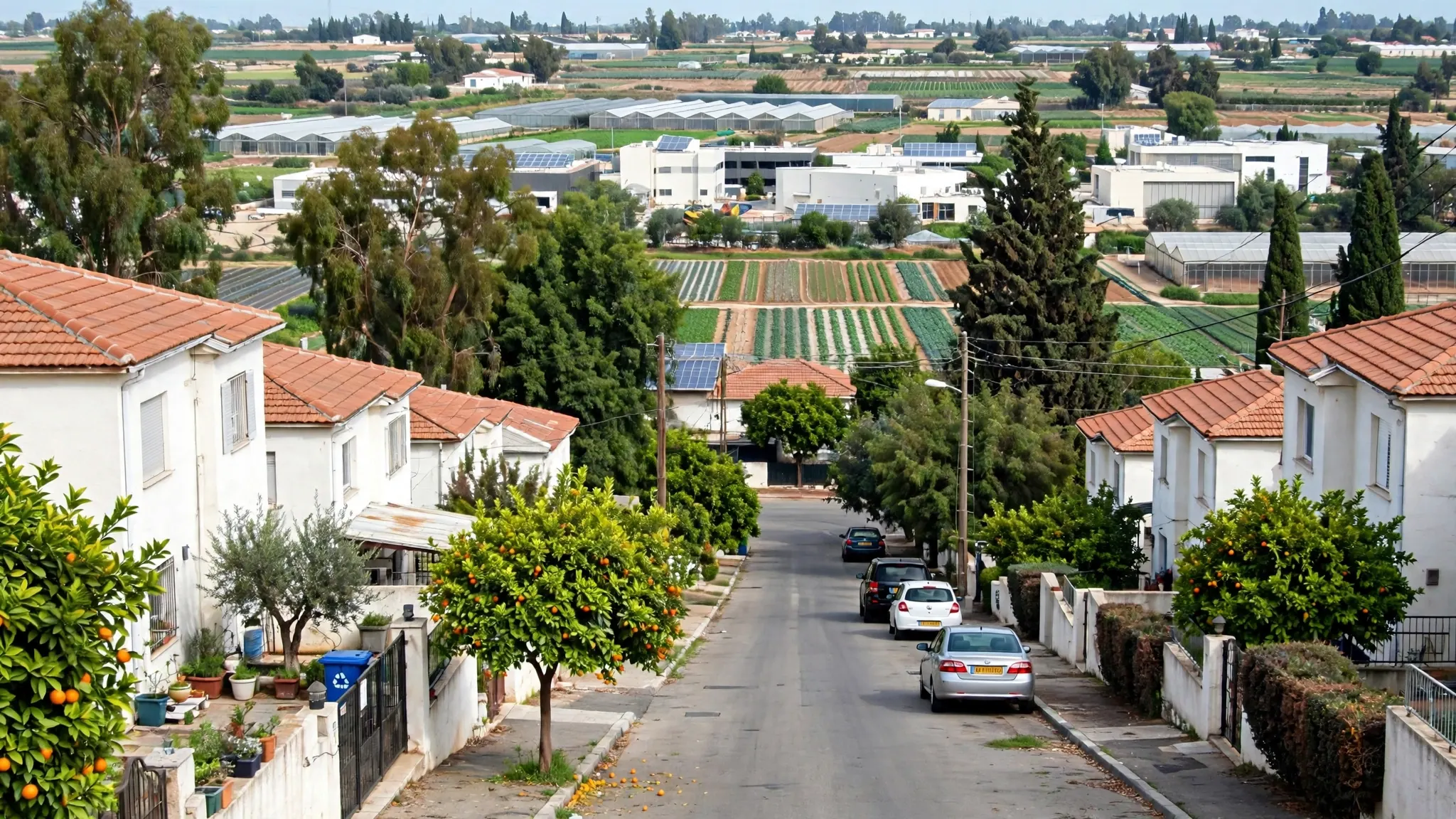
Population: 7,644
Why invest in Beit Dagan
Beit Dagan is a local council in the Central District, in the Ramla subdistrict, covering only 1.53 km². The town has 7,644 residents according to the Central Bureau of Statistics (CBS, 2021 — the 2024 figure was not confirmed at the time of writing). Its name means 'house of grain': it is thought to stand on the site of biblical Beit Dagon, a village of the tribe of Judah mentioned in the Book of Joshua, and Dagan was the Semitic god who guaranteed harvests. The modern town was founded in 1948 by Mizrahi Jewish immigrants from Yemen and North Africa, and it was granted local council status in 1958. Its location has long made its fortune and its history: at the crossing of the old Jaffa–Jerusalem road and the road to Rishon LeZion and Rehovot, it was a battle zone during the War of Independence, and its junction remains one of the busiest road nodes in the centre of the country. Two national institutions list a Beit Dagan address — the Israel Meteorological Service and the Ministry of Agriculture — even though their offices are physically across the municipal boundary, in Rishon LeZion, as is the famous Volcani agricultural research centre, on the road linking Rishon LeZion to Beit Dagan.
Where to buy in Beit Dagan. The town centre concentrates the town hall, shops and services, with older apartment buildings and detached houses, in a town where everything is done on foot. The area around Beit Dagan Junction, between Highway 44 and Route 412, is the liveliest sector, with the bus terminal and passing trade, handy for commuters but noisier. The northern sector, towards the Shapirim Interchange where Route 412 meets Highway 1, gives the fastest access to Jerusalem, Tel Aviv and Ben Gurion Airport. The southern sector, residential and quiet, is made of housing streets and family homes. Around Ezra Hebron Park, a green sector popular with families, with playgrounds and walks. The Rambam School neighbourhood, around the school, attracts families with children, with quiet streets and local services. To these existing sectors will be added the major development plan signed with the Ministry of Construction and Housing: 2,531 new homes, enough to add around 8,099 residents to a town of fewer than 8,000, plus 40,000 sq m of offices and shops, according to Globes. Beit Dagan is therefore about to change scale, and buyers must distinguish the current older stock from the future new neighbourhoods.
Buying in Beit Dagan from abroad. Foreign buyers can freely purchase property in Israel, with the support of a specialist lawyer. The process involves verifying the title deed at the Tabu, signing a contract overseen by the lawyer, and paying the purchase tax, the mas rechisha, whose amount depends on the price of the property and the status of the buyer: the IsraelStart tax guide and the tax and fees simulator explain the calculation, with no numerical thresholds reproduced here. For an off-plan purchase, the lawyer checks the developer's guarantees, and this is decisive in Beit Dagan, where the future homes in the development plan will be sold off-plan: check progress, contractual deadlines and guarantees before signing. IsraelStart's personalised search helps target properties in Beit Dagan as well as in the neighbouring towns of Rishon LeZion, Lod and Ramla, and compare new and resale. The local climate is also worth knowing: Mediterranean, with hot rainless summers and mild rainy winters, around 550 mm of rainfall a year, average maximum temperatures of 30.8 °C in summer and 18.5 °C in winter, according to the climate data published for the Beit Dagan station.
New or resale in Beit Dagan: IsraelStart currently lists no new development in the town, so this page is a buying and local living guide, not a catalogue. Support focuses on resale purchases, with the resale property guide and personalised search, as well as new developments in neighbouring towns — Rishon LeZion, Lod and Ramla — and, in time, the future homes of the local development plan, to be followed as they are marketed. Before deciding, estimate your financing with the financing simulator and the mashkanta guide, and your budget by city with the budget simulator. For a first purchase from abroad, the buying guide and the page dedicated to aliyah complete this city guide. Price per square metre, yields and trends are not published for Beit Dagan, for lack of a reliable source: no unsourced figure appears on this page, and the development plan cited above is the only future-supply figure mentioned, with its source.
- Rare centrality: Being at the crossing of Highway 44, Route 412 and Highway 1, between three towns and the airport, without living in a big city.
- A town about to grow: The development plan will transform Beit Dagan: new neighbourhoods, offices and shops, and a population set to double.
- Neighbourhood life: Schools, Ezra Hebron Park, the community centre and local shops: a simple local life, on foot.
- Mediterranean climate: Hot dry summers, mild rainy winters, around 550 mm of rain a year: the classic climate of the coastal plain.
- Gateway to the centre of the country: Rishon LeZion, Lod, Ramla, Rehovot and Tel Aviv are all within half an hour: Beit Dagan is a starting point, not a dead end.
Key advantages
- At the heart of the Gush Dan: Between Rishon LeZion, Lod and Ramla, minutes from Ben Gurion Airport: Beit Dagan sits at the centre of the Tel Aviv metropolis, without its density.
- A major development plan: 2,531 new homes signed with the Ministry of Construction and Housing, enough to more than double the population, plus 40,000 sq m of offices and shops (Globes).
- A historic road junction: Beit Dagan Junction, between Highway 44 and Route 412, and the Shapirim Interchange on Highway 1: the town is a transport node of the centre of the country.
- A town on a human scale: 7,644 residents on 1.53 km²: shops, schools and services on foot, neighbourhood life and neighbourliness that big cities have lost.
- A name full of history: The 'house of grain', on the supposed site of biblical Beit Dagon, at the crossroads of the Jaffa, Jerusalem and southern roads.
Infrastructure & Transport
- Beit Dagan Junction: Junction of Highway 44 and Route 412, with a bus terminal serving Rishon LeZion, Tel Aviv, Petah Tikva, Rehovot, Ashkelon and Tzrifin.
- Shapirim Interchange: North of the town, the interchange where Route 412 meets Highway 1: direct access to Jerusalem, Tel Aviv and Ben Gurion Airport.
- Ben Gurion Airport: The international airport is a few minutes away by car via Highway 1, an asset for buyers who travel often.
- Buses across the Gush Dan: Bus lines link Beit Dagan to Rishon LeZion, Lod, Ramla, Tel Aviv and Rehovot, for workers and students alike.
Investment profile
- A market in transformation: The plan for 2,531 homes will more than double the town: early buyers position themselves before the new neighbourhoods are delivered, with a lawyer checking each development.
- Gush Dan rental demand: At the heart of the Tel Aviv metropolis, close to the employment areas of Rishon LeZion, Lod and the airport, Beit Dagan attracts working tenants looking for rents below Tel Aviv's.
- Small supply, strong centrality: With 1.53 km² and fewer than 8,000 residents, existing supply is limited; centrality and the future development plan support demand.
Neighborhoods of Beit Dagan
Town centre
Around Beit Dagan Junction
Northern sector, towards Shapirim
Southern sector
Around Ezra Hebron Park
Rambam School neighbourhood
New build or resale in Beit Dagan
In Beit Dagan, you can compare the new developments listed in our catalogue or entrust us with the search for an existing property. The choice depends on your timeline, overall budget and target neighbourhood.
For resale, we define a brief with you — neighbourhood, number of rooms, mamad, lift, parking, outdoor space — then consult several sources and present an explained selection, with trade-offs and points to confirm.
Search in Beit Dagan Buying resale property: the guideFrequently asked questions about Beit Dagan
Why buy in Beit Dagan?
To live at the heart of the Gush Dan, between Rishon LeZion, Lod and Ramla, minutes from the airport, in a small human-scale town about to more than double with a plan for 2,531 new homes. It is a bet on a town in transformation, to be followed with a lawyer before any off-plan purchase.
Are there new developments in Beit Dagan?
No: IsraelStart currently lists no new development in the town. A development agreement provides for 2,531 new homes and 40,000 sq m of offices and shops (Globes), but marketing had not begun at the time of writing. The nearest new developments are in Rishon LeZion, Lod and Ramla.
How long does it take to reach Tel Aviv?
Beit Dagan is served by the junction of Highway 44 and Route 412, and by the Shapirim Interchange on Highway 1. Tel Aviv is about twenty minutes away by car outside peak hours, and buses link the town to Tel Aviv, Rishon LeZion, Petah Tikva and Rehovot.
Why is the Meteorological Service linked to Beit Dagan?
The Israel Meteorological Service and the Ministry of Agriculture list a Beit Dagan address, and the country's reference weather station is there, even though their offices are physically in Rishon LeZion, just across the municipal boundary, like the Volcani Centre.
Which neighbourhoods should I favour?
The centre for life on foot, the northern sector for access to Highway 1 and the airport, the southern sector and Ezra Hebron Park for quiet family living, and the Rambam School neighbourhood for families with children. The future new neighbourhoods of the development plan should be assessed separately, once marketed.
Similar cities
Discover other nearby cities or in the same price range.