New Build Property in Kfar Chabad: Developments & Areas 2026
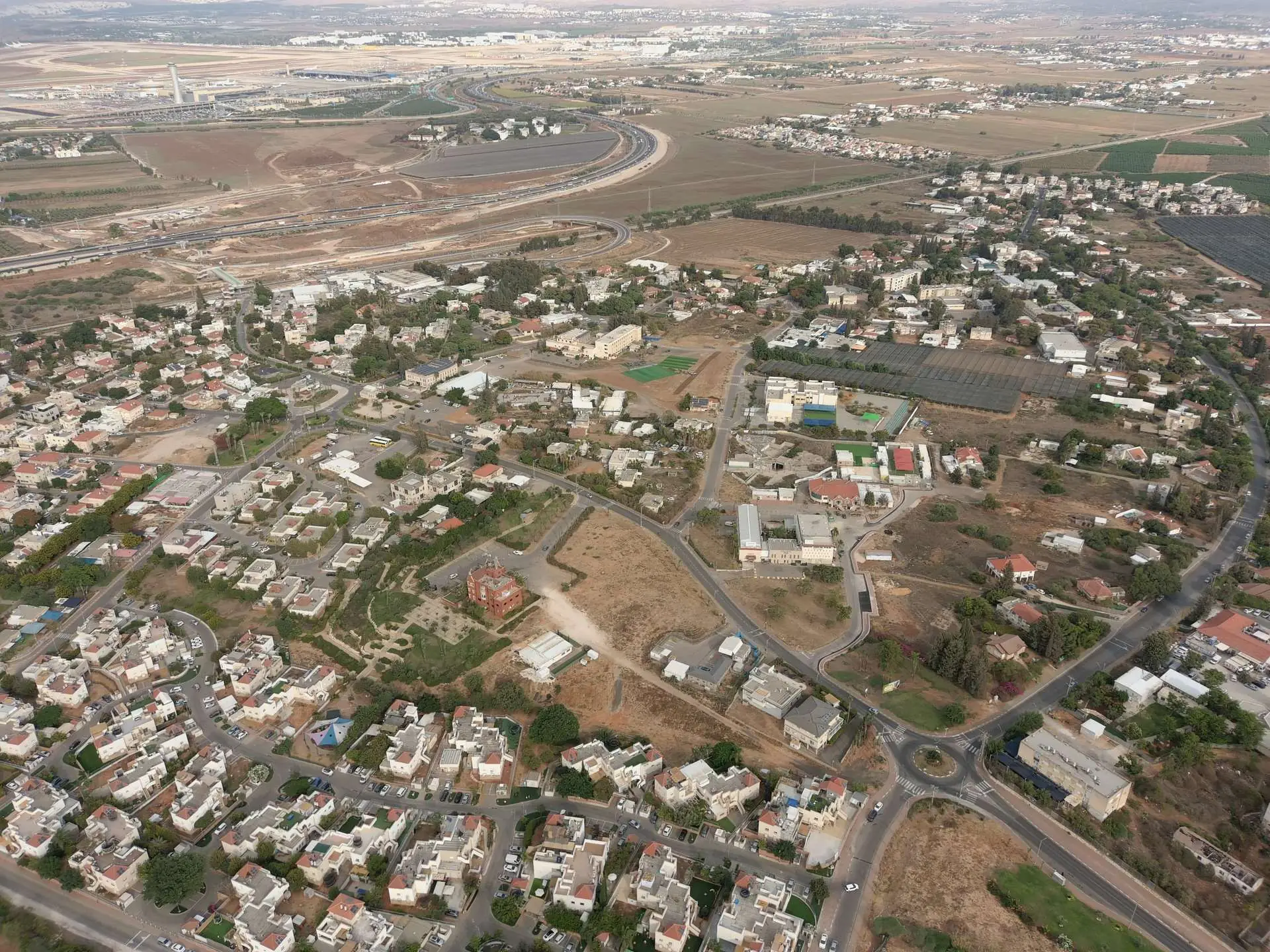
Kfar Chabad is a Hasidic community village of 6,391 residents (CBS, 2024), between Lod and Beit Dagan, about eight kilometres southeast of Tel Aviv. Founded in 1949 by the Chabad-Lubavitch movement, it is its headquarters in Israel: yeshivas, schools, synagogues and community life shape a property market apart, narrow and highly specific.
Population: 6,391
Why invest in Kfar Chabad
Kfar Chabad is not a town like any other: it is a community village of the Chabad-Lubavitch movement, in the Central District, under the Sdot Dan Regional Council, between Beit Dagan and Lod, about eight kilometres southeast of Tel Aviv. With 6,391 residents according to the Central Bureau of Statistics (CBS, 2024), 99.96% of them Jewish, it is a place where daily life is organised around Torah, study and community. The village was founded in 1949 on the initiative of the sixth Lubavitcher Rebbe, Rabbi Yosef Yitzchak Schneersohn: its first residents were some fifty families of Chabad Hasidim, Holocaust survivors and immigrants from the Soviet Union who had survived the war and Stalinist oppression. Their project was to earn their living from the land while remaining faithful to their way of life: livestock, poultry, citrus and field crops sustained the first decades of the village, inaugurated in 1949.
Today agriculture has receded, but Kfar Chabad has become the headquarters of the Chabad-Lubavitch movement in Israel. The village concentrates leading religious and educational institutions: yeshivas of the Tomchei Tmimim network, a seminary for girls, a vocational school teaching printing, mechanics, carpentry and agriculture, schools running from kindergarten to rabbinical college, and dozens of synagogues. At the heart of the village stands a full-scale replica of 770 Eastern Parkway, the movement's world headquarters in Brooklyn: the building, which serves as a synagogue, contains the same number of bricks as the original, and its construction, costing 700,000 dollars, was covered by the Rebbe. The village is also a place of remembrance: on 11 April 1956, five children and a teacher were killed in the vocational school synagogue during an attack, and a printing school was dedicated to their memory. Every year, the great festivals of the Hasidic calendar, such as Yud-Tet Kislev, the anniversary of the release of the movement's founder, Rabbi Shneur Zalman of Liadi, bring thousands of visitors.
Life in Kfar Chabad is recognisable by its signs: lampposts decorated with portraits and quotations of the Rebbe, a small supermarket around the central roundabout, streets with no traffic lights, neighbours who all know each other — people find their way by family names rather than by addresses. Figures from 2008 show how young the population is: half of the residents were then children, and the median age was 17. Most adults work in education, services or commerce, and many leave as emissaries of the movement, the shluchim, to Jewish communities around the world. The students of the institutions often come from outside the village and are not all Hasidic. For transport, the village has its own railway station, built in 1952 and rebuilt in 1999, on the Binyamina–Ashkelon line, which runs via Tel Aviv and Lod. By car, Lod and Beit Dagan are a few minutes away, then Routes 1 and 4 and Ben Gurion Airport, about twenty minutes away.
On the property side, Kfar Chabad is a niche market, to be understood before taking any step: homes are exchanged mostly within the Chabad community, in a community framework where religious life — Shabbat, kashrut, study — shapes daily life. IsraelStart lists no new developments in the village as of October 2026, so this page is a guide: no local catalogue, but support for buying resale, with the resale guide and the personalised search, which lets you target a home in the village or, failing that, in the neighbouring cities of Lod, Ramla and Rishon LeZion. There is no sourced figure for price per square metre or rental yield for Kfar Chabad: this page publishes none. As everywhere in Israel, buying involves checking the title deed at the Tabu, support from a lawyer and payment of the purchase tax, mas rechisha, whose amount depends on the price of the property and the status of the buyer: the legal guide and the tax and fees simulator from IsraelStart explain the calculation, with no figures quoted on this page. The financing simulator and the budget-by-city simulator help frame the project before viewing.
Kfar Chabad suits first and foremost families of the Chabad movement who want to live at the heart of their community, close to the yeshivas and institutions, and buyers who know the village and embrace its way of life. It is not a classic buy-to-let market: supply is scarce, demand is community-based, and resale happens within the same circle. For a buyer from outside the movement, the first step is to understand this way of life and to visit the village, its institutions and its station, before considering a purchase. The pages on Lod, Ramla and Rishon LeZion complete this guide for comparison with more conventional markets, a few minutes away.
- Living at the heart of your community: For Chabad families, living in Kfar Chabad means living next to the yeshivas, synagogues and institutions of the movement.
- Education from kindergarten to rabbinate: Few villages offer such a density of educational institutions: it is the first reason families live here.
- Village quiet, Tel Aviv jobs: Streets with no traffic lights and village life, eight kilometres from Tel Aviv and twenty minutes from the airport.
- A history that matters: Founded in 1949 by Holocaust survivors and immigrants from the Soviet Union, the village carries a strong history, kept alive by its institutions.
- A place of festivals and visits: Yud-Tet Kislev, Lag BaOmer and the great Hasidic festivals bring thousands of visitors to the village every year.
Key advantages
- The heart of the Chabad movement in Israel: Headquarters of Chabad-Lubavitch in Israel, the village concentrates yeshivas, schools, synagogues and institutions known around the world.
- A close-knit community: With 6,391 residents who know each other, intense religious and community life, and festivals that bring thousands of visitors, village life is very strong here.
- Educational institutions from kindergarten to rabbinate: Schools, a girls' seminary, Tomchei Tmimim yeshivas and a vocational school: education is the lifeblood of the village and attracts students from across the country.
- A railway station in the village: Kfar Chabad station, on the Binyamina–Ashkelon line, connects the village to Tel Aviv, Lod and Ashkelon: a rare asset for a village of this size.
- Eight kilometres from Tel Aviv: Between Lod and Beit Dagan, the village is minutes from Routes 1 and 4, Ben Gurion Airport and the Tel Aviv employment basin.
Infrastructure & Transport
- Kfar Chabad railway station: Built in 1952 and rebuilt in 1999, the station serves the Binyamina–Ashkelon line, via Tel Aviv and Lod.
- Roads and access: By car, Lod and Beit Dagan are a few minutes away, then Routes 1 and 4, and Ben Gurion Airport about twenty minutes away.
- Institutions and services: Yeshivas, schools, synagogues, local shops and community services: the essentials of daily life are found in the village.
- The 770 replica: The full-scale replica of the Brooklyn world headquarters, which serves as a synagogue, is the village landmark and a place visited by thousands of people.
Investment profile
- A niche community market: Supply is scarce and demand is community-based: homes are exchanged mostly within the Chabad movement. No sourced rental yield figure is available for this village, so we publish none.
- Demand from the institutions: The yeshivas and schools attract students and families from across the country every year, supporting demand for housing in the village and nearby.
- Typical tenants: Families of the movement, teachers and staff of the institutions, yeshiva students: a local, community rental market, not a classic investment market.
Neighborhoods of Kfar Chabad
Village centre — around the 770
Yeshiva and school area
Agricultural area and orchards
Station area
Residential extensions
New build or resale in Kfar Chabad
In Kfar Chabad, you can compare the new developments listed in our catalogue or entrust us with the search for an existing property. The choice depends on your timeline, overall budget and target neighbourhood.
For resale, we define a brief with you — neighbourhood, number of rooms, mamad, lift, parking, outdoor space — then consult several sources and present an explained selection, with trade-offs and points to confirm.
Search in Kfar Chabad Buying resale property: the guideFrequently asked questions about Kfar Chabad
What is Kfar Chabad?
Kfar Chabad is a community village of the Chabad-Lubavitch movement, in the Central District, between Beit Dagan and Lod, about eight kilometres southeast of Tel Aviv. It has 6,391 residents (CBS, 2024) and serves as the movement's headquarters in Israel.
Can I buy a new property in Kfar Chabad?
IsraelStart lists no new developments in Kfar Chabad as of October 2026: the local market is resale, within a community framework. The personalised search lets you target a resale home in the village and be alerted if a new development appears, or compare with new developments in Lod, Ramla and Rishon LeZion.
Do I need to be part of the Chabad movement to buy there?
The village market is mostly community-based: homes are exchanged within the Chabad movement, and daily life is organised around religious practice. A buyer from outside the movement must understand this framework before starting, and visit the village and its institutions.
How do I get to Kfar Chabad?
The village has its own station, on the Binyamina–Ashkelon line, via Tel Aviv and Lod. By car, Lod and Beit Dagan are a few minutes away, and Ben Gurion Airport about twenty minutes away.
Do I pay purchase tax (mas rechisha) in Kfar Chabad?
Yes, as everywhere in Israel: purchase tax applies to every acquisition, and its amount depends on the price of the property and the status of the buyer. IsraelStart's legal guide and tax and fees simulator explain the calculation, with no figures quoted on this page.
Similar cities
Discover other nearby cities or in the same price range.