Improvement Tax in Israel: The Lesson from Kikar HaMedina's 45 M₪
When buying a property in Israel, we think about the purchase tax, VAT, and fees. We often forget another tax that doesn't target the transaction but rather urban planning: the betterment tax, or hetel hashbacha. A Supreme Court decision reported this week, regarding Kikar HaMedina in Tel Aviv, provides a 45 M₪ example. It concerns landowners, but its lessons apply to any buyer, whether from abroad or already living in Israel.
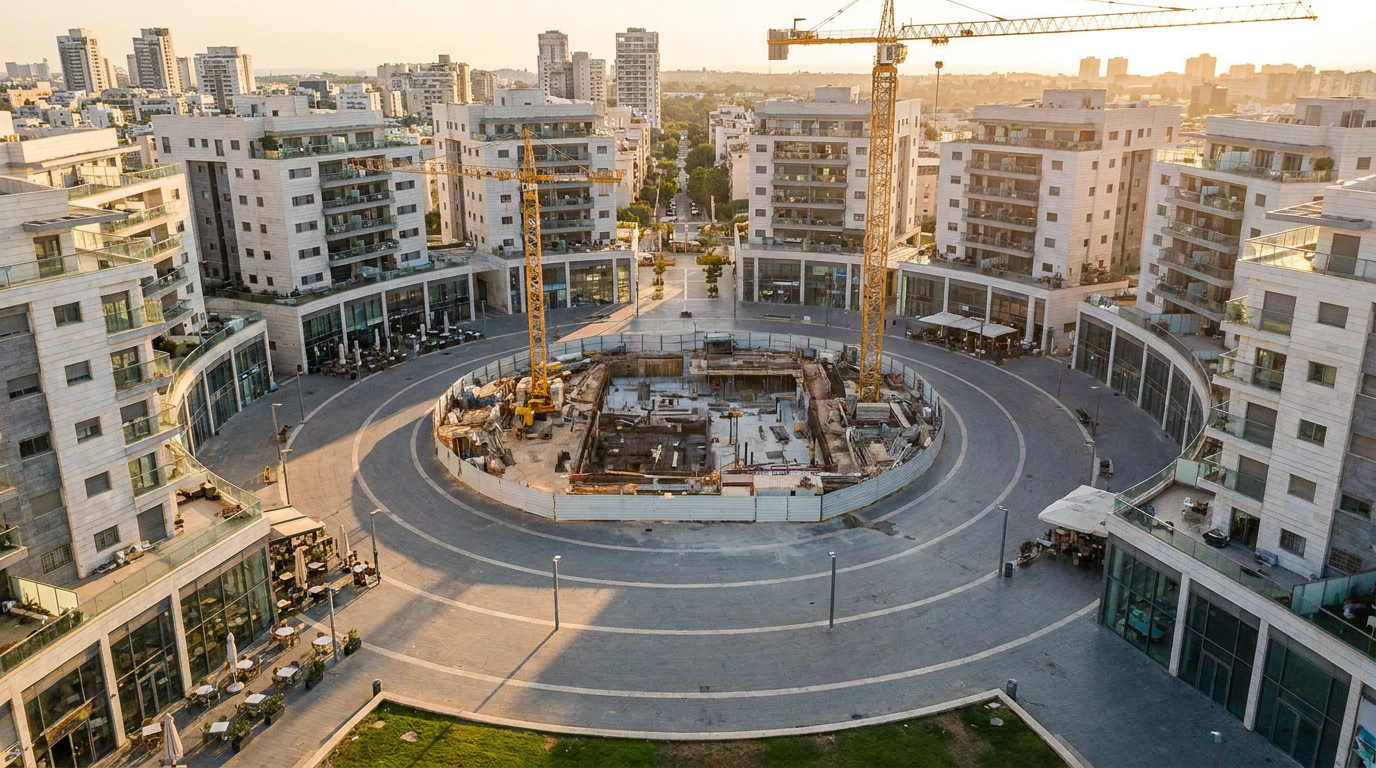
Kikar HaMedina: A Quarter Century of Plans
According to Globes, on October 7, 2026, the Kikar HaMedina project is being led by about 270 private owners, who have come together after decades of delays and disputes to build collectively. The plan has evolved in three stages.
| Plan Year | Content |
|---|---|
| 2000 | 3 towers of 25 floors, 387 apartments, commercial spaces, road tunnel under the square |
| 2013 | commercial spaces converted into apartments, towers increased to 40 floors, 453 apartments |
| 2018 | tunnel canceled, addition of service areas, change in phasing |
It was the 2018 plan that triggered the dispute. The Tel Aviv local committee demanded 135 M₪ in betterment tax. The owners, on the other hand, argued that canceling the tunnel devalued their land, with traffic on the square increasing by 15 to 20%, along with more noise and pollution.
Three Instances, One Conclusion
The appeals commission ruled that the plan had changed the situation and advanced the project's completion by several years. It appointed an appraiser, who considered traffic but assessed its impact as limited. The tax was reduced to 45 M₪, about a third of the initial demand.
| Step | Decision | Amount |
|---|---|---|
| Tel Aviv local commission | initial demand | 135 M₪ |
| Appeals commission, after appraisal | reduction | 45 M₪ |
| Administrative affairs court | both appeals rejected | 45 M₪ |
| Supreme Court | refused to allow a new appeal | 45 M₪, plus 5,000 ₪ in costs |
The Supreme Court did not redo the appraisal. It found that the request raised neither a fundamental question nor a risk of injustice. Regarding service areas, the courts held that they were created by the plan and enabled the specific building design. On the exemptions claimed for secure rooms and accessibility, the Court noted that the legal mamad areas were already not taxed.
Key Principle to Remember
Globes draws a clear lesson: added value depends not only on the number of apartments or square meters. Changing the conditions for carrying out a project, so it is completed sooner, also creates value, as owners receive their apartments or sale proceeds more quickly.
Improvement Tax at a Glance
- What triggers it: Approval of a plan or an exemption that increases the value of a property.
- Amount: In principle, half of the capital gain created, as estimated by an appraiser.
- When it is paid: Upon realization of rights, that is, at the sale of the property or when applying for a building permit.
- Who collects it: The local planning commission, meaning the municipality.
- Appeals: Objection before an arbitrator appraiser or an appeals commission, as in the Kikar HaMedina case.
These general principles include exemptions and special regimes, especially in urban renewal. They must be validated by a lawyer for each case.
What This Means for a Buyer
For New Builds
The developer usually covers the tax related to existing plans and includes it in the price. The key point to watch is for plans approved between signing and delivery: the contract must specify who is responsible for this cost.
For Existing Properties
It is customary for the seller to pay the tax related to plans approved before the sale. However, a seller may discover a significant debt late in the process, which can delay the transfer. Requesting the municipal tax status certificate in advance helps avoid unpleasant surprises.
For Land or a House
Buying a property "with potential" sometimes means buying a future improvement tax: if a plan later increases your building rights, you will generally pay half the added value when you build or resell. This is especially true in cities where additional rights are being reinstated, as we explain in our article on the return of construction reliefs.
All Taxes to Anticipate
The improvement tax is added to the rest. For a new property, the 18% VAT is included in the price; closing costs represent 10 to 13%; the purchase tax must be checked according to your profile, as detailed in our Mas Rechisha guide. Our taxes and fees calculator gives an initial estimate.
A buyer from abroad should also check how this interacts with the tax system in their country of residence. An Israeli already in Israel who sells to buy again must include any potential improvement tax in their financing plan.
Three experts to secure your file
Urban planning taxation involves three professionals: lawyer · broker · architect. The lawyer checks approved plans, tax debts, and the allocation clause; the architect identifies the truly usable building rights; the broker incorporates taxes into the financing plan.
See the Tel Aviv page to locate the developments. IsraelStart lists 300+ new projects across Israel: request a personalized assessment, with no obligation.
Sources
- Globes — Kikar HaMedina: appeal rejected, 45 M₪ betterment tax (07/10/2026)
- Nadlan Center — Supreme Court rejects the appeal of Kikar HaMedina beneficiaries (07/10/2026)
- Globes — The return of construction reliefs (06/10/2026)
Sources
- Source 1
- Source 2
- Source 3