Olim Tax Law: Israel's Exemption Extended to February 10, 2027
On October 28, 2026, the Israel Tax Authority (Rashut HaMisim) confirmed that the eligibility period for the new olim tax exemption, originally closing on December 31, 2026, runs until February 10, 2027. This exemption on earned income produced in Israel can reach 1,000,000 ₪ a year in 2027 and 2028. Who is eligible, which income is covered, how to claim the benefit, and which pitfalls to avoid.
A tax law passed in March 2026 lets new immigrants (Olim Hadashim) pay no income tax, for the first time, on part of what they earn in Israel, over five years. The deadline to qualify has just been pushed back: according to the Israel Tax Authority, it moves from December 31, 2026 to February 10, 2027. Here, point by point, are the conditions to meet and the pitfalls to avoid, so you can tell whether this applies to you.
The essentials at a glance
| Item | Details |
|---|---|
| Nature of the measure | income tax exemption on earned income produced in Israel, from 2026 to 2030 |
| Beneficiaries | olim who became Israeli residents for the first time, and veteran returning residents (at least 10 years abroad) |
| Eligibility period starts | November 5, 2025 |
| Eligibility period ends | December 31, 2026 originally, extended to February 10, 2027 |
| Annual caps | 600,000 ₪ (2026), 1,000,000 ₪ (2027 and 2028), 350,000 ₪ (2029), 150,000 ₪ (2030) |
| Excluded income | interest, dividends, rent, capital gains |
What does this law do?
This is the Law for Encouraging Aliyah and Return to Israel (temporary provision), published in the official gazette (Reshumot) on March 31, 2026 as part of the Economic Efficiency Law accompanying the 2026 budget, according to the firm Harris Consulting & Tax. Until now, new immigrants enjoyed a 10-year exemption on their foreign-source income, but paid regular tax on what they earned in Israel. The new law adds, for a limited time, an exemption on earned income produced in Israel.
According to the Tax Authority, as cited by the Jerusalem Post, the goal is also to encourage people to work in Israel, since the foreign income of olim was already exempt. This exemption comes on top of the existing benefits: it does not replace them (see below).
> Warning — the November 2025 draft is not the law that was passed. Many French-language publications still describe the draft announced in November 2025 by the Minister of Finance: graduated reduced rates (0% in 2026 and 2027, then 10%, 20% and 30%) under a single cap of 1,000,000 ₪ (announcement reported by Globes; Deloitte tax circular 30.2025). That is not the final text. The law passed in March 2026 works differently: a full tax exemption, but only up to declining income caps — 600,000 ₪ in 2026, then 1,000,000 ₪, 1,000,000 ₪, 350,000 ₪ and 150,000 ₪. If an article promises you "0% tax for two years" without mentioning the first-year cap of 600,000 ₪, it is citing the old draft.

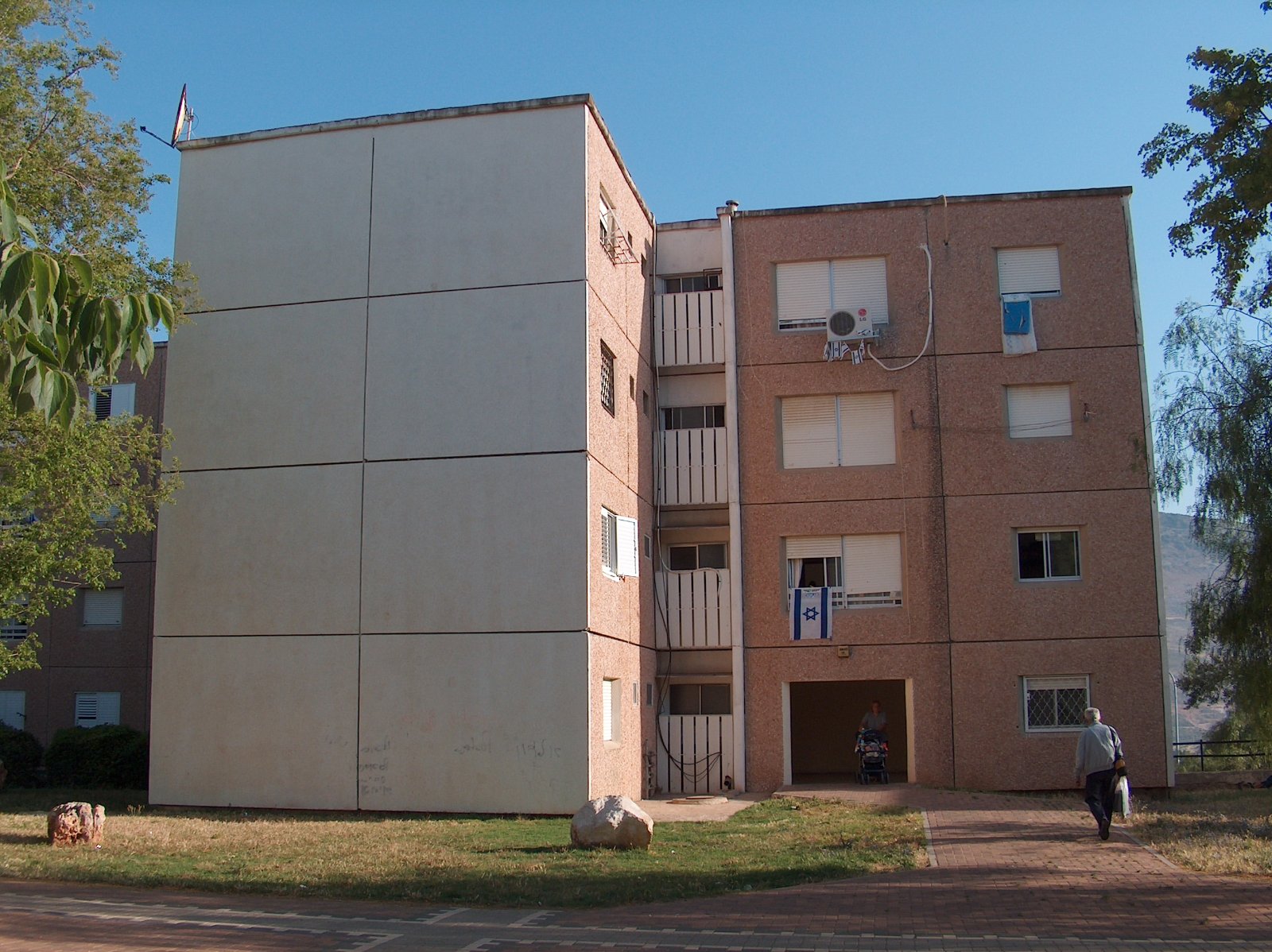
Photo : Hagai Agmon-Snir, CC BY-SA 4.0, Wikimedia Commons
The aliyah deadline is pushed back to February 10, 2027
In its original version, the law covered people who became Israeli residents between November 5, 2025 and December 31, 2026. According to the firm Shibolet, the Tax Authority has published on its website that this period is extended to February 10, 2027, under section 38 of the Basic Law: The Knesset, which keeps in force certain laws expiring around the election period. Kol Zechut, the public rights-information portal, also gives the date of February 10, 2027. The Rashut HaMisim (the Tax Authority) published its position on October 28, 2026, in an announcement on extending tax provisions during the election period (reported by Hashavim), and its official service page already shows the eligibility period "November 5, 2025 – February 10, 2027".
| Point | What we know |
|---|---|
| New deadline | February 10, 2027 |
| Who benefits | olim who became residents between January 1 and February 10, 2027 |
| Years covered for them | 2027 to 2030 only, not 2026 |
| Legal status | Tax Authority position, not yet incorporated into the updated circular (Circular 7/2026) |
| Open questions | how the 2027 cap is computed for a mid-year arrival, and the days-of-presence test: not yet specified |
Above all, remember this: if you arrive between January 1 and February 10, 2027, you may be eligible, but you have no entitlement for 2026. An updated circular is expected: watch for it before fixing your date.
The exempt-income caps, year by year
The exemption phases down and applies, each year, up to an income cap.
| Year | Exempt-income cap | Note |
|---|---|---|
| 2026 | 600,000 ₪ | computed pro rata to the period of residence |
| 2027 | 1,000,000 ₪ | full annual cap |
| 2028 | 1,000,000 ₪ | full annual cap |
| 2029 | 350,000 ₪ | reduced cap |
| 2030 | 150,000 ₪ | reduced cap |
For someone who became a resident at the very start of 2026, the maximum total of exempt income reaches 3.1 million ₪ over five years, according to Bizportal (600,000 + 1,000,000 + 1,000,000 + 350,000 + 150,000). Note: this is a cap on exempt income, not an amount of tax saved. The actual saving depends on your tax bracket.
Who is eligible?
Two categories of beneficiaries
| Category | Condition |
|---|---|
| New immigrant (Oleh Hadash) | become an Israeli resident for the first time during the eligibility period |
| Veteran returning resident | have been a foreign resident for at least 10 consecutive years before returning |
In both cases, you must have become an Israeli resident on or after November 5, 2025 and, according to the Tax Authority, no later than February 10, 2027. People who became residents before November 5, 2025 are not covered by this new exemption. They keep their existing benefits.
Your center of life counts, not the date on your certificate
According to the firm vTax, the decisive test is the date on which your center of life actually moved to Israel, not the date printed on your Oleh certificate issued by the Ministry of Aliyah. The same firm notes that electing an adaptation year does not postpone the date on which you become a resident for purposes of this benefit.
In practice:
- someone who received their Teudat Oleh (immigrant certificate) before 2026 but only truly settles in Israel in 2026 may be eligible;
- conversely, someone who obtains the status in 2026 but only moves their center of life after the eligibility period ends is not.
Tax Authority Circular 7/2026 spells out this center-of-life review: days of presence in Israel, a permanent home, where the family lives, economic activity and social ties. The authority has even put a days-of-presence calculator online so anyone can check their situation.
Which income is exempt (and which is not)?
The law covers earned income produced in Israel: salaried work, self-employment, a business, a professional practice.
| Exempt, up to the cap | Not covered by this law |
|---|---|
| salary from an activity performed in Israel | interest |
| income from self-employment or a business in Israel | dividends |
| income from a professional practice in Israel | rental income |
| capital gains and real estate gains |
Working for a relative: a much lower cap
According to Kol Zechut, for 2026, the cap drops to 140,000 ₪ for anyone whose income comes solely from a "relative" as defined by the law, versus 600,000 ₪ for everyone else. The rule is meant to prevent artificial arrangements. If you work for a family member or for a company they control, have your situation reviewed.
Mixed income
When an activity is performed partly in Israel and partly abroad, according to attorney David Melnik, the share tied to the activity abroad stays exempt under the existing 10-year exemption, and the share tied to the activity in Israel benefits from the new exemption, up to the cap. These cases require an individual analysis.
Tax year 2026: the pro-rata calculation
For 2026, the 600,000 ₪ cap is reduced in proportion to the part of the year during which you were an Israeli resident, computed by number of days, according to the Tax Authority. The 2027 to 2030 caps are unchanged.
| Date you become a resident | Share of tax year 2026 | 2026 cap |
|---|---|---|
| January 1, 2026 | 100% | 600,000 ₪ |
| March 1, 2026 | about 84% (306 days out of 365) | about 503,000 ₪ |
| July 1, 2026 | 50% | 300,000 ₪ |
Only the July 1 example comes directly from Kol Zechut; the March 1 line is an indicative calculation based on the day-count pro-rata rule.
The 75-day condition in 2028 and 2029
The law includes an anti-abuse clause: to keep the exemption, you must remain an Israeli tax resident and spend at least 75 days in Israel in 2028 and in 2029, according to the Labinsky firm and JNS. Someone who spends fewer than 75 days in Israel in either of those years loses the right to the exemption. According to Afik & Co and Saporta Penn Chen, the exemption is then lost for the earlier years as well, with substantial payment demands from the Tax Authority. This is a point to plan for before deciding how you will split your life between France and Israel.
How do you actually claim the exemption?
For tax year 2026, the exemption is not applied directly on your payslip. According to Kol Zechut and Bizportal, it must be claimed after the tax year ends:
- employees: an income tax refund claim after the end of 2026;
- self-employed: the annual tax return;
- the official route is Form 116ע, submitted to the Tax Authority: its service page (gov.il) describes the steps, which are free of charge, and notes that online tax coordination is available up to 300,000 ₪ of annual earned income;
- under Tax Authority Circular 7/2026, the exempt-income ceiling recognized through tax coordination for 2026 is 300,000 ₪ if you are not required to submit an annual return, and 500,000 ₪ if you are — these are coordination ceilings, distinct from the exemption caps themselves;
- an approval obtained this way does not remove the duty to submit an annual return where it applies for other reasons (self-employment, income from a foreign employer, income above certain thresholds).
According to the firm Dray & Dray, the exemption is automatic, but you may choose not to use it if that better serves your tax planning.
Working for a foreign company
Many future olim will keep working for a company located outside Israel. According to vTax, the law provides that between 2026 and 2030, a non-resident company is not taxed in Israel on income that results solely from your personal work, even if your presence could create a permanent establishment. This protection is useful for business owners and remote employees.
What stays the same, and what changes
| Topic | Situation |
|---|---|
| 10-year exemption on foreign-source income | unchanged |
| Tax credit points | unchanged: for an aliyah from 2022 on, they spread over 54 months; a point is worth 2,904 ₪ a year in 2026, 242 ₪ a month |
| Reporting of worldwide income and assets | required of olim who became residents from 2026 on, even for exempt income |
| Reporting exemption for foreign income and assets | removed for people who became residents on or after January 1, 2026 (Amendment 272 to the Income Tax Ordinance); the 10-year exemption on that income itself remains in force |
| National insurance contributions (Bituach Leumi) | still due despite the income tax exemption |
This reporting duty is the most significant change for future olim: get your asset records and documentation ready before you arrive.
Checklist before you decide
1. Pin down the actual date on which you will become an Israeli tax resident and check that it falls within the eligibility period.
2. Estimate your earned income in Israel for each year and compare it with the caps.
3. Identify your passive income: rent, dividends, interest and capital gains follow other rules.
4. If you work for a relative or for a company you control, have the 140,000 ₪ cap checked.
5. Plan for at least 75 days of presence in Israel in 2028 and 2029.
6. Prepare your reporting of worldwide income and assets.
7. Consult an Israeli CPA or tax attorney before fixing your move date.

Photo : Effib, CC BY-SA 4.0, Wikimedia Commons
What about your real estate plans in Israel?
Higher net income in the first years helps build a down payment and absorb the monthly payments. But the bank assesses your borrowing capacity by its own criteria: a temporary, declining exemption is not necessarily treated as durable income. Check this with a mortgage broker before building a financing plan on these amounts.
Another benchmark: if you buy before your aliyah, financing for a non-resident is capped at 50% of the price, as we explain in our article on parents helping with a mortgage. Test your budget with the financing simulator.
From abroad or already in Israel
For those still preparing their aliyah
Timing is your first lever: arriving in 2026 entitles you to the 2026 exemption on a pro-rata basis, while arriving between January 1 and February 10, 2027 entitles you only to the years 2027 to 2030. Have a tax advisor confirm your date before booking your flight or signing a lease.
For buyers who keep an activity in France
If you keep income outside Israel, it falls under the 10-year exemption, with the new duty to report it. Your situation with France (tax residence, tax treaty) must also be checked on the French side.
Getting professional support
Work out the full cost of your purchase: 18% VAT included in the price of a new home, closing costs of 10 to 13%, and purchase tax (Mas Rechisha) to be confirmed for your situation, with our tax and closing-cost simulator and our Mas Rechisha guide. A timing note: the same extension mechanism to February 10, 2027 also extends other temporary provisions, including the Mas Rechisha rates that apply to buying an additional home (Hashavim) — without changing the schedules that apply to olim themselves, detailed in our dedicated guide.
Three specialists support you: attorney · mortgage broker · architect, joined here by a CPA or an Israeli tax specialist to validate your eligibility.
Every situation is specific. The rules above are general principles, current as of November 11, 2026, and must be verified against your personal tax situation. This article is not tax or legal advice.
IsraelStart lists 300+ new projects across Israel: browse the catalog and request a personalized assessment, with no obligation.
Sources
- Kol Zechut — Income tax exemption for olim hadashim and veteran returning residents (accessed 11/11/2026)
- Shibolet & Co — Extension of the eligibility period for the tax benefits (accessed 11/11/2026)
- Tax Authority, via Arnon, Tadmor-Levy — implementation of the tax benefits (accessed 11/11/2026)
- Jerusalem Post — Knesset advances bill granting five-year tax exemption to olim, returning residents
- Jerusalem Post — Your Taxes: The budget's tax breaks
- Harris Consulting & Tax — New Immigrant Exemption for Israeli source income
- Bizportal — Exemption up to one million shekels: the guide for olim and returning residents
- vTax — Tax exemption for olim on income in Israel
- JNS — Israel offers income-tax break to encourage aliyah
- Dray & Dray — Olim Hadashim: the complete guide to your rights and benefits
- Labinsky — The Aliyah math just changed
- Afik & Co — Red carpet or trap: a historic benefit for olim
- David Melnik, attorney — The complete guide to the temporary aliyah-encouragement measure
- Cole & Waxman — New 2026 Israeli Tax Rules for U.S. Olim
- i24news — Zero tax for two years: Israel launches a sweeping tax reform to encourage aliyah
- Dray & Dray — New 2026 tax reform explained (optional exemption)
- Tax Authority (Rashut HaMisim) — official service page: application for tax relief for olim and returning residents, 2026-2030 (gov.il, accessed 11/11/2026)
- Tax Authority — Circular 7/2026, temporary measure encouraging aliyah and return (PDF, hosted by Capitax)
- Gornitzky — New tax benefit: income tax exemption on income in Israel for olim and returning residents (PDF, April 2026)
- Gornitzky — Extension of the eligibility period for the exemption for olim and returning residents (November 2026)
- Hashavim / Kol Mas — Extension of tax provisions to February 10, 2027 under section 38 (Tax Authority announcement of October 28, 2026)
- HOCPA — Extension of tax provisions to February 10, 2027: Mas Rechisha, tax benefits and imports
- Malam Payroll — Extension of the Aliyah Encouragement Law benefits, from January 1, 2027 to February 10, 2027
- Saporta Penn Chen — Olim and returning residents: what changed in taxation in 2026 (November 4, 2026)
- Bizportal — Tax preparation ahead of a possible aliyah wave (analysis, October 21, 2026)
- Deloitte Israel — Tax circular 30.2025: the original November 2025 draft (PDF)
- Globes — Smotrich plans 0% income tax for new immigrants (original announcement, November 2025)
- Krief Expertise — Oleh guide 2026: first tax return in Israel (Amendment 272, 140,000 ₪ relative cap)
Sources
- Source 1
- Source 2
- Source 3
- Source 4
- Source 5
- Source 6
- Source 7
- Source 8
- Source 9
- Source 10
- Source 11
- Source 12
- Source 13
- Source 14
- Source 15
- Source 16
- Source 17
- Source 18
- Source 19
- Source 20
- Source 21
- Source 22
- Source 23
- Source 24
- Source 25
- Source 26
- Source 27
- Source 28