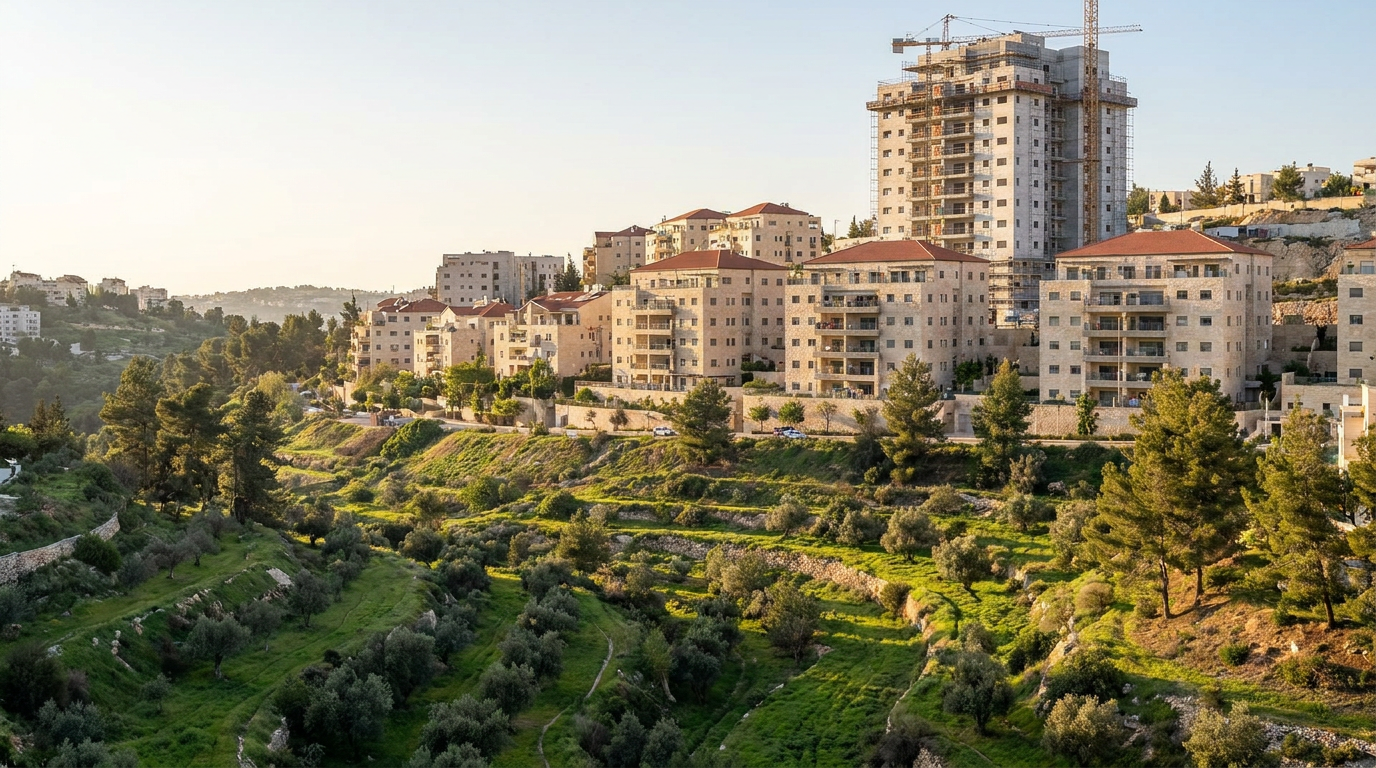
Jerusalem: a 25-story tower in Kiryat HaYovel, battle in Ein Karem
In Jerusalem, high-rise construction is never a neutral topic. Between demographic pressure, scarce land, and a unique historical landscape, every tower is up for debate. Two projects this week, both located in the same southwestern area of the city, provide a useful illustration for any buyer—whether preparing their project from abroad or already among Israelis living in Israel.
Kiryat HaYovel: 190 Housing Units Approved on Borochov Street
According to Nadlan Center, on October 7, 2026, the Jerusalem District Committee approved an urban renewal plan for Borochov Street in Kiryat HaYovel. Three old buildings will be demolished and replaced by a tower of about 25 floors and a 10-story building, including shops and public facilities. The project will roughly quadruple the number of housing units on the site: this increased density funds the relocation of current owners into new apartments.
According to the project leaders, the local committee supports the initiative and around 75% of owners have given their consent. They hope to start construction in 2027. One of them mentioned preparing over twelve projects in Jerusalem, totaling around 4,500 housing units: a figure to be considered cautiously, as with any project pipeline.
Ein Karem: Four Towers and an Appeal
The second case is more contentious. Nadlan Center detailed on October 6 the appeal filed against a large-scale plan located on open land between Kiryat HaYovel and the historic village of Ein Karem. The district commission approved it on July 16. Three of its own members, including a deputy mayor, referred the matter to the appeals subcommittee of the National Planning Council to seek its cancellation or revision.
| Case | Kiryat HaYovel, Borochov Street | Plan between Kiryat HaYovel and Ein Karem |
|---|---|---|
| Nature | urban renewal | construction on open land |
| Housing units | about 190 (46 today) | more than 1,000 |
| Building size | tower of about 25 floors and a 10-story building | 4 towers of about 30 floors |
| Built area | not specified | about 342,000 m² |
| Other uses | shops, public buildings | hotel, shops, public buildings |
| Status | approved by the district commission | approved, appeal before the National Council |
Source: Nadlan Center.
Arguments of the Opponents
- Heights: municipal policy only allows buildings over 17 floors under certain conditions, which are reportedly not met here.
- Urban nature: the site is classified among the city's urban nature sites, and several groves would disappear.
- Ein Karem: the towers would move closer to the village houses and reduce the green buffer, which could harm its candidacy for World Heritage status.
- Traffic: the access road is already congested, according to an expert report attached to the objections.
- Tramway: the site is not on the line; the planned connection by elevators, walkways, and escalators has never been implemented in Jerusalem.
- Competition with urban renewal: more than 12,000 housing units are already approved in the area, and a thousand units on open land could undermine these projects.
The investigator in charge of the objections recommended rejecting most of them, while removing a hotel building and imposing phasing. The applicants believe that the commission did not fully follow these recommendations.
What These Two Cases Teach Buyers
An Approved Plan Is Not a Final Plan
The example of Ein Karem shows that a district approval can still be challenged at the national level. An appeal may reduce the number of floors, require phasing, or delay the entire project for several years.
Urban Renewal Has a Political Advantage
Rebuilding on an already developed site faces less opposition than building on open land. This is one of the reasons why urban renewal plays a major role in new housing supply in Jerusalem. Building regulations are also evolving in other cities, as we explain in our article on the return of construction easements.
The Future Environment Matters as Much as the Apartment
With more than 12,000 approved housing units in the area, southwest Jerusalem is set for major changes: views, traffic, schools, shops. An apartment should also be judged by what its neighborhood will become.
Buying in Jerusalem: The Method
For buyers from abroad, Jerusalem is often a purchase from the heart. All the more reason to demand facts: project stage, existence of appeals, permits, contractual timeline. Also ask if the project depends on a neighboring plan that is not finalized: access, schools, or roads may be linked to a contested development. For Israelis already living in Israel, the decision often comes down to distance from the light rail and budget: test your capacity with our financing simulator.
In both cases, calculate the full cost: 18% VAT included in the price of new properties, closing costs of 10 to 13%, and purchase tax, to be checked according to your profile using our Mas Rechisha guide.
Be accompanied by three experts: lawyer · broker · architect. The lawyer checks ongoing appeals and the contract, the broker structures the mortgage, the architect analyzes the plans, neighboring heights, and orientation.
See the Jerusalem page to locate current developments. IsraelStart lists 300+ new projects across Israel: request a personalized review, with no obligation.
Sources
- Nadlan Center — Jerusalem: 190 housing units and a 25-story tower approved in Kiryat HaYovel (07/10/2026)
- Nadlan Center — Ein Karem: the appeal against a plan for four towers (06/10/2026)
- Nadlan Center — Podcast: urban renewal project journals (04/10/2026)
Sources
- Source 1
- Source 2
- Source 3