Gush Dan Metro: 65 BILS₪ of Works Planned, What Impact on Real Estate?
The metro of the Tel Aviv metropolis, the Gush Dan, is one of Israel's largest infrastructure projects. In early October 2026, it reached a major milestone with the selection of companies authorized to compete for the major civil engineering works. For a buyer from abroad as well as for Israelis already in Israel, the question is simple: should the metro be factored into a purchase project, and how?
What Was Announced
According to Nadlan Center, the public company in charge of mass transit has published the results of the prequalification phase for the so-called Infra 1 tenders. Nineteen consortiums, made up of 31 Israeli and international companies, have passed the threshold. They will be able to submit bids for works estimated at around ₪65 billion.
The international companies come notably from India, the United States, Greece, China, South Korea, and France. A cap on the number of lots per consortium is being considered to limit risks.
Scope of the Works
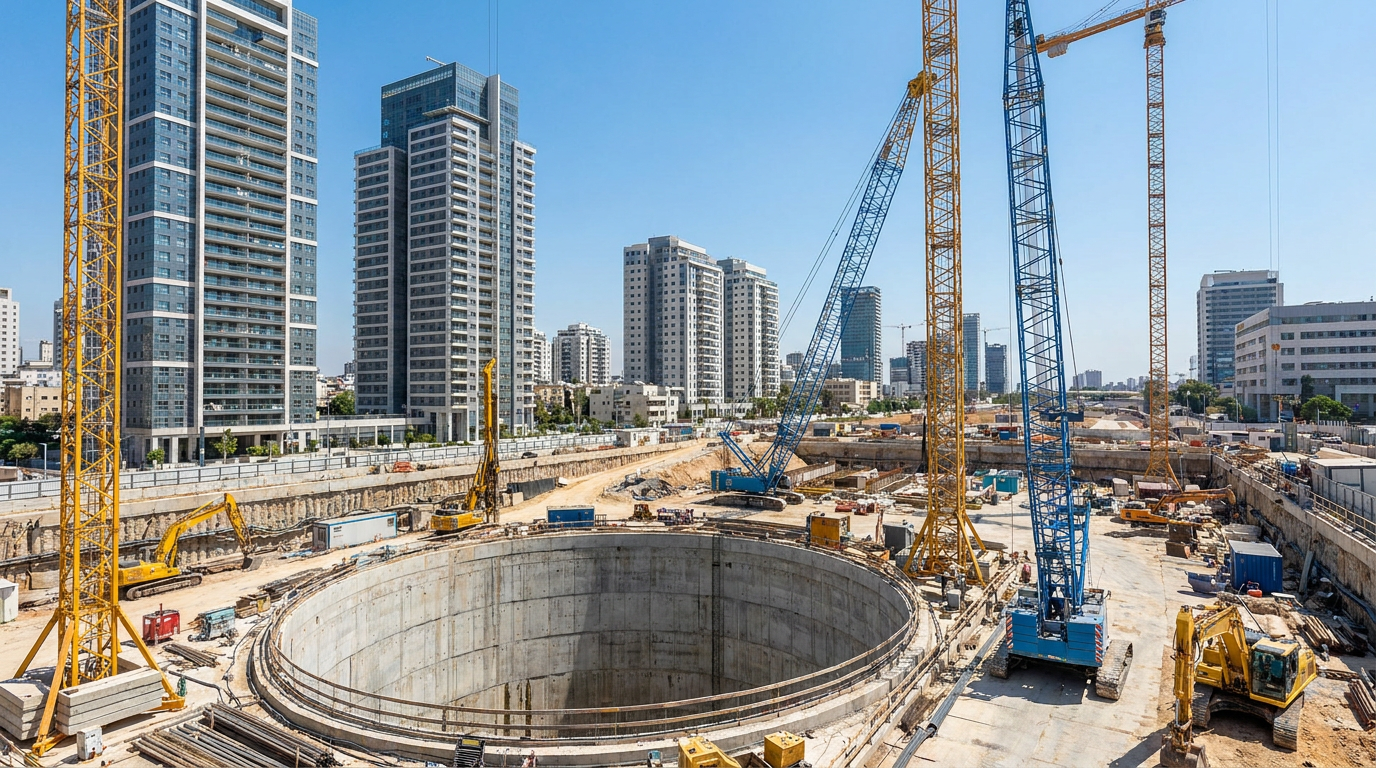
Infra 1 covers the core of civil engineering: tunneling, underground station structures, and the works connecting the street to the platforms. This concerns the central section of the M1 line, the entire M2 line, and more than half of the M3 line.
| Element | Value |
|---|---|
| Qualified consortiums | 19 (31 companies) |
| Infra 1 works value | around ₪65 billion |
| Double tunnels involved | around 75 km |
| Underground stations involved | 59 |
| Infra 2 tenders (systems, trains) | around ₪30 billion |
| Complete network | 3 lines, around 150 km, 109 stations |
| Municipalities crossed | 24 |
| Expected ridership | over 600 million trips per year |
Prequalification for a second series of tenders, Infra 2, has just opened for systems: train sets, signaling for automated trains, electricity, and communications. The company's CEO mentions the continuation of preparatory works throughout the Gush Dan area starting in 2027.
What the Listing Doesn't Say
The article gives neither a submission deadline for offers, nor a start date for excavation, nor an opening date. This is a crucial point for a buyer: building a metro takes many years, and schedules for this type of project often slip. A purchase that would only be profitable if the metro opens on a specific date is based on a fragile assumption.
The Metro Is Already Changing Urban Planning
While the timeline remains uncertain, the impact on urban planning is already visible in this week's news.
- Raanana is updating its master plan, taking into account the progress of the metro and the national policy of densifying areas around transport hubs. We cover this topic in detail in our article on Raanana's master plan.
- Holon has just signed a roof agreement; its mayor, quoted by Globes, sees this as catching up on decades of infrastructure delays, linked to future tram and metro connections. See the Holon East project.
- Tel Aviv and its neighboring cities are already undergoing significant densification. A study cited by Nadlan Center measures up to a 4°C difference between the dense city and the surrounding open areas: the quality of public spaces and shade will become a key selection criterion.
Buying Near a Future Station: Opportunities and Risks
Advantages
Heavy transport permanently improves accessibility and expands the employment area reachable without a car. Urban planning grants more building rights near stations, fueling new developments and urban renewal.
Limitations
- The construction site: several years of work mean noise, dust, and disrupted traffic near shafts and stations.
- Price already factored in: in some neighborhoods, the metro argument is already reflected in listing prices. Compare with similar properties farther from the route.
- Densification: more towers also mean more neighbors, more facing buildings, and greater pressure on public facilities.
- Local taxation: plans that increase building rights generate improvement taxes for landowners, a topic to have checked by your lawyer.
Method for Buyers
For buyers from abroad, the key is not to buy a promise: request the approved site plan and pinpoint the building in relation to the station and its access points. For Israelis already living in Israel, the decision often comes down to daily life: accepting the inconveniences of construction today for better accessibility tomorrow.
In all cases:
1. Assess the current value of the property, excluding the metro, then consider the metro as a bonus.
2. Compare cities with the same budget using our city budget simulator and check out the Tel Aviv page.
3. Include the full cost: 18% VAT included in the price of new properties, closing costs of 10-13%, and purchase tax (Mas Rechisha) to be confirmed based on your profile.
4. Have the project checked by three experts: lawyer · broker · architect. The lawyer reviews permits and contracts, the broker aligns financing with your timeline, and the architect evaluates the future environment of the building.
IsraelStart lists 300+ new projects across Israel, including many developments in the served cities. Request a personalized assessment, with no obligation, to position your project in relation to future lines.
Sources
- Nadlan Center — Metro: 31 qualified companies for ₪65B of works (07/10/2026)
- Nadlan Center — Raanana updates its master plan (06/10/2026)
- Globes — Rooftop agreements: the report (06/10/2026)
- Nadlan Center — Urban heat islands in the Gush Dan (06/10/2026)
Sources
- Source 1
- Source 2
- Source 3
- Source 4