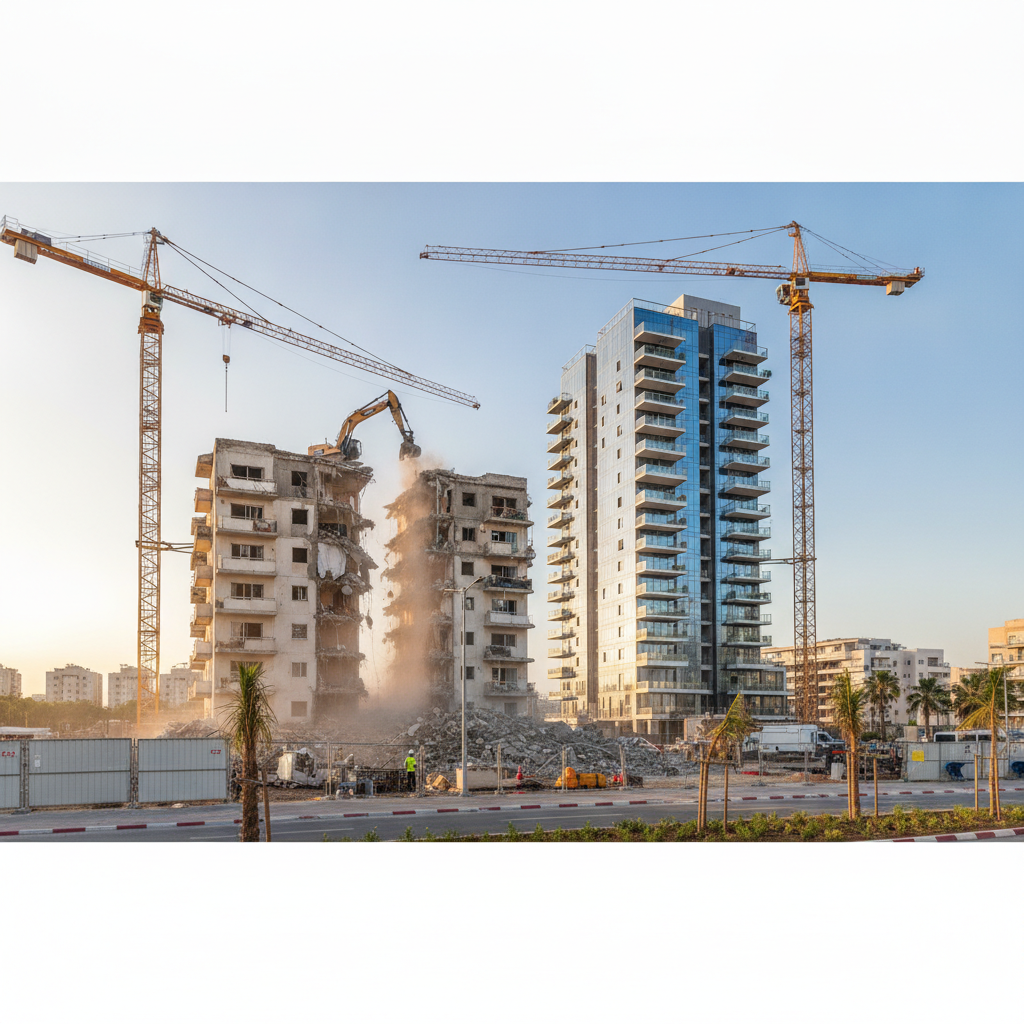
Urban Renovation in Israel in 2026: Construction Sites Declining, Favorable Decisions for Homeowners
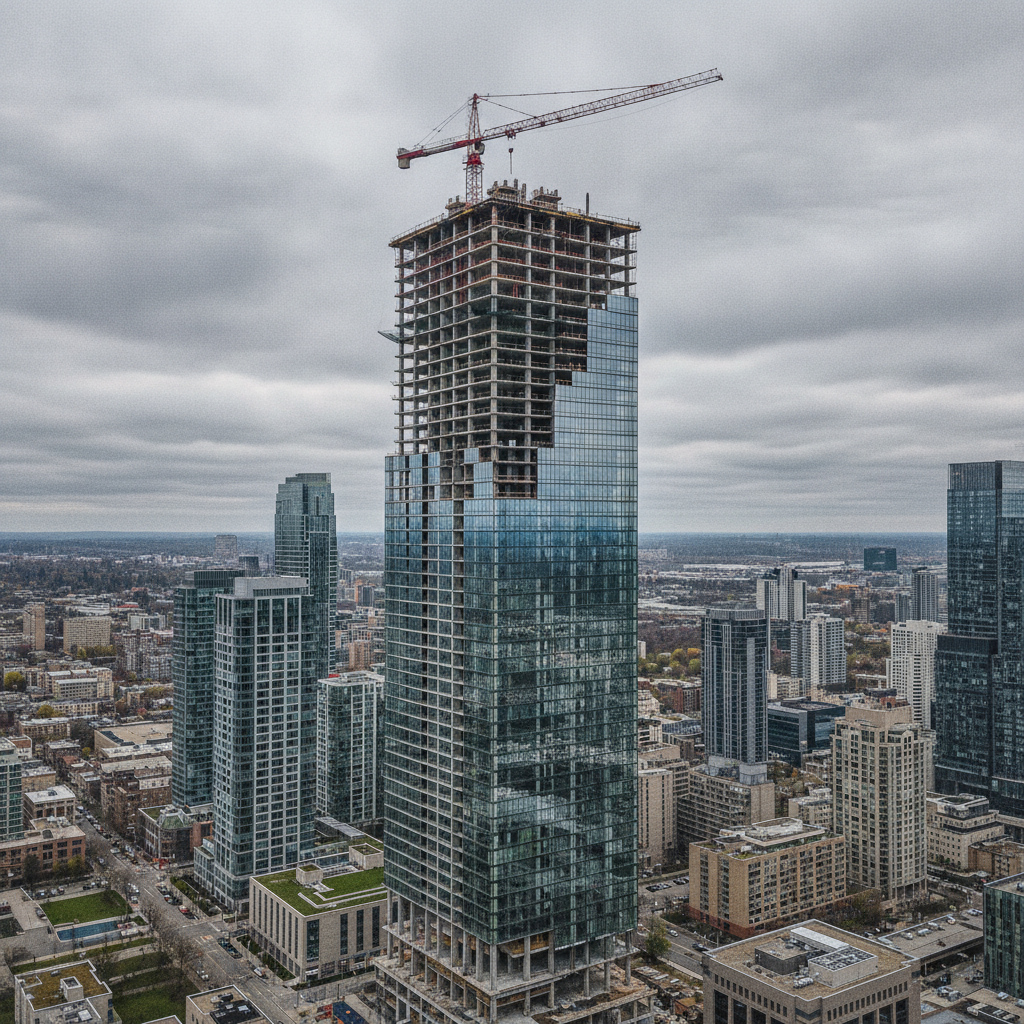
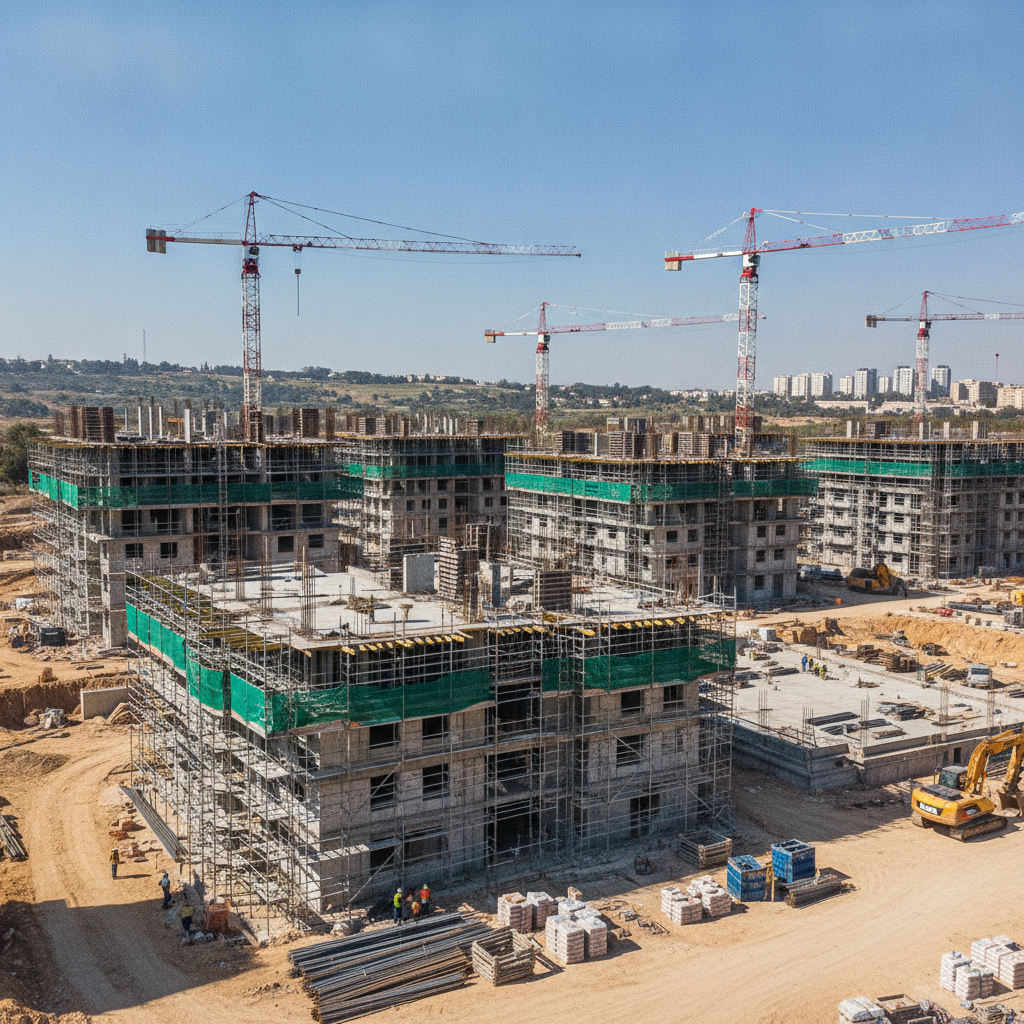
Urban renewal accounts for more than a quarter of housing starts in Israel, but it is falling sharply in 2026. At the same time, several recent rulings have sided with homeowners against municipal taxes.
Urban Renewal in Israel: 2026 Update
Urban renewal in Israel (hitchadshout ironit) has become one of the main drivers of new housing supply in central cities. However, in 2026, it is experiencing a significant slowdown. At the same time, several recent decisions, reported by Merkaz HaNadlan, have favored property owners regarding taxes demanded by municipalities.
For buyers—whether Israeli residents or those purchasing from abroad—here is the current situation.
Quarterly Figures
According to CBS data for the second quarter of 2026:
| Indicator (Q2 2026) | Value |
|---|---|
| Housing units started in urban renewal | 4,871 (27% of housing starts) |
| of which demolition-reconstruction | 4,006 built, 1,429 demolished, resulting in 2,577 net additional units |
| of which additions to existing buildings | 865, including 400 in Tama 38 reinforcement-addition |
| Overall change year-on-year | around -23% |
| Demolition-reconstruction | -13% vs Q1, just over -20% year-on-year |
| Reinforcement-addition | about one third less, both quarterly and year-on-year |
As a reminder, Tama 38/1 refers to the reinforcement and addition of floors to an existing building, Tama 38/2 to its demolition-reconstruction, and Pinui Binui to the demolition-reconstruction of a group of several buildings.
Where Urban Renewal Is Concentrated
Over twelve months, about 17,670 housing units were launched after the demolition of an existing building:
- 45.9% in the Tel Aviv district;
- 34.6% in the Central district;
- 84.4% as part of Tama 38/2 or Pinui Binui projects.
Additions to existing buildings (about 4,790 units) are more spread out: around 19% in the Southern district, as well as in Tel Aviv and the Central districts.
In Tel Aviv, urban renewal explains much of the city's return to the top of new housing starts. See our ranking of cities.
Favorable Decisions for Property Owners
Several decisions reported this week point in the same direction:
- In Tel Aviv, the municipality demanded a tax of about 1.5 million shekels in a Tama 38 project: the request was rejected, a win for property owners;
- An appeals committee ruled that an agreement signed after a plan's approval did not prevent exemption from the betterment tax (heitel hashbacha) on secure rooms (mamad);
- In Kiryat Ata, the local commission must return over one million shekels that were wrongly collected from landowners.
These decisions do not have automatic general application, but they serve as a reminder that taxes related to urban renewal can be challenged, and that good legal support has real value.
Projects Moving Forward Despite Everything
Despite the overall slowdown, many projects are progressing:
- In Jerusalem, two towers up to 30 stories and 222 apartments are set to replace old railway buildings in Beit HaKerem;
- In Hod HaSharon, two plans featuring towers and hundreds of apartments are coming before the district commission;
- In Eilat, two towers and hundreds of apartments have been approved to replace 208 old units;
- In Ramat Gan, a tower project with 208 apartments, offices, and shops is facing opposition from landowners who dispute the allocation of building rights, according to Globes.
This last example shows that a project can be delayed by objections, even after passing several stages.
Buying in an Urban Renewal Project
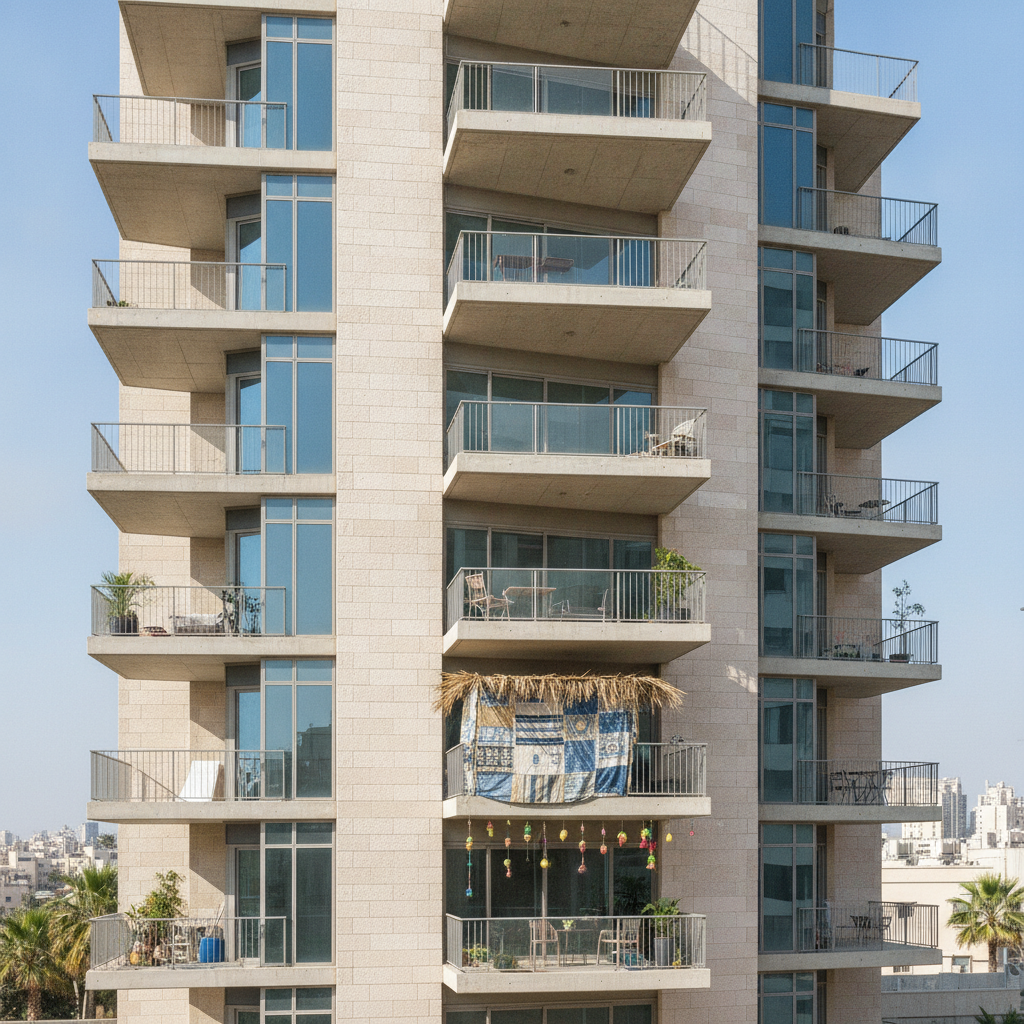
These programs offer a rare advantage: new properties in already established neighborhoods, close to transport, schools, and shops. However, they require specific checks:
1. Administrative progress: approved plan, agreements from existing owners, permits issued, relocation organized. The more advanced the project, the more reliable the schedule.
2. Guarantees: as with any off-plan purchase, each payment must be secured. See how to protect yourself when buying off-plan.
3. Taxes: the distribution of the betterment tax and other levies must be clearly stated in the contract.
4. Registration: in complex projects, final registration can take time.
5. Total cost: 18% VAT included for new builds, purchase tax depending on your profile, closing costs of around 10 to 13%.
For an example of a city driven by urban renewal, read our analysis of Rehovot, or our guide to the Bitzaron neighborhood in Tel Aviv.
IsraelStart lists urban renewal programs among more than 300 new projects across Israel, and supports buyers from abroad as well as Israelis already on site with a lawyer, broker, and architect. A personalized, no-obligation assessment allows you to evaluate a project before committing.
Sources
- Merkaz HaNadlan, housing starts and urban renewal in Q2 2026 according to the CBS (09/17/2026).
- Merkaz HaNadlan, decisions on taxes in urban renewal and ongoing projects (09/22-24/2026).
- Globes, oppositions to the tower project in Ramat Gan (09/23/2026).
Figures and decisions reported by the Israeli economic press, rephrased and put into perspective by the IsraelStart editorial team. Indicative information, to be confirmed with a lawyer, broker, and expert before making any decisions.
Need personalized support?
An IsraelStart expert will call you within 24h with a personalized analysis of your project.