Housing Starts in Israel: Lowest Level in Two Years in Q2 2026
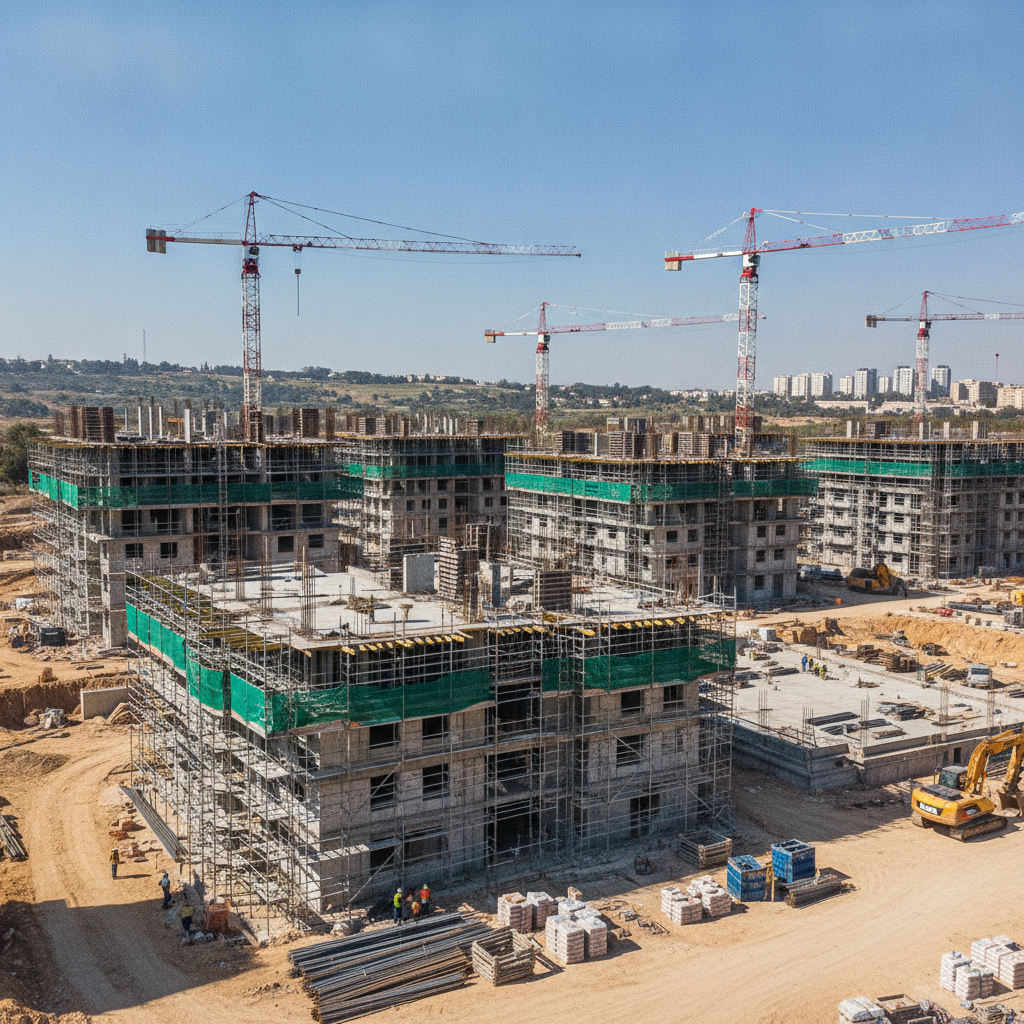
The pace of construction is slowing markedly in Israel: 17,866 housing starts in the second quarter, the lowest figure in two years. But the number of homes under construction is reaching a record.
Housing starts in Israel significantly slowed down this spring. According to data from the Central Bureau of Statistics (CBS), released on September 17th and analyzed by Merkaz HaNadlan, 17,866 housing units were started between April and June 2026. This represents 10.2% fewer units than a year prior and marks the lowest quarterly level in two years.
For any buyer, whether residing in Israel or purchasing from abroad, these figures shed light on the supply of new homes for the coming years.
Quarterly Figures
| Indicator | Q2 2026 | Comparison |
|---|---|---|
| Housing Starts | 17,866 | -10.2% year-on-year, -9.5% vs Q1 |
| Net Housing Starts (excluding demolitions) | 16,437 | — |
| Permits Issued | ~17,500 | 19,400 in Q1 |
| Housing Completions | 13,374 | -13.7% year-on-year |
| Homes Under Construction (end of June) | 217,200 | +7.7% year-on-year |
A Paradox: Fewer Starts, More Homes Under Construction
How can the number of homes under construction rise while new housing starts decline? It's because construction projects are taking longer and fewer homes are being completed each quarter (-13.7%).
Globes reported this week that in Israel, building an apartment complex often takes twice as long as in other countries, due to a lack of industrialization. According to the same newspaper, some developers also obtain permits without using them immediately, waiting for a more favorable market.
For buyers purchasing off-plan, the consequence is clear: delivery times must be carefully reviewed, and late penalties negotiated in the purchase agreement. See our guide buying off-plan in Israel.
Urban Renewal Stumbles
This marks the most significant drop. In the second quarter, 4,871 housing units were launched under urban renewal programs, representing 27% of all housing starts. However, the trend is clearly negative:
- Demolition-Reconstruction (Pinui Binui and Tama 38/2): approximately -13% compared to Q1 and just over -20% year-on-year;
- Reinforcement and Addition of Floors (Tama 38/1): about one-third less, both quarter-on-quarter and year-on-year;
- Overall: nearly -23% in urban renewal housing starts year-on-year.
Over the past twelve months, nearly half of the housing units from demolition-reconstruction projects are located in the Tel Aviv district (45.9%), and over a third in the Central district (34.6%). We've dedicated an article to this topic: urban renewal in 2026.
The Annual Pace
Over twelve months (July 2025 to June 2026), approximately 76,040 housing units began construction, marking a -7% decrease compared to the previous period. Interestingly, the country had been consistently seeing around 80,000 housing starts annually for several quarters.
Geographical Distribution over Twelve Months:
| District | Share of Housing Starts |
|---|---|
| Center | 25.3 % |
| Tel Aviv | 22.9 % |
| South | 18.4 % |
| North | 11.7 % |
| Haifa | 11.6 % |
| Jerusalem | 8.4 % |
Curious about the specifics? A detailed breakdown by city, revealing some truly spectacular differences, is available in where is the most construction happening in Israel.
Who's Building What
Roughly 70% of new housing units hitting the market are for sale. A significant portion, 13.3%, benefit from public support through reduced-price programs. What about the other 30%? Nearly half of those are self-built homes. Another quarter involves land-swap deals, often a combination of cash and land. And finally, about 14% are dedicated rental units, adding up to roughly 3,200 homes annually.
What This Means for Prices
It might be tempting to conclude that fewer construction sites today means higher prices tomorrow. But the reality is more nuanced:
- On the supply side, 217,200 housing units are already under construction. They'll hit the market in the coming years, and some developers are already struggling to sell, even resorting to renting out their unsold units. See our analysis.
- On the demand side, credit remains very dynamic, and demographic growth supports long-term needs.
For a buyer, the current period thus combines a wide selection and a favorable negotiating position, provided you choose solid developers and secure your guarantees.
A lawyer verifies the guarantee for each payment and the delivery clauses, a broker structures the financing, and an architect checks plans and specifications. IsraelStart coordinates these three experts across more than 300 new projects throughout Israel, for buyers from abroad as well as for Israelis already living here. A personalized assessment, with no obligation, helps you pinpoint the right programs.
Sources
- Merkaz HaNadlan, 'Construction Volumes Down 10%', according to the CBS (09/17/2026).
- Central Bureau of Statistics (CBS), Q2 2026 housing starts.
- Globes, real estate section: construction project durations and unused permits (September 2026).
These figures and decisions, originally reported by the Israeli economic press, have been rephrased and put into perspective by the IsraelStart editorial team. Remember, this information is for guidance only. Always consult a lawyer, broker, and expert before making any significant decisions.
Need personalized support?
An IsraelStart expert will call you within 24h with a personalized analysis of your project.