Sukkot and Real Estate in Israel: Balcony-Sukkah, Shared Courtyard, and Condominium Rules
Every year at Sukkot, the same questions come back: can you close off your sukkah balcony? Build a sukkah in the shared courtyard? In front of a parking space? A practical overview, and what to check before buying.
For many families, both in Israel and among buyers from abroad, the mirpeset soucca (balcony-soucca) is one of the key criteria when choosing an apartment. As the holiday approaches, the Israeli real estate press is reminding readers this week about the rules to know: checks on enclosed balconies without permits, neighbor disputes over a soucca in shared areas. Here’s what you need to know, both for the holiday and for your future purchase.
What is a balcony-soucca
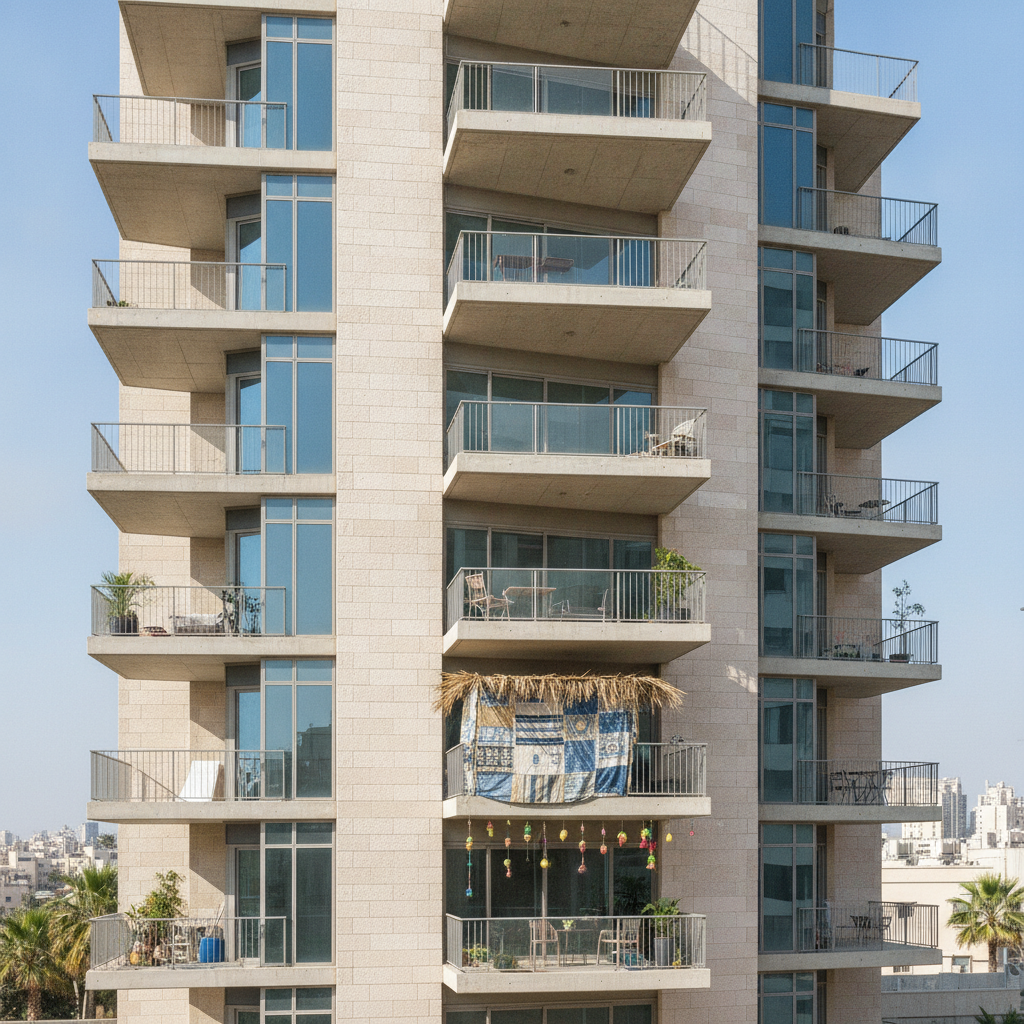
A soucca must, according to tradition, be open to the sky, covered only with vegetation (skhakh). In an apartment building, a balcony located under another balcony is therefore not suitable.
The balcony-soucca solves this problem: the balconies are staggered from one floor to another, so that no construction is above. This design has become a common selling point in new developments, especially in cities with a large observant population.
Closing Your Balcony: Beware of Permits
It’s tempting to turn your balcony into an extra room or to cover it permanently. However:
- Closing or permanently covering a balcony without a permit is a zoning violation;
- This can result in fines, an obligation to restore the original state, and complications when selling;
- According to Merkaz HaNadlan, authorities launched a control operation before the holiday targeting closed sukkah-balconies without permits.
For buyers, a closed balcony without authorization in an existing property is something to flag to your lawyer: it can affect the property’s compliance, or even its valuation by the bank.
Soucca in the Courtyard or Parking Lot
In buildings without a suitable balcony, some residents build their soucca in the shared courtyard, on the roof, or near parking spaces. This week, Globes is dedicating a feature to the questions this raises: can you set up a soucca anywhere? What if it blocks access to a parking spot or the sidewalk? Can other co-owners use it?
Without going into every scenario, a few common-sense principles apply:
- Common areas belong to everyone: their use must be compatible with the rights of other co-owners;
- A soucca must not block access, an assigned parking spot, a sidewalk, or an emergency exit;
- The condominium regulations (takanon habayit) may include specific rules;
- In public spaces, municipal authorization may be required.
Good Neighbor Rules
Most conflicts are resolved through dialogue:
1. Inform your neighbors before building, especially in a shared area;
2. Choose a location that does not block traffic or parking;
3. Respect the duration: take everything down promptly after the event;
4. Suggest sharing if the space is common and limited.
If disagreements persist, you can turn to the building manager, mediation, or a lawyer.
Buying New: Key Points to Check
If the balcony-soucca matters to you, check it from the plan stage:
The Plan and the Facade
Request the facade plans and cross-sections, not just the apartment layout. An architect can confirm that nothing overhangs the balcony, including on the upper floor, pergolas, or technical equipment.
Orientation and Size
A balcony-soucca should be able to fit a family table. Check the usable area and sun exposure.
The Contract
Your lawyer can specify in the technical specifications attached to the contract that the balcony is designed as a balcony-soucca, to prevent changes during construction. See buying off-plan in Israel.
The Condominium Rules
Check if there are rules regarding the use of balconies, roofs, and shared courtyards.
For a family preparing to move, these details matter as much as the price. Our guide aliyah and real estate covers other practical criteria. Don't forget the total cost: 18% VAT included in new builds, purchase tax depending on your profile, and closing costs of around 10 to 13%.
In Existing Properties Too
In an older apartment, a balcony-soucca is not always original. Some buildings have been modified over the years, with balcony enclosures of varying legality. Before buying, ask your lawyer to compare the property's actual condition with the building permit plans. An unauthorized enclosure can complicate the sale, bank financing, and insurance.
Urban renewal projects are an opportunity to integrate balcony-souccas into buildings that didn’t originally have them: a point to check in the specifications if you’re buying in this type of development.
IsraelStart selects, from over 300 new projects across Israel, those that match your lifestyle, and supports you with a lawyer, broker, and architect, whether you’re buying from abroad or within Israel. A personalized assessment, with no obligation, helps clarify your criteria. Hag Souccot Sameah!
Sources
- Globes, Q&A on the sukkah in condominiums (September 2026).
- Merkaz HaNadlan, inspection operation for sukkah-balconies without permits (09/24/2026).
Figures and decisions reported by the Israeli economic press, rephrased and put into perspective by the IsraelStart editorial team. Indicative information, to be confirmed with a lawyer, broker, and expert before any decision.
Need personalized support?
An IsraelStart expert will call you within 24h with a personalized analysis of your project.