Mas Rechisha 2026: Real Estate Acquisition Tax Calculation Israel Non-Resident
Mas Rechisha: Definition and Principle
Mas Rechisha (מס רכישה) is the real estate acquisition tax in Israel, equivalent to the transfer tax (notary fees) in France. Anyone — resident or not — who acquires a property in Israel is liable for this tax, which must be paid within 50 days of signing the sales contract.
The amount of Mas Rechisha depends on two variables: the price of the property and the buyer's status (resident purchasing their sole home, resident purchasing a second property, non-resident, Oleh Hadash). It is the most significant additional cost in a real estate purchase in Israel, and understanding it is essential for properly budgeting your project.
The calculation is progressive by brackets, just like income tax. Each price bracket is taxed at a different rate, and the total amount is the sum of the taxes for each bracket. This bracket system was designed to provide some progressivity, although for non-residents, this progressivity is less pronounced. Understanding this mechanism is fundamental for anticipating the real cost of your purchase and avoiding any unpleasant surprises.
2026 Scales: Resident vs Non-Resident
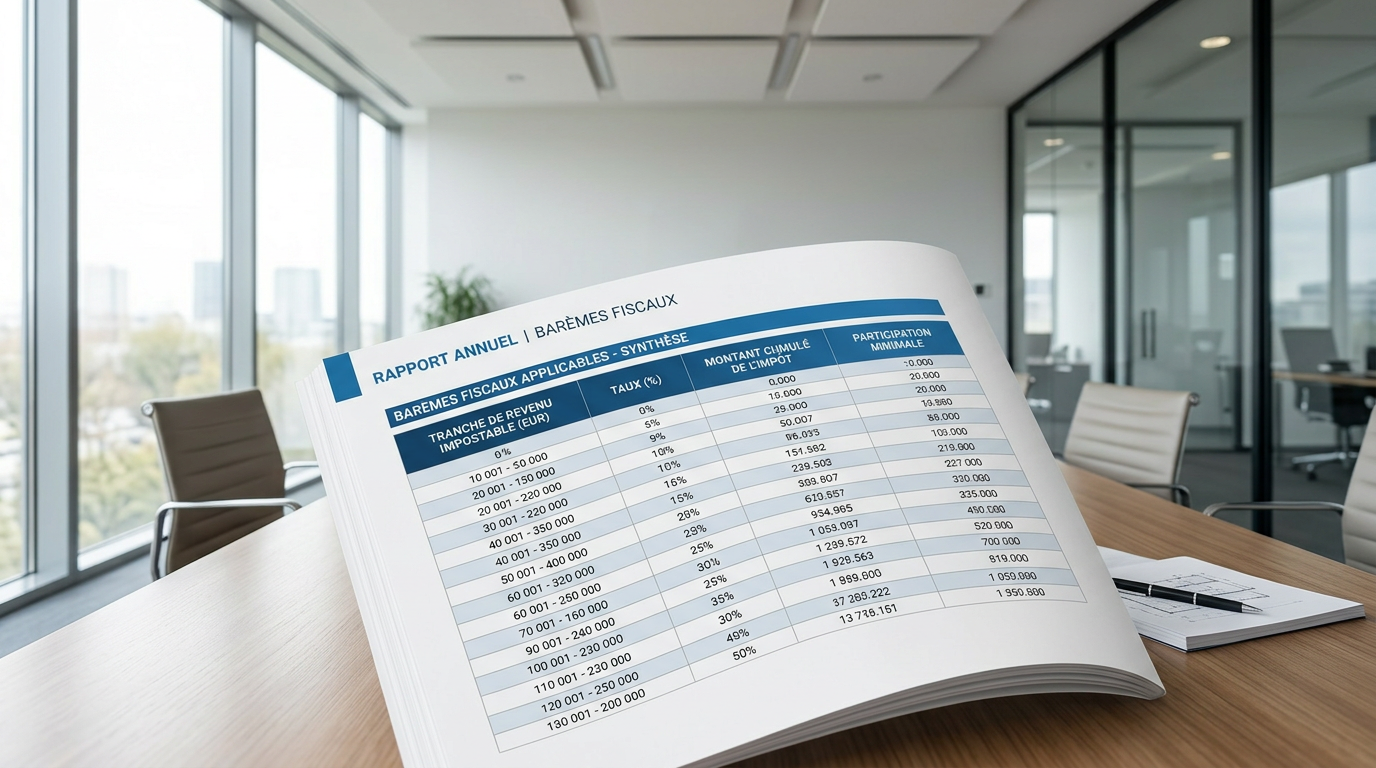
The scales are updated each year by the Israeli tax authority (Rashout HaMissim). These adjustments are generally linked to the consumer price index and the government's fiscal policy, often influenced by the real estate market itself. Here are the applicable scales for 2026, based on the latest publications and projections from the Ministry of Finance:
Resident Scale — Single Home (Dira Yehida):
This scale applies to Israeli citizens and permanent residents who do not have any other registered real estate property in Israel.
| Price Bracket (₪) | Rate |
|---|---|
| Up to 1,978,745 | 0% |
| 1,978,745 – 2,347,040 | 3.5% |
| 2,347,040 – 6,055,070 | 5% |
| 6,055,070 – 20,183,565 | 8% |
| Above 20,183,565 | 10% |
Non-Resident and Second Property Scale:
This scale applies to people who do not reside in Israel, as well as Israeli residents acquiring a second (or more) property in Israel.
| Price Bracket (₪) | Rate |
|---|---|
| Up to 6,055,070 | 8% |
| Above 6,055,070 | 10% |
The difference is significant. A resident buying their first property for 2,000,000₪ pays about 750₪ in Mas Rechisha (calculation: (2,000,000 - 1,978,745) * 3.5% = 743.73₪). A non-resident buying the same property pays 160,000₪ — more than 200 times as much. This is the most striking tax reality for buyers from abroad and a major point of attention in investment strategy. This policy aims to curb real estate speculation by non-resident investors and to promote homeownership for residents.
Step-by-Step Calculation with Example
To concretely illustrate how these rates are applied, let's explore some detailed scenarios. Understanding the progressive nature of the rates is key.
Let's take a property priced at 2,500,000₪ purchased by a non-resident. With the non-resident rate (8% on the entire amount up to 6,055,070₪), the calculation is: 2,500,000₪ × 8% = 200,000₪. This calculation is straightforward because the property price falls entirely within the first bracket of the non-resident scale.
For a property at 7,000,000₪ bought by a non-resident, the calculation is progressive:
1. First bracket up to 6,055,070₪: 6,055,070₪ × 8% = 484,405.60₪.
2. Second bracket above 6,055,070₪: (7,000,000₪ – 6,055,070₪) × 10% = 944,930₪ × 10% = 94,493₪.
The total Mas Rechisha amount is the sum of these two amounts: 484,405.60₪ + 94,493₪ = 578,898.60₪.
For a resident buying their first property at 2,500,000₪:
1. First bracket (up to 1,978,745₪): 0% - The amount is 0₪.
2. Second bracket (between 1,978,745₪ and 2,347,040₪): (2,347,040₪ – 1,978,745₪) × 3.5% = 368,295₪ × 3.5% = 12,889.325₪.
3. Third bracket (between 2,347,040₪ and 2,500,000₪): (2,500,000₪ – 2,347,040₪) × 5% = 152,960₪ × 5% = 7,648₪.
The total Mas Rechisha amount is: 0₪ + 12,889.325₪ + 7,648₪ = 20,537.325₪.
These examples show how crucial it is to know your exact tax status and the corresponding scale to estimate the total cost of your purchase. The accuracy of these calculations can significantly impact the feasibility of your project.
Possible Exemptions and Reductions
Although the standard Mas Rechisha regime may seem burdensome, especially for non-residents, there are various provisions that can, in some cases, allow for a reduction or exemption. It is crucial to carefully examine your situation to see if you may benefit from them.
Residents purchasing their sole home benefit from a reduced rate, with the first bracket at 0% up to nearly 2 million shekels (1,978,745₪ in 2026). This measure aims to facilitate home ownership for Israeli households.
Olim Hadashim (new immigrants) have specific tax advantages for a period of 7 years after their Alyah, and may benefit from the resident rate even for a second property. This is a major incentive for Alyah, offering a significant window of opportunity. This special regime is often the key for French-speaking buyers considering a future Alyah and wishing to prepare for their move.
People with disabilities may be eligible for reductions under certain specific conditions. Israeli law provides accommodations for people with certain levels of disability recognized by the authorities. Medical expertise and a solid file are required to apply.
For standard non-residents, unfortunately, there is no general exemption. The 8% rate applies from the first shekel up to a limit, and then increases to 10%. This is one of the most significant entry costs for international investors and must be factored in from the budgeting phase of your project. Any attempt to circumvent this tax is illegal and can result in heavy penalties. Transparency is key.
Olim Hadashim: Special Regime
The status of Oleh Hadash (a new immigrant who has made their Alyah) grants significant tax advantages, especially regarding Mas Rechisha. This is a crucial point for French-speaking buyers considering making their Alyah.
For a period of 7 years after the date of Alyah, Olim Hadashim can acquire real estate in Israel while benefiting from the resident rate (single residence), even if they already own a property in Israel or abroad. This means they will be subject to brackets of 0%, 3.5%, 5%, 8%, and 10%, instead of the 8% and 10% imposed on non-residents. This advantage applies even if they declare a second property, which is a major exception to the general rule.
This provision is a strong argument for buyers considering Alyah in the medium term. If you purchase a property at 2,500,000₪, the difference in Mas Rechisha between the non-resident rate (200,000₪) and the Olim rate (about 20,537.325₪) is nearly 180,000₪ — a considerable saving that alone justifies planning the timing of your purchase according to your immigration project. It is important to note that this 7-year period starts from the date of Alyah, not from the date of property purchase. Good planning is therefore essential.
Future Olim are advised to consult a specialized lawyer or tax advisor to ensure they meet all the conditions and optimize this regime. For example, proof of Oleh Hadash status is an essential document (Tehudat Oleh, Tehudat Zakaut).
Simulate Your Mas Rechisha in 30 Seconds
Our Mas Rechisha simulator instantly calculates the exact amount of your acquisition tax based on the property price and your status (non-resident, first-time resident, second-time resident, Oleh Hadash). The rates are updated in real time according to the latest publications from the tax authorities, ensuring the validity and accuracy of the estimates provided for 2026 and beyond.
This tool is designed to give you a quick and reliable estimate, essential for setting up your acquisition budget. It includes all the nuances of the progressive tax brackets.
Combined with our additional fees simulator and the mashkanta (mortgage) calculator, it gives you a complete and transparent view of your total acquisition budget. These tools are designed to relieve our clients from the complexity of calculations so they can focus on finding the ideal property.
Deadlines and Payment Terms
Strictness is required regarding the deadlines and payment terms for Mas Rechisha. Failure to comply may result in additional costs and administrative complications.
Mas Rechisha is due within 50 calendar days following the date of signing the final sales contract. This period is non-negotiable. Payment must be made by bank transfer to the order of the Israeli tax authority. It is not possible to pay in cash or by personal check.
Your lawyer, appointed for the transaction, prepares the tax declaration (Shomah Atzmit form) detailing the property, price, buyer's status, and the calculation of Mas Rechisha. They then make the payment on your behalf using the funds available in your Israeli bank account, after verifying that the necessary amount is properly funded. Proof of transfer and a receipt from the tax authority will then be provided.
In case of late payment, late interest applies (generally 0.5% per week of delay), as well as penalties that can reach up to 5% of the amount due. These penalties can accumulate quickly, significantly increasing the initial cost. It is therefore crucial to fund this amount in your Israeli account before signing the contract, in addition to the down payment due to the seller or developer.
Your lawyer systematically includes the management of Mas Rechisha in their overall transaction mandate. From abroad, you do not have to take any personal steps, except to ensure that the funds are available. This is one of the key turnkey support elements offered by IsraelStart for the taxation of your acquisition and for a smooth process.
Penalties for Non-Declaration or Under-Declaration
In addition to late payment penalties, the Israeli tax authority applies severe sanctions in cases of non-declaration or intentional under-declaration of Mas Rechisha. If the authority considers that there has been concealment or false declaration, it may impose fines of up to 300% of the amount due, in addition to late interest. In the most serious cases, criminal proceedings may be initiated. It is therefore essential to declare the actual transaction price and ensure that the calculation of Mas Rechisha is carried out with the utmost accuracy. The role of your lawyer is crucial here to ensure compliance with all procedures.
Frequently Asked Questions about Mas Rechisha
Can Mas Rechisha be paid in installments?
No, Mas Rechisha must be paid in a single payment within 50 days of signing the final contract. Israeli law does not allow for staggered payments, regardless of the amount involved. Therefore, it is essential to set aside this sum well before signing, in addition to the down payment owed to the developer. Setting aside 10% of the purchase price to cover all additional costs, including Mas Rechisha, is considered good practice.
Is Mas Rechisha tax-deductible?
Mas Rechisha is not directly deductible from rental income in Israel. However, it is an important part of your property's acquisition cost. On the other hand, it is fully deductible from the calculation of Mas Shevach (capital gains tax) when you sell the property. This means it reduces the taxable base of your capital gain, thereby lowering the tax you will have to pay upon resale. It is crucial to keep the proof of payment for Mas Rechisha, as well as all other acquisition, renovation, and sale expenses.
What happens if the contract is canceled after paying Mas Rechisha?
If the transaction is canceled within 24 months of signing, you can request a refund of the Mas Rechisha already paid. However, the tax authorities will withhold a symbolic amount, usually around 2.5% of the amount paid, as administrative fees. After 24 months, the refund process becomes more complex and subject to stricter conditions, but it is still possible if the cancellation is due to factors beyond your control (for example, an unresolved construction issue).
Mas Rechisha for Investors: Impact on Profitability
The Mas Rechisha represents the most significant entry cost for a non-resident investor. Its impact on the overall profitability of your investment should be calculated from the prospecting phase. It is essential not to consider it as an isolated expense, but as an integral part of your financial strategy.
For a property at 2,000,000₪ with a Mas Rechisha of 160,000₪, the total entry cost (Mas Rechisha, lawyer's fees, agency fees, registration fees, VAT if applicable) can exceed 2,200,000₪ — that is, 10% to 15% more than the listed price. If fees represent 10% of the total cost for a property at 2,000,000₪, that amounts to 200,000₪, mostly made up of the Mas Rechisha.
This additional cost inevitably extends the payback period. If your gross rental yield is 5% per year (that is, 100,000₪ annual rent for a property of 2,000,000₪), it will take about 2 years of gross rent to recoup the Mas Rechisha alone of 160,000₪. Over a 10-year investment, the Mas Rechisha reduces your annualized return by about 0.8 percentage points (160,000₪ / (2,000,000₪ * 10 years) = 0.008 or 0.8%). This is significant but manageable, especially if capital appreciation largely compensates (which has historically been the case in the Israeli market, with average annual increases of 5% to 10% over the past ten years in sought-after cities like Tel Aviv or Jerusalem).
To optimize the impact of the Mas Rechisha, three strategies are available to you:
1. Alyah Planning: If you are considering Alyah in the coming years (for example, within 7 years), postponing the purchase until after obtaining Oleh status can save you 140,000₪ to 180,000₪ on a 2-million property. This saving is often greater than any potential increase in property price over a few years.
2. Net Yield Optimization: For a pure investment, always include the Mas Rechisha in your profitability calculation and compare cities based on net yield after all fees. Some cities like Beer Sheva or Ashkelon, despite a proportionally high Mas Rechisha compared to the purchase price, can still offer better net yields thanks to intrinsically lower acquisition prices and relatively stable rents.
3. Specialized Tax Advice: Consult a tax lawyer specialized in Israeli real estate who can identify possible optimizations according to your personal situation and the structure of your investment. In some complex cases (e.g., property acquired through a company), specific regimes may apply.
International Comparison: Israel vs France vs Other Markets
To put the Mas Rechisha into perspective, it is useful to compare it with property acquisition taxes in other countries popular with international investors. This comparison highlights Israel's position in the global real estate tax landscape.
| Country | Acquisition Tax (non-resident) | Example €500,000 | Details and Context |
|---|---|---|---|
| Israel | 8% – 10% (Mas Rechisha) | €40,000 – €50,000 | This high rate for non-residents aims to discourage speculative investment and protect the market for residents. It is progressive, rising to 10% above ₪6,055,070. |
| France | 7% – 8% (Droits de mutation) | €35,000 – €40,000 | Includes the land registration tax and registration fees. Rates vary slightly depending on the department but remain within this range. No significant distinction between resident and non-resident rates. |
| Spain | 6% – 10% (Impuesto de Transmisiones Patrimoniales - ITP) | €30,000 – €50,000 | Varies significantly between autonomous communities (e.g., Catalonia at 10%, Madrid at 6%). Often, there is no rate distinction based on residency. |
| Portugal | 6% – 7.5% (Imposto Municipal sobre as Transmissões Onerosas de Imóveis - IMT) | €30,000 – €37,500 | Progressive rates based on property value. A stamp duty of 0.8% is also applied. Programs like the Golden Visa have attracted many non-residents. |
| Dubai | 4% (DLD fee - Dubai Land Department) | €20,000 | Dubai is known for its low acquisition taxes and the absence of income or capital gains tax, making it a very attractive destination for international investors. |
| USA (New York) | 1% – 2% (Transfer Tax) | €5,000 – €10,000 | The "Transfer Tax" is relatively low, but other fees (legal, title, loan fees) may apply, and the market can be complex for non-residents. Specific local taxes may also be added. |
Israel is in the higher range of acquisition taxes, mainly due to the significantly higher rates imposed on non-residents. However, this extra cost is often seen as offset by the strength of the Israeli real estate market, strong legal protection (cadastre system and registration at the Tabo), and historical price appreciation (5% to 10% per year in major cities has been the average observed over the past decade).
IsraelStart's support includes the precise calculation and payment of the Mas Rechisha as part of the turnkey management of your acquisition from abroad. We provide a personalized comparative analysis so you can make informed decisions.
Need personalized support?
An IsraelStart expert will call you within 24h with a personalized analysis of your project.