New Build Property in Rosh HaAyin: Developments & Areas 2026
A fast-growing family city between Petah Tikva and Modi'in, Rosh HaAyin combines a station, road 6 and forest: its new Psagot Afek neighbourhood, with about 14,000 homes, is doubling the city.
Population: 79,023
Why invest in Rosh HaAyin
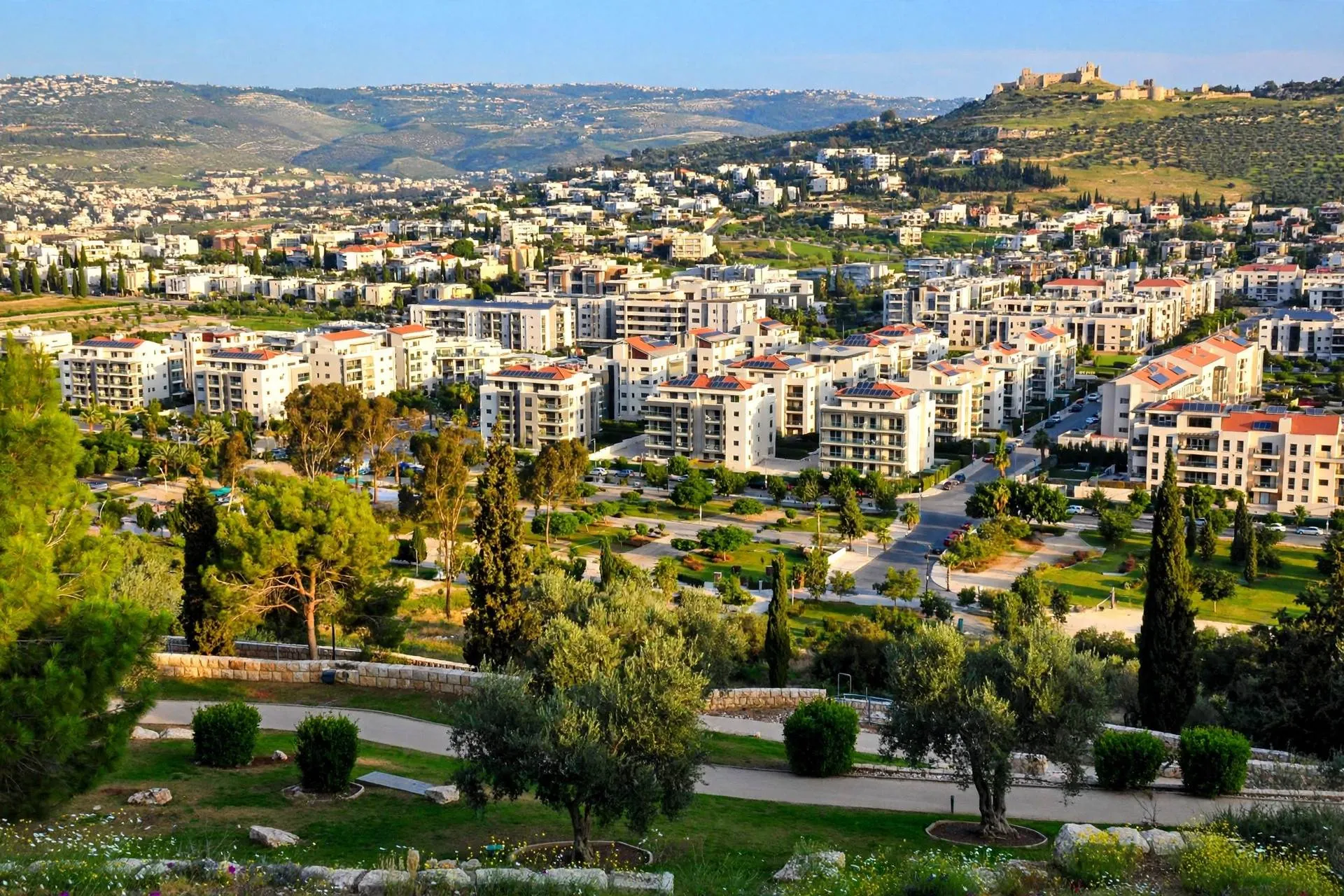
Rosh HaAyin means 'head of the spring': the city was born near the sources of the Yarkon, to the west, and the ancient fortress of Migdal Afek, to the south-east. The site has been inhabited since antiquity — biblical Aphek, then Roman Antipatris — and the modern city was founded in 1949. Long a small family town in the centre, Rosh HaAyin has changed scale: its population rose from about 55,000 to 79,023 in the CBS 2024 census, driven by the new neighbourhoods of Givat Tal, Mitzpe Afek, Neve Afek and Psagat Tal. The momentum continues with Psagot Afek, a neighbourhood under construction with about 14,000 homes that should take the city towards 100,000 inhabitants, with about 1.5 billion shekels of infrastructure planned. For a buyer, this is the central fact of the page: buying in Rosh HaAyin means buying in a growing city, with a station, the Trans-Israel road 6 and road 483 to Petah Tikva, the Rosh HaAyin forest and the planned Migdal Afek national park. The IsraelStart catalogue lists three new-build projects, complemented by projects in Petah Tikva, Kfar Saba and Modi'in. Resale in the historic neighbourhoods — Aviv, Rambam, Shabazi, Tzahal, Mishkenot HaMusica — offers family houses and apartments at more contained prices than in Gush Dan. The personalised search, the resale guide and the financing and tax simulators help prepare the purchase, with a lawyer and a broker.
- Buy in a city that is growing: Few Israeli cities are growing as fast as Rosh HaAyin. Buying during growth means buying new buildings, new infrastructure and an arriving population, rather than a frozen market.
- New build to current standards: The recent neighbourhoods and Psagot Afek offer new buildings with lift, balcony, shelter and green spaces. For a family, that is a comfort that resale in the historic neighbourhoods does not always offer.
- Double connection, rail and road: Station and road 6: this double connection is rare and precious. It gives options when one of the two networks is saturated, and it widens the employment basin accessible from the city.
- Nature two steps from the centre: Forest, promenade along the Nahal Raba, planned national park: Rosh HaAyin offers a green setting that buyers discover when visiting. It is a quality-of-life criterion that matters for families with children.
- A contained entry price for the centre: For a central city served by train and road 6, Rosh HaAyin remains more affordable than Petah Tikva, Herzliya or Tel Aviv. That is its positioning: the affordable tech city, between employment hubs and nature.
Key advantages
- Psagot Afek: the city that doubles: About 14,000 homes under construction, infrastructure of about 1.5 billion shekels, a population expected around 100,000: Psagot Afek is the city's largest development project. Buying in Rosh HaAyin today means positioning yourself before the new neighbourhood is finished, without promising any date or price.
- An affordable tech city: Between Petah Tikva, Herzliya and Tel Aviv, Rosh HaAyin is the affordable gateway to the employment hubs of the centre. Tech employees find new family homes and a station there, for a budget below that of cities closer to Tel Aviv.
- Station and road 6: Rosh HaAyin station and the Trans-Israel road 6 give the city a double connection, rail and road, rare for a city of this size. Road 483 connects directly to Petah Tikva. For a working person, this connectivity protects the value of the home.
- Forest and nature in the city: The Rosh HaAyin forest, the Tzlilei HaMusica promenade along the Nahal Raba and the planned Migdal Afek national park offer a green living environment, minutes from the centre. It is a quality-of-life argument that the big Gush Dan cities do not have.
- A calm family city: Rosh HaAyin remains a calm family city, with schools, parks and residential neighbourhoods where children move around on foot or by bike. The new neighbourhoods attract young families, renewing the population and neighbourhood life.
Infrastructure & Transport
- Rosh HaAyin station: The station serves the city on central and northern lines. Check frequencies and connections for your usual journey before buying: they vary by line and time, and the train is one of the city's major assets.
- Trans-Israel road 6: Road 6, the country's north-south motorway, passes east of the city and gives fast access to the whole centre, the coast and the north. It is the axis that made Rosh HaAyin accessible to employees across Gush Dan.
- Road 483 to Petah Tikva: Road 483 connects Rosh HaAyin to Petah Tikva in a few minutes, opening direct access to one of the country's largest employment hubs, its hospitals and its shopping centres.
- Buses to Tel Aviv and Petah Tikva: Regular bus lines connect the city to Tel Aviv and Petah Tikva. Frequencies are good on weekdays and reduced on Shabbat, as everywhere in Israel outside special lines.
Investment profile
- Young first-time-buyer families: The dominant profile is the young family buying its first apartment, often new in Psagot Afek or in the recent neighbourhoods. The city budget simulator helps test the budget before viewing, and the mashkanta broker the financing.
- Tech and Petah Tikva employees: Employees of nearby employment hubs buy in Rosh HaAyin to combine a new family home with a reasonable commute. Rental demand from these profiles is stable, with long leases and careful tenants.
- Growth investors: With a city growing from 79,000 to about 100,000 inhabitants, investors bet on the growth of supply and demand. Rental yields there are in the middle range, and the horizon is medium-term: no capital-gain promise is made here, only the momentum is documented.
Neighborhoods of Rosh HaAyin
Aviv
Rambam
Shabazi
Givat Tal
Neve Afek
Psagot Afek
New build or resale in Rosh HaAyin
In Rosh HaAyin, you can compare the new developments listed in our catalogue or entrust us with the search for an existing property. The choice depends on your timeline, overall budget and target neighbourhood.
For resale, we define a brief with you — neighbourhood, number of rooms, mamad, lift, parking, outdoor space — then consult several sources and present an explained selection, with trade-offs and points to confirm.
Search in Rosh HaAyin Buying resale property: the guideFrequently asked questions about Rosh HaAyin
Which new-build projects are available in Rosh HaAyin?
The IsraelStart catalogue lists three new-build projects in Rosh HaAyin at the time of writing. The personalised search also tracks Psagot Afek projects and those in neighbouring Petah Tikva, Kfar Saba and Modi'in, and alerts you as soon as a new project enters the catalogue.
What is Psagot Afek?
Psagot Afek is the new neighbourhood under construction east of Rosh HaAyin: about 14,000 homes planned, with infrastructure of about 1.5 billion shekels, to take the city towards 100,000 inhabitants. It is a future construction site, not an inhabited neighbourhood: purchases there are off-plan, with timelines to check file by file, and it should not be confused with Psagat Tal or Neve Afek.
Is Rosh HaAyin well connected?
Yes: the city has a station, the Trans-Israel road 6 and road 483 to Petah Tikva, plus buses to Tel Aviv. This double rail and road connection is one of its major assets. Still, check train timetables and the real journey time from the neighbourhood you are considering before buying.
Rosh HaAyin or Petah Tikva: which to choose?
Petah Tikva is bigger, more urban and closer to Tel Aviv, with more jobs on site. Rosh HaAyin is calmer, greener and more affordable, with growth driven by Psagot Afek. For a family looking for new family homes and nature, Rosh HaAyin often wins; for a working person who wants to live at the heart of an employment hub, Petah Tikva wins. Compare the two city pages and visit both.
What budget for a new apartment in Rosh HaAyin?
The budget depends on the size, the neighbourhood — old or new, Psagot Afek or established neighbourhoods — and the finish. This page does not publish a range, for lack of a reliable source on typical sizes: use the personalised search and the city budget simulator to refine your budget, then have the financing priced by a mashkanta broker.
Similar cities
Discover other nearby cities or in the same price range.
New projects in Rosh HaAyin
- Apex Pines — From 3,190,000 ₪ – 4,200,000 ₪ (~852,941 €)
- Apeak Gardens — Price on request
- Prophet Meadows — From 3,330,000 ₪ (~890,374 €)