New Build Property in Netanya: Average Prices & Developments 2026
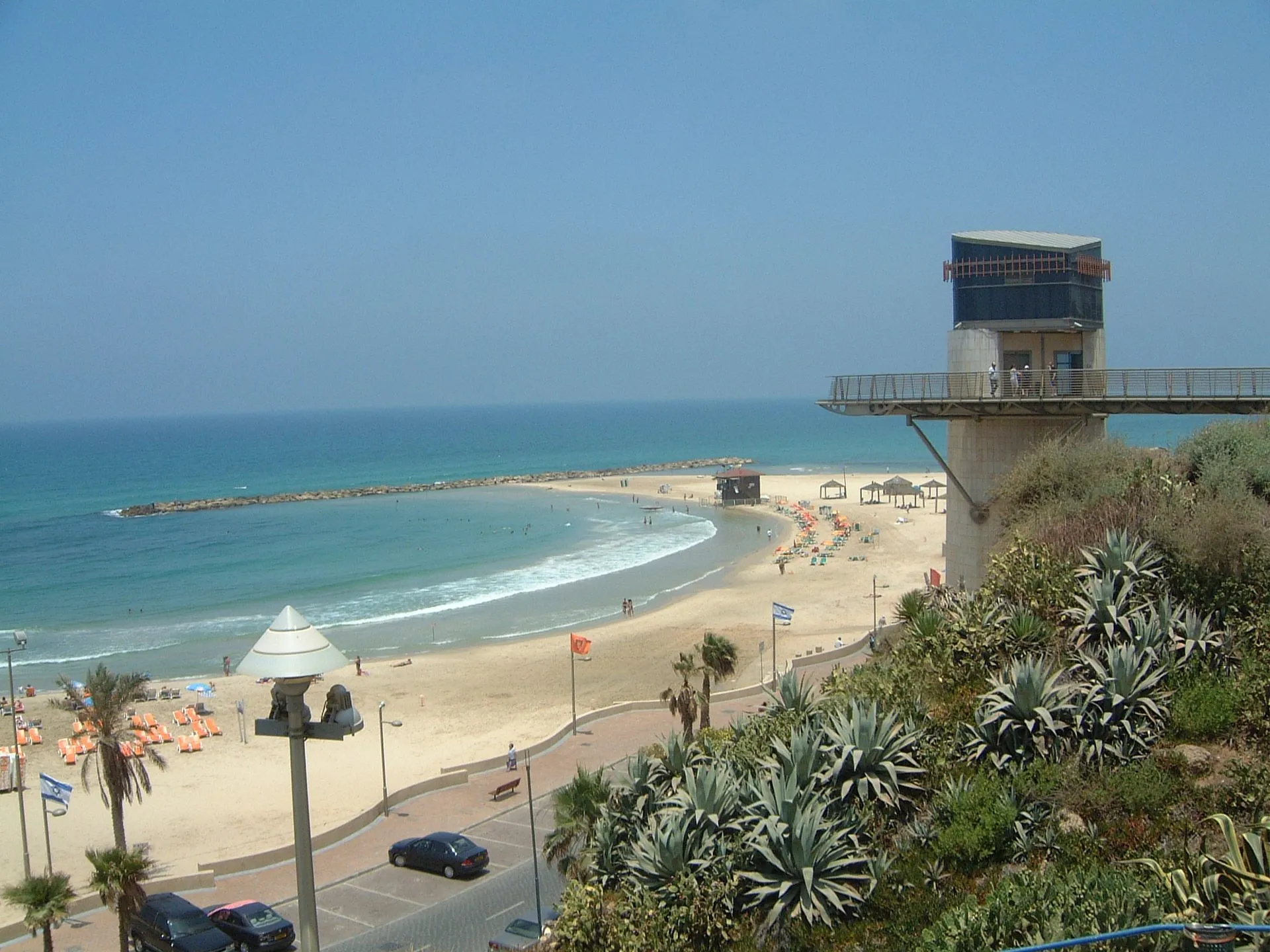
Israel's sixth city with 234,813 residents, Netanya is the 'Israeli Riviera': a long stretch of beaches at the foot of the cliffs, a lively promenade, and the favourite city of French speakers in Israel. Founded in 1929 and named after the philanthropist Nathan Straus, it grew between the sea and the family neighbourhoods of the east, becoming a city where people live year-round, in French as in Hebrew. Buyers find new sea-view flats in the towers of Ir Yamim and Nof HaTayelet, a family villa in Ramat Poleg, a family home in Kiryat HaSharon, or an older flat to renovate in the city centre and the north. The train reaches Tel Aviv in about thirty minutes, French-speaking sales offices support buyers from France, and the second home is a tradition here.
Population: 234,813
Why invest in Netanya
Netanya is not one single market: fifteen minutes apart, price gaps from one neighbourhood to another are wide. Three factors drive the gap: the sea view, the age of the building and the distance to the beach. The price hierarchy follows the city's geography. Ir Yamim, on the seafront, concentrates the new towers with views over the Mediterranean and is the most sought-after segment, popular in particular with French-speaking buyers. Nof HaTayelet, on the cliffs, offers recent buildings with panoramic sea views. Ramat Poleg, in the south, is a quiet residential area of villas and large family flats. Kiryat HaSharon, family-oriented, appeals through its proximity to stations and shops. The city centre, gentrifying, offers small flats to renovate, while the north, around Neot Herzl, is the city's entry-level segment. As a sourced benchmark, the average transaction price in Netanya in the first half of 2026 was 2,730,000 shekels, up 2.1% year on year (source: Ynet, 15 September 2026). For a precise budget, the personalised search and the per-city budget simulator let you refine by size, floor and view. And everywhere, the terrace matters: a large sea-facing balcony is almost worth an extra room. The stock that attracts French speakers is first of all new: the towers of Ir Yamim and Nof HaTayelet keep rising, with French-speaking sales offices, plans in French and staged payments. Off-plan buying is governed by the 1973 Sale Law: the developer secures every payment with a bank guarantee, and you pay only as the building rises. Resale has its supporters: in the city centre and the north, prices there sit well below those in Ir Yamim, and some buildings qualify for urban renewal. But from a distance, resale needs more care: the real condition of the flat, service charges, title checks at the land registry, and a local lawyer is non-negotiable. If you buy from France without living there, off-plan new build simplifies everything: no hidden defects, a known payment schedule, delivery to current standards. The drawback is the wait: two to three years before handover. Resale, by contrast, can be rented the day after purchase. It all depends on your horizon: future residence or immediate income. The city itself was founded in 1929, named after Nathan Straus, and its story is that of a seaside resort turned big city: the diamond industry long thrived here, then tourism and second homes took over, carried by a French-speaking community with its shops, synagogues and habits. Netanya and Netanya Sapir stations, and Beit Yehoshua to the south, link the city to Tel Aviv and Haifa, and the coastal road and Highway 2 serve the whole shoreline. Before signing, the total cost of purchase can be estimated with the tax and fees simulator, borrowing capacity with the financing simulator, and comparisons with Herzliya, Hadera or Kfar Yona with the city budget simulator. Personalised search, the resale buying guide and the blog article on Netanya's French speakers complete the journey.
- A second home that rents: Summer demand from French-speaking tourists is real, and a well-located flat in Netanya can be let short-term, subject to the municipal rules and those of the building. Rental income is declared in Israel, and local management is essential from France.
- A market French speakers know: Netanya is the best-documented city on the site for French-speaking buyers, with a dedicated blog article and guides in French. You do not buy blind here: the neighbourhoods, the orders of magnitude and the pitfalls are known.
- Guidance in your language: Lawyer, mortgage broker, tax adviser: the team supporting your purchase speaks your language and knows both systems. Documents are explained before signing, steps are planned, and every decision is made with full information, with no surprise when the property is registered.
- Simulators before you sign: Before making an offer, estimate the total cost of purchase with the tax and fees simulator, test borrowing capacity with the financing simulator, and compare cities with the city budget simulator. Acquisition tax is described without fixed thresholds: the exact scale depends on each situation, and the dedicated guide and simulator give the answer for each case.
Key advantages
- The Israeli Riviera for French speakers: Netanya is the favourite city of French speakers in Israel: you live there in French, you find French-speaking shops, restaurants and sales offices, and the community has been settled for decades. For a buyer coming from France, it is the city where settling in is gentlest, with familiar landmarks from day one and a market that knows your expectations.
- Beaches and cliffs unique in Israel: Netanya's seafront, its cliffs and its promenade have no equivalent in the country: the buildings of Nof HaTayelet and Ir Yamim offer panoramic views found nowhere else. It is this rarity that drives seafront prices, and makes the sea view the city's first criterion of value.
- A two-speed market, so real trade-offs: Between Ir Yamim and the north of the city, the price per square metre nearly doubles. That spread is an opportunity for the buyer: for the same budget, you choose between sea view, space, or proximity to stations and schools. The city budget simulator and personalised search let you make that trade-off with full information.
- The train to Tel Aviv and Haifa: Netanya, Netanya Sapir and Beit Yehoshua stations link the city to Tel Aviv in about thirty minutes and to Haifa, and Highway 2 runs along the coast. For a buyer working in the Gush Dan or splitting time between France and Israel, the station matters as much as the sea view.
Infrastructure & Transport
- Stations and the coastal highway: Netanya is served by Netanya and Netanya Sapir stations, and by Beit Yehoshua station to the south, on the Tel Aviv-Haifa line. Highway 2 runs along the coast to Tel Aviv and Haifa, and intercity buses link the city to the whole centre of the country.
- French-speaking shops and daily life: The city centre and the seafront concentrate shops, restaurants, markets and services, including many French-speaking businesses. Schools, health centres and municipal services cover all neighbourhoods, from Ir Yamim to Kiryat HaSharon.
- Beaches, promenade and cliffs: The seafront promenade, the developed beaches at the foot of the cliffs and the city parks shape daily life. The beaches are lifeguarded in season, and cliff lifts connect the promenade to the beaches below.
Investment profile
- New homes and off-plan buying: Buying a new off-plan flat in Netanya lets you choose the floor, orientation and finishes before completion, with payments spread over the construction schedule. Israel's 1973 Sale Law governs the transaction: every payment is secured, usually by a bank guarantee. It is the simplest way to buy from abroad, with no hidden defects and delivery to current standards, but it takes patience: two to three years before handover is typical.
- Resale and urban renewal: Resale property in Netanya is available immediately, often better located and sometimes cheaper per square metre than new build, at the cost of extra care: the real condition of the flat, service charges, and title checked at the land registry. Some older buildings are part of urban renewal schemes that can transform a whole neighbourhood. Our resale guide and personalised search compare both options without bias, according to budget and time horizon.
- Personalised property search: Instead of scrolling listings one by one, a personalised search hands your brief to a hunter: neighbourhood, number of rooms, mamad, lift, parking, outdoor space, budget. The hunter selects new and resale homes that truly match, organises viewings and negotiates with the seller. It is the most effective route when buying from abroad, or when the local market largely trades off-portal.
Neighborhoods of Netanya
Ir Yamim
Nof HaTayelet
Ramat Poleg
Kiryat HaSharon
City centre
North (Neot Herzl)
New build or resale in Netanya
In Netanya, you can compare the new developments listed in our catalogue or entrust us with the search for an existing property. The choice depends on your timeline, overall budget and target neighbourhood.
For resale, we define a brief with you — neighbourhood, number of rooms, mamad, lift, parking, outdoor space — then consult several sources and present an explained selection, with trade-offs and points to confirm.
What to look at in Netanya
Netanya stretches along the sea: daily life is not the same near Independence Square and the centre, in the newer southern neighbourhoods such as Ir Yamim, or in the residential areas further east. In seafront towers, compare service charges, exposure to wind and salt, and parking. In older buildings in the centre, check the lift, whether there is a mamad and any urban renewal plans. A terrace is judged on its actual size, orientation and how overlooked it is.
Search in Netanya Buying resale property: the guideFrequently asked questions about Netanya
Nof HaTayelet or Ramat Poleg: where to buy in Netanya?
Nof HaTayelet, perched on the cliffs, concentrates recent buildings with panoramic views: higher prices, a second-home clientele. Ramat Poleg, further south, is a quiet residential area of villas and 4 to 5-room flats, popular with year-round families. Spectacular sea views on one side, neighbourhood life on the other.
What budget for a new 3-room flat facing the sea?
A new sea-facing 3-room flat in Ir Yamim or Nof HaTayelet sits in the city's highest segment: floor, view and size move the budget, and a large sea-facing balcony adds real value. In resale in the city centre, prices are noticeably more accessible, plus works, and some buildings qualify for urban renewal. For a precise budget, the personalised search lets you compare available offers against your criteria.
Can you let your flat short-term in Netanya?
Yes, summer demand from French-speaking tourists is real. But check Netanya's municipal rules on short lets and those of your building — some buildings forbid them. Rental income is declared in Israel, and local management is essential from France.
Buying in Netanya from France: where to start?
With personalised search: the hunter knows the towers of Ir Yamim and Nof HaTayelet, the French-speaking sales offices and the older buildings of the city centre. Then the tax and fees simulator gives the total cost of purchase, the financing simulator the borrowing capacity, and the resale guide the checks to make before signing. The local lawyer, who speaks French, steps in before any signature.
Similar cities
Discover other nearby cities or in the same price range.
New projects in Netanya
- Sea Park Promenade — From 4,980,000 ₪ (~1,331,551 €)
- Nordau Essence — Price on request
- Lakeside Elegance — Price on request
- Harbor Crest — Price on request
- Coastal Blossom — From 3,800,000 ₪ (~1,016,043 €)
- DAVID Netanya - Naot Herzl — From 2,180,000 ₪ (~582,888 €)
- Coastline Residences — From 3,000,000 ₪ – 5,000,000 ₪ (~802,139 €)
- Sea Breeze Gardens — From 3,000,000 ₪ – 7,000,000 ₪ (~802,139 €)
- Ocean Park Residences — From 3,590,000 ₪ (~959,893 €)
- Coastal Breeze — From 2,799,000 ₪ (~748,396 €)
- Coastal Harmony — Price on request