New Build Property in Bnei Brak: Developments & Areas 2026
Israel's seventh city with 229,996 residents, Bnei Brak is a city apart in the Gush Dan: founded in 1924, it is the centre of Haredi life in Israel and the most densely populated city in the country, with more than 32,000 residents per square kilometre. On barely more than 7 square kilometres, between Ramat Gan, Petah Tikva and Tel Aviv, it concentrates large families, yeshivot and institutions, kosher shops and a neighbourhood life paced by Shabbat, when streets are closed to traffic in most neighbourhoods. Buyers look mainly for large family flats, new or resale, near institutions and shops, with a different neighbourhood, Pardes Katz in the north, and a business district rising in the east. The market follows its own rules, and it is understood neighbourhood by neighbourhood, with local guidance.
Population: 229,996
Why invest in Bnei Brak
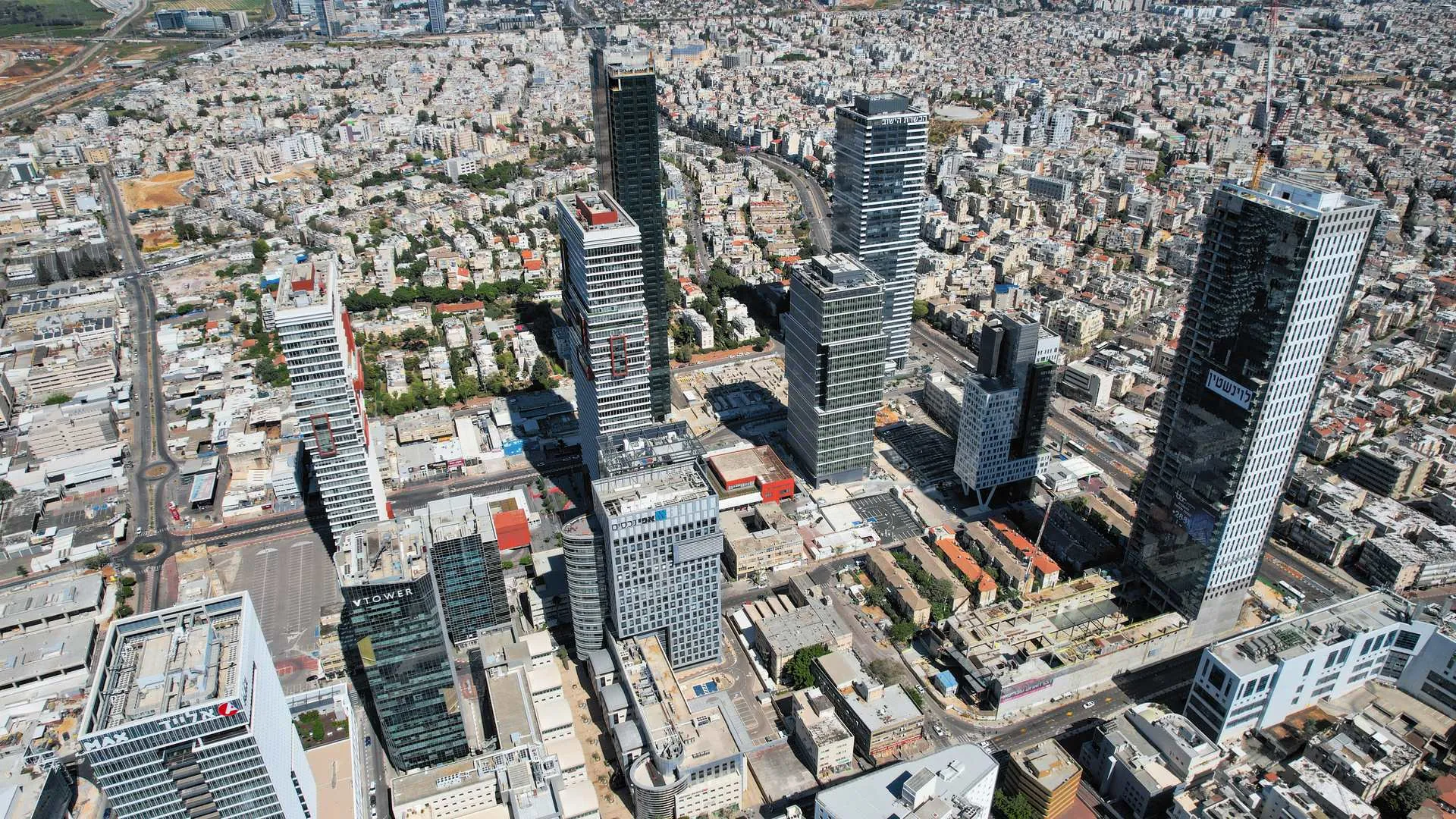
Bnei Brak was founded in 1924 as an agricultural settlement, then became the heart of Haredi life in Israel: most of its residents are Haredi, and in the 2021 general election, 89 percent of voters chose Haredi parties. With 229,996 residents counted by the Central Bureau of Statistics in 2024 on 7.088 square kilometres, more than 32,000 residents per square kilometre, it is the most densely populated city in Israel. That density explains the local property market: demand is first of all for large family flats, suited to large families, near yeshivot, synagogues, schools and kosher shops. The city centre concentrates this life: shopping streets, Torah and hesed institutions, family housing in dense buildings. Ramat Aharon, in the east, founded in 1967 and named after Rabbi Aharon Kotler, also concentrates institutions and family housing. Pardes Katz, in the north, with about 30,000 residents, is the only neighbourhood where most residents are not Haredi: its profile is more mixed, with newer buildings and a different neighbourhood life, which makes it a market apart within the city. In the east, the business district, with some fifteen office towers under construction since 2011, is a commercial hub, not a residential neighbourhood: it must be distinguished from residential areas when comparing homes. Daily life has practical rules to know before buying: streets are closed to traffic on Shabbat in most neighbourhoods, shops and services are organised accordingly, and parking and access are planned around that rhythm. Transport serves the city through the Bnei Brak suburban station, the Red Line light rail at the Ramat Gan border, buses and the nearby Ayalon highway, which reaches Tel Aviv in minutes. For a buyer, the central question is not generic rental yield, but how well the home fits a dense family life: number of rooms, space, proximity to institutions, lift and parking. Off-plan new build exists, notably in urban renewal and recent schemes, governed by the 1973 Sale Law with a bank guarantee on payments. Resale, more common, is available immediately and needs the usual checks: condition of the home, charges, title at the land registry. In both cases, personalised search is the safest entry point: the hunter knows the neighbourhoods, the buildings and local customs, and selects homes that truly match the brief. Before signing, the total cost of purchase is estimated with the tax and fees simulator, borrowing capacity with the financing simulator, and comparisons with Ramat Gan, Petah Tikva or Tel Aviv with the city budget simulator. Acquisition tax is described without fixed thresholds: the exact scale depends on each situation, and the dedicated guide and simulator give the answer for each case.
- A market understood with local guidance: Bnei Brak does not read like the other cities of the Gush Dan: its neighbourhoods, customs and expectations are specific. Personalised search and the local lawyer, who know the city, avoid misreadings and target homes that truly fit the project.
- Large family flats: Local demand is for family homes of several rooms, with generous space and storage. That is the profile to look for first, new or resale, rather than the small investment flats typical of other cities.
- Guidance in your language: Lawyer, mortgage broker, tax adviser: the team supporting your purchase speaks your language and knows both systems. Documents are explained before signing, steps are planned, and every decision is made with full information, with no surprise when the property is registered.
- Simulators before you sign: Before making an offer, estimate the total cost of purchase with the tax and fees simulator, test borrowing capacity with the financing simulator, and compare cities with the city budget simulator. Acquisition tax is described without fixed thresholds: the exact scale depends on each situation, and the dedicated guide and simulator give the answer for each case.
Key advantages
- At the heart of the Gush Dan, minutes from Tel Aviv: Bnei Brak borders Ramat Gan, Petah Tikva and Tel Aviv, with the Ayalon, the suburban station and the Red Line light rail nearby. You live in a city with a very strong identity without leaving the country's economic centre, and you reach Tel Aviv in minutes.
- Structural family demand: The city's density and family size create constant demand for large family flats near institutions, schools and shops. It is a market driven by local life and the real needs of residents, more than by speculation or seasonal letting.
- Pardes Katz, a market apart: In the north, Pardes Katz is the only neighbourhood in the city where most residents are not Haredi, with about 30,000 residents and newer buildings. For a buyer outside Haredi life, it is the neighbourhood to study first, with a profile and prices of its own.
- Urban renewal and a business district: Urban renewal schemes transform older buildings, and the business district, with its office towers, brings jobs and services to the east of the city. These changes alter the face of some areas without changing the identity of the residential neighbourhoods.
Infrastructure & Transport
- Train, light rail and the Ayalon: Bnei Brak suburban station serves the Yarkon line, the Red Line light rail runs at the Ramat Gan border, and buses link the city to the whole Gush Dan. The nearby Ayalon highway reaches Tel Aviv in minutes and Ben Gurion Airport via the main roads.
- Institutions, schools and shops: The city concentrates yeshivot, synagogues, schools and hesed institutions, as well as kosher shopping streets that shape daily life. Municipal services, health centres and local shops cover every neighbourhood, with hours adapted to the rhythm of the week.
- Shabbat and neighbourhood life: Streets are closed to traffic on Shabbat in most neighbourhoods, and neighbourhood life is organised around that rhythm: shops closed, streets given over to pedestrians and families. It is practical information to know before buying, notably for parking and access.
Investment profile
- New homes and off-plan buying: Buying a new off-plan flat in Bnei Brak lets you choose the floor, orientation and finishes before completion, with payments spread over the construction schedule. Israel's 1973 Sale Law governs the transaction: every payment is secured, usually by a bank guarantee. It is the simplest way to buy from abroad, with no hidden defects and delivery to current standards, but it takes patience: two to three years before handover is typical.
- Resale and urban renewal: Resale property in Bnei Brak is available immediately, often better located and sometimes cheaper per square metre than new build, at the cost of extra care: the real condition of the flat, service charges, and title checked at the land registry. Some older buildings are part of urban renewal schemes that can transform a whole neighbourhood. Our resale guide and personalised search compare both options without bias, according to budget and time horizon.
- Personalised property search: Instead of scrolling listings one by one, a personalised search hands your brief to a hunter: neighbourhood, number of rooms, mamad, lift, parking, outdoor space, budget. The hunter selects new and resale homes that truly match, organises viewings and negotiates with the seller. It is the most effective route when buying from abroad, or when the local market largely trades off-portal.
Neighborhoods of Bnei Brak
City centre
Pardes Katz
Ramat Aharon
Business district (BBC)
New build or resale in Bnei Brak
In Bnei Brak, you can compare the new developments listed in our catalogue or entrust us with the search for an existing property. The choice depends on your timeline, overall budget and target neighbourhood.
For resale, we define a brief with you — neighbourhood, number of rooms, mamad, lift, parking, outdoor space — then consult several sources and present an explained selection, with trade-offs and points to confirm.
Search in Bnei Brak Buying resale property: the guideFrequently asked questions about Bnei Brak
What kind of home should you buy in Bnei Brak?
Local demand is first of all for large family flats, 4 rooms and more, near yeshivot, synagogues, schools and kosher shops. Off-plan new build and urban renewal offer homes to current standards, with mamad, lift and parking; resale, more common, is available immediately. Personalised search targets the right neighbourhood and the right type, without wasting time on unsuitable homes.
Is Pardes Katz different from the rest of Bnei Brak?
Yes: with about 30,000 residents, Pardes Katz, in the north, is the only neighbourhood where most residents are not Haredi. Its profile is more mixed, its buildings newer, and its neighbourhood life different from the city centre. For a buyer outside Haredi life, it is the neighbourhood to study first, keeping in mind that it is fully part of the city and its services.
How do you get around Bnei Brak on Shabbat?
Streets are closed to traffic on Shabbat in most neighbourhoods, and shops are closed. It is practical information to factor in before buying: parking, access to the building, proximity to shops open during the week. During the week, the suburban station, the Red Line light rail at the Ramat Gan border, buses and the Ayalon serve the city and the whole Gush Dan.
Buying in Bnei Brak from abroad: where to start?
With personalised search: the hunter knows the neighbourhoods, the buildings and local customs, and selects homes that match the brief, new or resale. Then the tax and fees simulator gives the total cost of purchase, the financing simulator the borrowing capacity, and the resale guide the checks before signing. The local lawyer steps in before any signature, and acquisition tax is calculated case by case, with no fixed scale.
Similar cities
Discover other nearby cities or in the same price range.