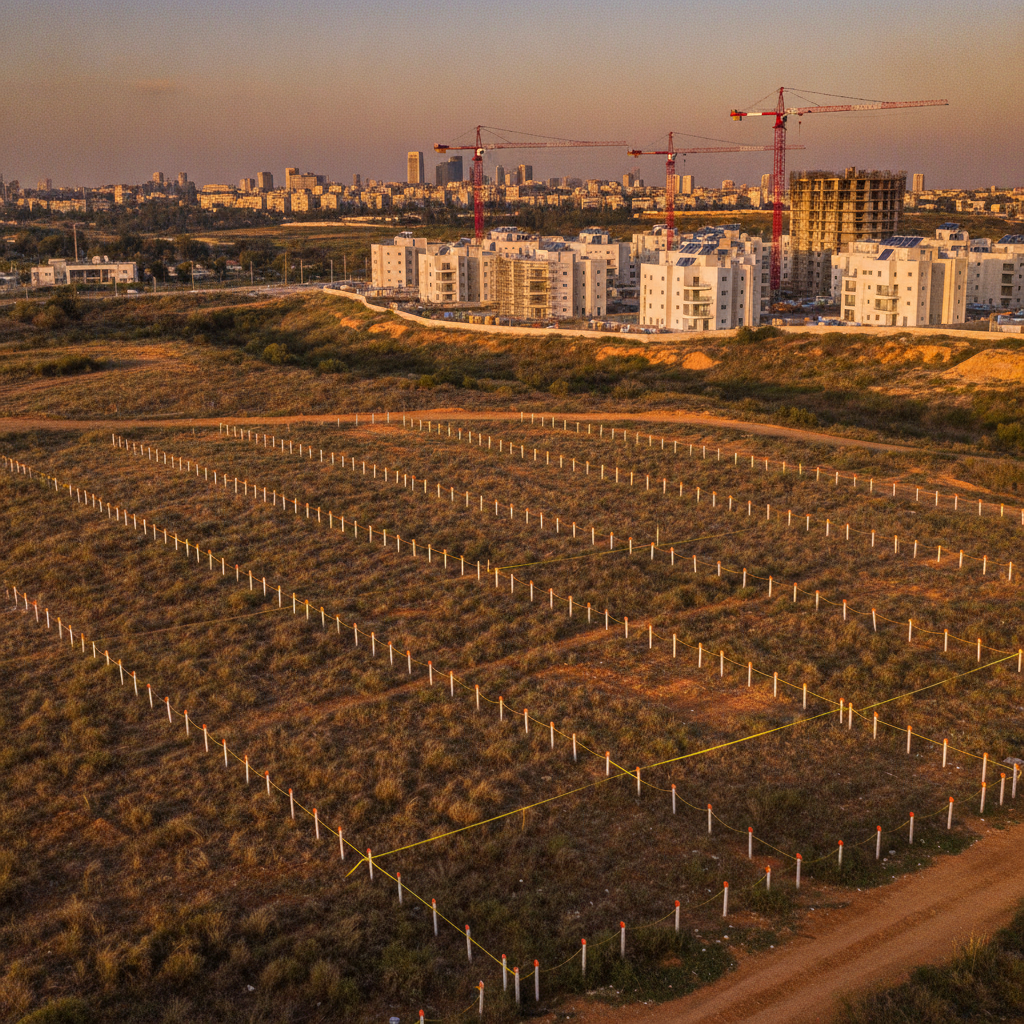
Land Auctions in Israel: 62% Drop in 2026, What Impact on Prices?
According to Land Authority data published by Globes, the number of homes put up for tender fell by around 62% in 2026. A weak signal today, but a decisive factor for new-build supply and prices in the coming years.
The Israel Land Authority, which controls most of the country’s buildable land, significantly slowed its tenders in 2026. This figure may seem technical, but it directly determines the number of new homes available in three to five years. Whether you are buying from abroad or already living in Israel, understanding this mechanism helps you choose the right time and place for your purchase.
What the Land Authority's Figures Reveal
According to data from the Land Authority published by Globes on September 28, 2026, 35,143 housing units have been put up for tender since the start of the year, compared to 91,993 in all of 2025. This represents a decrease of about 62%. The tenders actually awarded to a developer concern 22,845 units, compared to 48,406 in 2025.
The number of closed tenders confirms the trend: 185 in the first nine months of 2026, compared to 266 for all of 2025 and 346 in 2024, according to the same source.
| Year | Housing units tendered | Units awarded |
|---|---|---|
| 2020 (Covid) | 50,622 | 23,172 |
| 2022 (record) | 107,181 | 60,467 |
| 2023 | 93,456 | 34,860 |
| 2024 | 113,197 | 47,554 |
| 2025 | 91,993 | 48,406 |
| 2026 (9 months) | 35,143 | 22,845 |
Source: Land Authority, data published by Globes.
Why the Supply of Land is Collapsing
Globes identifies three main causes. First, the war disrupted the schedule and cooled developers' appetite. Next, the Land Authority is operating without permanent leadership, under a disputed interim management, which slows down decision-making. Finally, the relative weakness of the market, with prices slightly down year-on-year, makes developers more cautious in their bids.
The Director General of the Ministry of Housing says he is counting on catching up with targets by the end of the year. But, according to Globes, out of 422 tenders being prepared, only 70 are currently open for bids, representing 9,187 housing units. This volume is considered insufficient to close the gap with previous years.
The Covid Precedent: A Warning for Prices
Recent history calls for caution. In 2020, during the health crisis, only 50,622 homes were put up for auction. According to Globes, prices then jumped by about 30% in 2021-2022, partly because the supply of new homes did not keep up with the rebound in demand.
The comparison is not perfect. The 2026 context is different: a high stock of unsold homes, especially in the South, even higher interest rates than at that time, and slightly declining prices. The Bank of Israel also notes, in its September 1st statement, a high but stable stock of unsold properties. Therefore, it would be unwise to predict an automatic surge. On the other hand, a lasting shortage of land limits the market's flexibility when demand picks up, and there are already signs of renewed interest in new builds.
What Impact on New Property Prices in the Coming Years
Between the allocation of land and the delivery of apartments, several years usually pass: planning, permits, construction. The missed tenders of 2026 will therefore result in fewer project launches around 2028-2030. For buyers, there are two perspectives.
In the short term, the existing stock of projects remains significant, and developers are offering increasingly attractive payment terms. This is a rather favorable period for negotiation, as we explain in our weekly market summary. In the medium term, if the expected catch-up does not occur, areas with high demand could face a shortage of new properties, especially in the center of the country. Urban renewal, which does not depend on public land, will then play a growing role, as shown in our ranking of cities undergoing urban renewal.
How to Adapt Your Buying Strategy
For an Israeli already living in Israel and considering a purchase within the next two years, the key is to take advantage of current conditions without rushing. For a buyer from abroad, it's also important to factor in currency effects: according to the Times of Israel, the shekel has appreciated by about 10% against the dollar in one year.
Some useful tips:
- Compare already launched projects with known timelines in our catalogue.
- Assess the total cost with our taxes and fees calculator: 18% VAT included for new builds, purchase tax (Mas Rechisha) to be checked according to your profile, closing fees of 10 to 13%.
- Review the payment schedule offered by the developer.
- Have your lawyer verify the land status and Tabo registration before signing anything.
The trio of lawyer, broker, and architect remains essential: the lawyer secures the contract and guarantees, the broker negotiates financing, and the architect analyzes plans and technical specifications.
Key Takeaways
The drop in land tenders in 2026 is not driving prices up today, but it is setting the stage for a more limited supply of new properties in the future. Buyers who act early, with a carefully chosen project from our 300+ new developments across Israel, will be in a strong position. Request a personalized assessment, with no obligation, to see how your project fits into this context.
Sources
- Globes — Israel Land Authority Tenders (28/09/2026)
- Bank of Israel — Monetary Policy Statement (01/09/2026)
- Times of Israel — Housing snapshot, September 2026
Need personalized support?
An IsraelStart expert will call you within 24h with a personalized analysis of your project.