Customize Your New Apartment in Israel: Architecture and Design Guide
Introduction: Customizing Your New Apartment in Israel
This comprehensive guide covers all aspects of customizing a new apartment in Israel—architecture and design—for buyers and investors from abroad. Understanding these issues is essential to secure your real estate investment in Israel and avoid costly mistakes.
The Israeli real estate market has a mature and protective regulatory framework, but its specifics differ significantly from the French system. Each point addressed in this guide directly impacts your acquisition, taxation, or return. The support of a professional—real estate lawyer, broker, or property manager—is essential to navigate these complexities from abroad.
Legal and Regulatory Framework
The framework for customizing a new apartment in Israel is based on several key legal texts. The Sale of Apartments Law (Hok Mecher Dirot) of 1973, amended in 2005 and 2011, forms the basis of buyer protection, notably through the bank guarantee (Hok Habankaim) which secures payments to the developer in case of insolvency. The Land Registration Law governs property rights and their registration in the Tabo, ensuring indisputable legal security once the property is recorded. The Israeli Civil Code (Hok HaHozim) regulates contractual relations between parties, defining each party's rights and obligations.
For non-residents, specific provisions apply: the increased Mas Rechisha scale (8% to 10% in 2026, compared to 3-5% for residents on the first bracket), mashkanta conditions (maximum debt-to-income ratio of 30% and LTV of up to 50% of the property's price for non-residents in 2026, compared to 70-75% for residents), and mandatory declarations to the Israeli tax authorities, especially for rental income. Although these rules are more restrictive than for residents, they remain stable and predictable, which secures long-term investment and allows for precise financial planning. A good understanding of the Planning and Building Law (Hok Hatichnun Ve Habniya) is also crucial to grasp building permits and potential structural modifications.
Protection for New Home Buyers
The Sale of Apartments Law is particularly protective for new property acquisitions. It requires developers to provide a bank guarantee (ערבות בנקאית - arvut banka'it) for each payment made by the buyer, ensuring the recovery of funds in case of non-delivery or developer insolvency. This guarantee is issued by an Israeli bank and must cover 100% of the amounts paid. It is a major safeguard for international buyers, as it eliminates the financial risk associated with construction. Additionally, the law imposes a ten-year guarantee on the building's structure, and a 1 to 3-year guarantee on non-structural elements (finishes, equipment, waterproofing), similar to the French biennial and decennial guarantees, but managed differently. It is essential that these guarantees are clearly stipulated in the purchase contract.
Practical Aspects and Implementation
In practice, managing the customization of a new apartment involves coordination between several professionals. Your lawyer ensures legal compliance and protects your interests by conducting thorough due diligence on the developer, the land, and the contract. They make sure all guarantees are in place and that the clauses are fair. Your broker or banker optimizes the financial terms of your mortgage (mashkanta), negotiating the best rates (currently between 4.5% and 6.5% for 2026, depending on the profile and loan duration) and structuring the financing, taking into account the specificities of non-residents. Your property manager (if applicable) handles the day-to-day operational aspects, from finding tenants to property maintenance, including rent collection and management of charges (Arnona, Vaad Bait).
For a buyer from abroad, this coordination is key to a successful transaction. The advantage of IsraelStart's turnkey support is to centralize this coordination: a single point of contact who manages all professionals on your behalf, in your language, and keeps you informed at every stage through regular reports and video calls.
| Aspect | Responsible | Average Timeframe | Estimated Cost (excluding purchase) |
|---|---|---|---|
| Legal verification | Lawyer | 1-2 weeks | 1-1.5% of purchase price |
| Financial setup | Broker/Bank | 3-6 weeks | 0.5-1% of loan obtained |
| Administrative coordination | IsraelStart | Ongoing | Service fee (flat rate) |
| Post-acquisition follow-up | Manager | Ongoing | 8-12% of rental income |
| Customization & Works Supervision | Architect/Designer | 2-4 months (after purchase) | 5-10% of works costs |
Key Considerations for Non-Residents
Several important points require special attention for buyers living in France or elsewhere abroad. The power of attorney (ייפוי כוח - yipui koach) is essential for any administrative procedure in Israel—make sure it specifically covers actions related to purchasing a new apartment, including signing the purchase agreement, opening an Israeli bank account, and handling post-acquisition formalities. Administrative processing times can be longer for non-residents due to enhanced compliance checks, particularly the AML (Anti-Money Laundering) and KYC (Know Your Customer) procedures of Israeli banks, which may take an additional 2-3 weeks. Communication with Israeli authorities is conducted exclusively in Hebrew—your lawyer is your required intermediary, mastering the legal jargon and administrative nuances. It is crucial to ensure that your lawyer is accredited by the Israeli Bar Association.
Impact on Your Investment
The impact of customizing a new apartment on your investment can be measured in direct financial terms (costs, taxes, fees) and indirect ones (legal protection, security of property title, property appreciation, rental potential). Careful management of these aspects can make the difference between a profitable investment and an underperforming one. For example, a 0.5% gain on your mashkanta interest rate can represent thousands of shekels over the life of the loan, and effective tax optimization can save you tens of thousands of shekels in the long run. Thoughtful customization of your new apartment can also increase its rental value by 10 to 15% and make resale easier.
Our recommendation: do not overlook any of these aspects, even those that seem secondary. In international real estate, technical details are often the most expensive when ignored. The IsraelStart support service integrates each of these points into its turnkey offering, providing you with peace of mind and maximizing your return on investment.
FAQ
Does this topic concern non-resident buyers?
Yes, customizing a new apartment applies to all buyers in Israel, both residents and non-residents. Some provisions are specific to non-residents and are detailed in this guide, including tax implications and banking restrictions.
Do I need a lawyer to handle this aspect?
Yes, the involvement of a specialized lawyer is strongly recommended, and even required by Israeli law to secure the transaction. IsraelStart connects you with experienced French-speaking lawyers who are experts in these matters and will fully represent you.
What are the associated costs?
Costs vary depending on the complexity of your situation and the price of the property. Your lawyer and IsraelStart will provide you with a detailed estimate as part of the initial personalized assessment, ensuring transparent support from abroad. Generally, lawyer fees represent between 1% and 1.5% of the purchase price, excluding VAT. Real estate brokerage fees are typically 2% of the purchase price plus VAT, but may vary.
What are the typical timelines for buying a new apartment?
From signing the preliminary contract to final delivery, timelines can range from 18 to 36 months depending on the progress of construction. Final registration at the Tabo can take 1 to 3 years after delivery due to administrative complexities and the completion of the "Parcellation Scheme" (תבנית חלוקה).
In-depth Analysis of Key Issues
This area is especially important for non-resident buyers, as it directly impacts the legal and financial security of your investment. In Israel, the real estate legal system fundamentally differs from the French system on several essential points.
First, there are no notaries in Israel. The role of legal guarantor is fulfilled by the parties' lawyers. Each party has their own lawyer, who negotiates and secures the transaction. This structural difference means that the quality of your lawyer is the decisive factor in the security of your purchase. The lawyer conducts thorough checks: verification of the title deed, urban planning scheme (תכנית מתאר - tochnit matar), building permits (היתר בנייה - heter bniya), absence of liens or seizures on the property, and the developer's solvency.
Second, the Israeli land registry (Tabo - לשכת רישום מקרקעין) operates differently from the French cadastre. Three types of registration coexist (Tabo, Minhal, Tabat Mishlama), each with its own rules and levels of protection. Tabo is the most secure and common registration. Minhal, now the Israel Land Authority (רשות מקרקעי ישראל - Rashut Mekarke'i Israel), manages national lands through long-term leases. Tabat Mishlama (חברה משכנת - chevra mashkenet) is an internal registry of real estate companies, which does not have the legal value of Tabo and must eventually be converted to Tabo. Your lawyer systematically checks the registration status before any commitment and ensures final registration in Tabo for the best guarantees.
Third, Israeli real estate contracts (Heskem Mecher - הסכם מכר or Heskem Ekar) are drafted in Hebrew and do not include a cooling-off period—unlike the 10-day SRU period in France. Once signed, the contract is binding and final, except for specific termination clauses that must be negotiated and included. This reality highlights the importance of quality legal support before any signature, to ensure that all protective clauses (delivery deadlines, late penalties, property compliance, guarantees) are properly included.
Financial and Tax Implications
The financial and tax aspects of this field deserve special attention. The Israeli real estate tax system includes five main taxes: Mas Rechisha (acquisition tax, 8% to 10% for non-residents in 2026 for amounts above approximately 2.5 million NIS, with a progressive scale below that), Mas Shevach (capital gains tax, 25% for sales of properties held less than 4 years or not eligible for exemption), Arnona (annual municipal tax, ranging from 6,000 to 15,000 NIS per year for a 3-room apartment depending on the city), VAT ( 18% included in the price of new properties for developers), and rental income tax (10%, 15%, or a progressive scale at your choice with deduction of expenses).
The 1995 France-Israel tax treaty provides tax credit mechanisms that prevent double taxation. Rental income received in Israel is declared and taxed in Israel (the 10% flat rate option without deduction of expenses is often the most advantageous for non-residents), then declared in France with a tax credit equal to the tax paid in Israel. This mechanism is well established and fully mastered by the tax experts in the IsraelStart network, who will advise you on the best tax option for your situation.
For an investor from abroad, tax optimization can represent a saving of 50,000₪ to 200,000₪ over the holding period of a property worth several million shekels. This is why tax support, including scenario simulations and assistance with declarations, is an integral part of the IsraelStart turnkey service. In 2026, new tax reforms are planned to rebalance the market, so it is crucial to stay informed.
Comparison with the French System
For French buyers, comparing with the French system highlights both differences and similarities. In France, transfer taxes (notary fees) are 7 to 8%—comparable to the Mas Rechisha for non-residents at 8% to 10%. In France, the notary ensures legal security—while in Israel, this is the lawyer's responsibility, who plays a much more active role in negotiation and representation. In France, the annual property tax is similar to the Israeli Arnona, with comparable amounts in major cities.
The main differences: there is no cooling-off period in Israel; the mashkanta system (with no equivalent in France, it is a multi-rate financing over different durations and indexations); and the absence of inheritance tax in Israel (a significant advantage for asset transfer, although inheritance tax may apply in France depending on the deceased's tax residence). Additionally, the indexation of payments to the Construction Index (מדד תשומות הבנייה - Madad Tashumot Habniya) for new builds is unique to Israel, potentially adding 5% to 10% to the final price over the course of the project.
IsraelStart Resources and Tools
IsraelStart provides its overseas buyers with a range of tools and resources to navigate these complexities: online simulators (Mas Rechisha, mashkanta with estimated rates for 2026, additional fees, projected rental yield), detailed thematic guides (like this one), a network of verified and experienced French-speaking real estate lawyers and mashkanta brokers, and a dedicated contact who coordinates everything. This turnkey support is designed so that international buyers benefit from the same level of protection and information as local buyers, with the added convenience of smooth communication in their own language. We also offer personalized financing plans to assist with opening an Israeli bank account and obtaining the mashkanta.
Design Process and Customization of New Properties
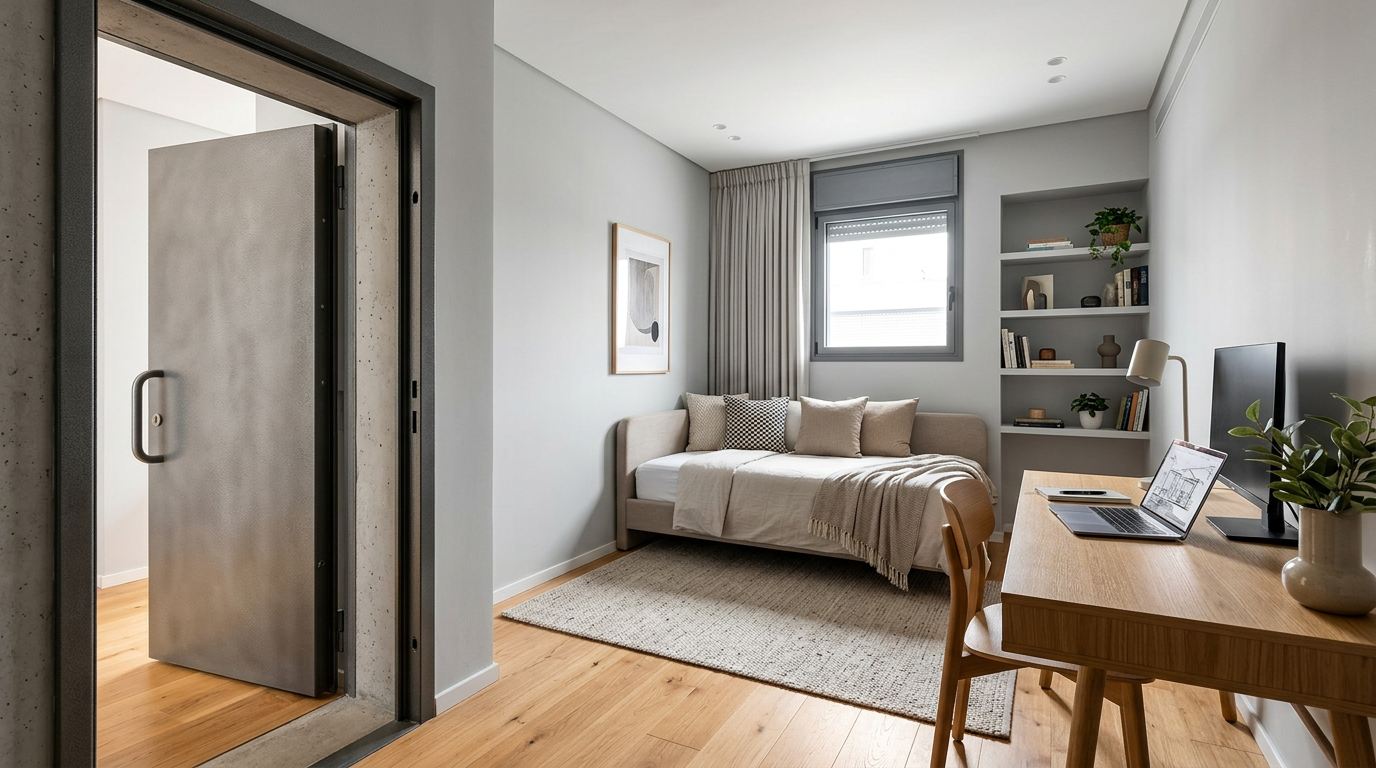
When purchasing a new apartment in Israel, the developer usually provides a standard specification sheet (מפרט טכני - mifrat techni) that includes basic finishes such as tiling, flooring, sanitary ware, the kitchen, and sometimes closets. However, many developers offer the possibility to customize your new Israeli apartment by making modifications (שינויי דיירים - shinuyei dayarim) compared to this standard.
These modifications can involve structural aspects (moving non-load-bearing walls, adjusting room sizes, creating wall niches for 5,000–15,000 NIS per modified m²) and aesthetic aspects (choosing premium materials, adding specific equipment). The deadlines for submitting these requests are usually very strict, often within 3 to 6 months after signing the contract, and any later changes can lead to significant additional costs and delays. Developers charge fees for these changes, ranging from 5,000 NIS for minor modifications to over 50,000 NIS for major redesigns.
Working with an interior architect or designer is highly recommended for foreign buyers. This professional can not only help translate your wishes into a technical plan for the developer, but also supervise the quality of the work and ensure that choices comply with local standards and practices. The cost of an interior architect for a customization project is between 5% and 10% of the renovation budget, with a minimum of 15,000 NIS.
Legislative Developments and Outlook 2026-2028
The Israeli regulatory framework is evolving regularly to adapt to market realities, particularly to support population growth and housing demand. Among recent and expected changes impacting this sector, there is a strengthening of transparency obligations for developers, with increased requirements for the disclosure of technical and financial information about projects. The gradual digitalization of administrative procedures (online Tabo, digitalized tax declarations) is underway, which should simplify processes for non-residents from 2027, reducing delays and the need for travel. Discussions are also ongoing regarding adjustments to Mas Rechisha rates for non-residents, with a possible trend towards simplification or differentiation depending on the objective (rental investment vs. secondary residence).
These developments are generally favorable for international buyers: more transparency (reduced risk of disputes), simplified procedures (saving time and increasing efficiency), and a better-regulated market (increased investment security). IsraelStart provides ongoing regulatory monitoring to inform its clients abroad of changes impacting their investment, through newsletters and regular information sessions. For example, new support for energy renovation may be introduced, increasing the added value of new apartments that comply with ecological standards.
Practical Guide: The 5 Priority Actions
For buyers from abroad approaching this subject, here are the 5 priority actions in order. First, appoint a French-speaking real estate lawyer specializing in Israeli law before any other step. Their knowledge of Israeli specifics and non-resident rights is essential. Second, have your lawyer conduct a full due diligence (Tabo verification, legal status of the developer and land, urban planning compliance, validity of building permits). Third, negotiate the contractual terms through your lawyer, paying close attention to protection clauses (bank guarantee, delivery deadlines, late penalties, customization options). Fourth, secure your financing with several Israeli banks, competing through a French-speaking mashkanta broker to get the best conditions (interest rates, duration, structure of the "tracks"). Fifth, set up a management structure (rental or asset management) suited to your non-resident status, including a property manager if you are targeting an investment.
This sequence forms the foundation of the turnkey IsraelStart support: each step is coordinated by your single point of contact, in your language, with regular and transparent follow-up. We will also guide you in choosing interior architects or designers familiar with Israeli developers to personalize your apartment.
IsraelStart is your trusted partner to navigate these complexities from abroad. With over 300 new projects listed throughout Israel, a network of French-speaking real estate lawyers and finance brokers in every city, and a dedicated team that speaks your language, we turn a potentially daunting process into a smooth and secure experience.
Need personalized support?
An IsraelStart expert will call you within 24h with a personalized analysis of your project.