Mashkanta Non-Resident 2026: Getting a Mortgage in Israel from France
Mashkanta: definition and how it works
The mashkanta (משכנתא) is the Hebrew term for a mortgage loan. It is the exact equivalent of a French home loan, with a few specific features linked to the Israeli banking system. The mashkanta is secured by a first-ranking mortgage registered at the Tabo (land registry) on the financed property. This registration gives the bank solid security in the event of borrower default, which explains their willingness to lend even to non-residents.
The mashkanta market in Israel is dominated by the country's five major banks, all of which have specialised departments for non-residents. These departments often include multilingual, even French-speaking, staff who are used to the specific procedures involved for international buyers. Lending conditions, rates, and maximum amounts differ according to your residence status, your nationality, and your financial profile. Understanding these nuances is essential in order to optimise your financing. For example, a new immigrant (Oleh Hadash) benefits from more advantageous conditions than a standard non-resident.
For French buyers who wish to buy an apartment in Israel, the mashkanta is an essential lever that makes it possible to finance up to 50% of the value of the property, thereby reducing the initial down payment required. This financing not only makes it possible to acquire a larger or better-located property, but also to keep cash available for other investments or for the ancillary costs of a property purchase (taxes, lawyer's fees, agency fees, etc.). The process, although similar in its broad outlines to a French home loan, presents cultural and administrative particularities that expert support can greatly simplify.
Non-resident eligibility conditions 2026
Israeli banks lend to non-residents subject to compliance with specific conditions, which are stricter than those for residents. These requirements are intended to minimise the risks for the bank, given the physical distance and the potential complexity of recovery in the event of default. Here are the eligibility criteria in 2026, with precise details to help you anticipate your file:
Minimum personal down payment: 50% of the value of the property. This is the most restrictive rule for non-residents. For a property at 2 million shekels (around 500,000 euros at the current exchange rate), you must have at least 1 million shekels (around 250,000 euros) in your own funds. This down payment must be proven by clear bank statements and, ideally, come from stable and easily identifiable accounts. The source of the funds is a major concern for Israeli banks because of the international regulations on anti-money laundering (AML).
Repayment capacity: the monthly payments must not exceed 30% to 40% of your net monthly income, depending on the banks and the stability of your income. This ratio is calculated on your income in euros, converted into shekels at the rate on the day of the analysis. Banks often apply a prudence coefficient for the euro/shekel conversion in order to protect themselves against unfavourable exchange rate fluctuations. Income is generally calculated on an average of the last 3 to 6 months. Additional income (rent, dividends) can be taken into account if it is stable and can be documented.
Professional stability: a permanent employment contract (CDI) of at least 2 years, or 3 years of activity for the self-employed (liberal professions, company directors), with positive and growing balance sheets over the last two to three fiscal years. For employees, a certificate from the employer confirming the position, the length of service and the salary is required. For the self-employed, the banks will require the last two balance sheets audited or certified by a chartered accountant, as well as the corresponding income declarations. The stability of the sector of activity is also a factor that is taken into account.
Age: the term of the loan cannot exceed the date of your 75th birthday. In concrete terms, if you are 55 years old, the maximum term of your mashkanta will be 20 years. It is important to note that some banks may limit the maximum term to 70 years or 72 years for the tranches of loans that are uninsured or at higher risk. The younger you are, the longer the term over which you can borrow, which reduces the monthly payments.
Banking and financial history: no major payment incidents (rejected cheques, unpaid direct debits), no Banque de France registration (FCC, FICP), no ongoing over-indebtedness in France or in other countries. Israeli banks require a certificate of non-registration in your country of residence. Good management of your bank accounts and regular savings are major assets. The banks may also ask for proof of the good conduct of your other loans (consumer loans, other property loans).
Maximum LTV: 50% for non-residents
The Loan-to-Value (LTV) ratio is the percentage of the price of the property that the bank agrees to finance. For non-residents, the maximum LTV is capped at 50% by the regulation of the Bank of Israel (Bank Israel), compared with 70% to 75% for residents. This regulation is a prudential measure to limit the exposure of Israeli banks to non-resident risk, which is perceived as higher because of the difficulties of international legal recourse.
This 50% cap is regulatory and non-negotiable, whatever the quality of your file or your personal wealth. However, some banks accept taking into account the appraised value of the property (and not the purchase price) for the calculation of the LTV. If the appraisal is higher than the price paid — which happens frequently in new-build or on very dynamic markets such as Tel Aviv or Jerusalem — the amount actually borrowed may be slightly higher than 50% of the purchase price. For example, if you buy a property for 2 million shekels and the bank appraisal values it at 2.1 million, the bank will potentially be able to lend you 50% of 2.1 million, that is 1.05 million shekels, instead of 1 million. This is an important nuance to exploit.
Comparative table of LTVs by profile:
| Buyer profile | Max LTV | Minimum down payment | Example (property 2M₪) | Details and conditions |
|---|---|---|---|---|
| Resident – 1st purchase | 75% | 25% | 500,000₪ | For the purchase of the main residence, subject to income conditions and with no other real estate property in Israel. |
| Resident – 2nd property | 50% | 50% | 1,000,000₪ | For the acquisition of a second home or of an investment property when the buyer already owns a property in Israel. |
| Non-resident | 50% | 50% | 1,000,000₪ | Applicable whatever the type of property (future main residence, second home, investment), subject to repayment capacity. |
| Oleh Hadash (<7 years) | 75% | 25% | 500,000₪ | A "new immigrant" (making Alyah) benefits for 7 years from the same conditions as an Israeli resident for his first acquisition. This status is very advantageous. |
Fixed vs variable rates: 2026 comparison
The Israeli mashkanta offers unique flexibility thanks to its system of tracks (Masloulim). Each loan is made up of several combined tracks, each with its own type of rate and its own early repayment conditions. This modularity makes it possible to build a tailor-made loan, according to your aversion to risk and your economic forecasts. The distribution between these tracks is crucial and must be thought through strategically.
Fixed shekel rate (Kvoua): between 4.8% and 5.8% in March 2026 for a term of 20 years. This is the most secure track — your monthly payments are guaranteed for the entire term of the loan, and therefore protected against rises in Bank of Israel rates. Ideal for non-residents who want total predictability and to minimise the uncertainties linked to managing an investment at a distance. This rate is often preferred for the major part of the loan. However, in the event of a fall in rates, early repayment may generate penalties (Amla).
Variable Prime rate (Prime ±): Prime (currently 6.0% in March 2026, after several successive rises) ± a negotiated spread. In March 2026, offers range between Prime -0.5% (that is, 5.5% effective) and Prime +0.5% (that is, 6.5% effective). The Prime rate varies directly according to the decisions of the Bank of Israel on its key rate, generally once a month. This track offers great flexibility for early repayment without penalty. It is attractive for a portion of the loan if you anticipate a fall in rates or if you foresee a partial repayment in the short or medium term.
Indexed fixed rate (Kvoua Tzamoud): between 3.2% and 4.0% in March 2026, but indexed to the consumer price index (Madad). This means that the outstanding capital and the monthly payments are adjusted periodically according to inflation. If inflation is strong, your monthly payments increase, sometimes substantially. Conversely, in a period of low inflation, this rate can be very advantageous because the starting nominal rate is lower. Attractive if inflation remains contained and you are ready to take this risk. It is also a track with no early repayment penalties, which makes it flexible.
Variable Libor/Euribor rate: between 4.0% and 5.5% in March 2026, indexed to international interbank rates (Libor for the dollar or Euribor for the euro). Reserved for borrowers who receive their income in foreign currencies (euro, dollar, pound sterling) and wish to limit their exchange rate risk. If your income is in euros, a loan indexed to Euribor may be relevant. Early repayment on this track is generally without penalty.
The regulation requires that no more than 33% of the loan be concentrated on a single track if that track presents a particular risk for the borrower (e.g.: uncapped variable rate). In addition, some banks may impose a minimum weighting of fixed rate (Kvoua) for non-residents, in order to secure part of the outstanding amount. Your broker or your banker composes an optimal mix adapted to your risk profile, to your financial objectives and to your ability to anticipate economic developments. A classic distribution could be 50% fixed (Kvoua), 30% variable Prime, and 20% indexed fixed (Kvoua Tzamoud).
The banks that lend to French buyers
All the major Israeli banks offer mashkantaot to French non-residents, but with variable levels of service and competitiveness. The choice of bank is not limited only to the rates, but also to the fluidity of the process, to the availability of French-speaking advisers and to the flexibility of their international departments.
Bank Hapoalim — The market leader with the most developed international department. Reputed for its efficiency and the clarity of its process. A dedicated French-speaking desk, a well-honed process for non-residents, competitive rates thanks to its large volume of transactions. It is the default choice of the majority of French buyers, often perceived as the most "friendly" bank for this clientele. Their teams are very used to French documentation.
Bank Leumi — The country's second bank, very active on the non-resident segment. Often in direct competition with Hapoalim on offers. It offers personalised follow-up and conditions that are often close to Hapoalim, sometimes even more advantageous on certain tracks, in particular for files with high income or a large down payment. They also have bilingual teams and a good understanding of foreign tax and banking systems.
Bank Mizrahi-Tefahot — Historic specialist in the mashkanta in Israel (the leading bank for residential property loans to residents). Increasingly active with non-residents, with offers that are sometimes very aggressive in order to gain market share. They compensate for an international department that is potentially smaller than Hapoalim's or Leumi's with efforts on rates. They can be particularly attractive for new properties or construction projects where their expertise is proven.
Bank Discount — Competitive positioning on large transactions (>3M₪, around 750,000 euros), and more specific profiles (entrepreneurs, multi-product investors). Less volume on the standard non-resident segment, but not to be neglected for exceptional files. Their flexibility can be a major asset for more complex situations.
First International Bank (FIBI) — The smallest of the five in the mashkanta segment, but it can offer attractive conditions to win files and increase its international portfolio. They are often able to be more flexible on certain points of documentation or timing. Do not hesitate to sound them out, especially if your file presents small "hitches" or particularities.
Our recommendation: approach at least 3 banks to put the offers in competition and obtain the best rate/conditions combination. It is rare for a single bank to have the best offer on all the tracks simultaneously. IsraelStart coordinates this competitive process as part of its support, presenting your file in the optimal manner for each institution.
Application file: required documents
The mashkanta file for a French non-resident is demanding and must be put together rigorously in order to avoid delays. As Israeli banks are very sensitive to international regulatory constraints (anti-money laundering, etc.), the clarity and exhaustiveness of the documents are paramount. All documents must be drafted in English or in Hebrew, or accompanied by a sworn translation.
Identity documents:
* Valid passport of the borrower and of the co-borrower (if applicable), with a certified true copy. A second identity document (national identity card) may be requested.
* Recent proof of address (less than 3 months old) in France (electricity bill, local tax notice).
* Possibly, a certificate of Israeli tax non-residence issued by the French tax authorities or a sworn declaration.
Income documents:
* For employees:
* The last 3 or 6 payslips.
* Employment contract if recent, or a certificate from the employer mentioning your position, date of hiring, annual salary and whether the position is permanent (CDI).
* For the self-employed / company directors:
* The last 3 balance sheets and profit and loss accounts of your company, certified by a chartered accountant or a statutory auditor.
* The last 3 personal tax declarations (IRPP) showing your professional income.
* A K-Bis or extract from the trade register of your company less than 3 months old.
* For retirees:
* The last 3 pension statements.
* Notification of pension award.
* All these documents must be accompanied by a sworn translation into Hebrew or English, and ideally by an "accountant's letter" summarising your net annual income.
Tax documents:
* The last 2 French tax notices (income tax notices), complete.
* If you have rental income, the corresponding declarations (2044 or 2042).
Bank documents:
* Bank statements for the last 6 months of all your current accounts in France and in other countries. These statements make it possible to assess the management of your finances, the regularity of your income and the absence of incidents.
* Proof of your savings accounts (passbooks, life insurance, securities accounts) showing the personal down payment required for the operation. The origin of the funds making up the down payment must be clear and traceable (sale of a property, inheritance, employee savings).
* A bank certificate of non-registration in France is often required.
Property document:
* Reservation contract or Heskem Ekar (preliminary sales agreement) signed and valid, or letter of commitment from the developer for a new property. This document must clearly establish the price of the property, the payment terms and the identity of the parties.
* Detailed description of the property (address, surface area, number of rooms).
* For an existing property, proof of the seller's ownership (Tabo).
Cost of translations and appraisals:
The cost of sworn translations can vary from 500€ to 1500€ depending on the volume of documents. The appraisal of the property (Shomé) is ordered by the bank after conditional acceptance and financed by the borrower (cost: 2,000₪ to 4,000₪, that is around 500€ to 1000€). These costs are to be anticipated.
The average processing time is 3 to 6 weeks between the submission of the complete file and the bank's firm offer. However, it is frequent for the banks to request additional documents or clarifications, extending this time. A well-prepared file and proactive follow-up are essential.
Simulate your mashkanta online
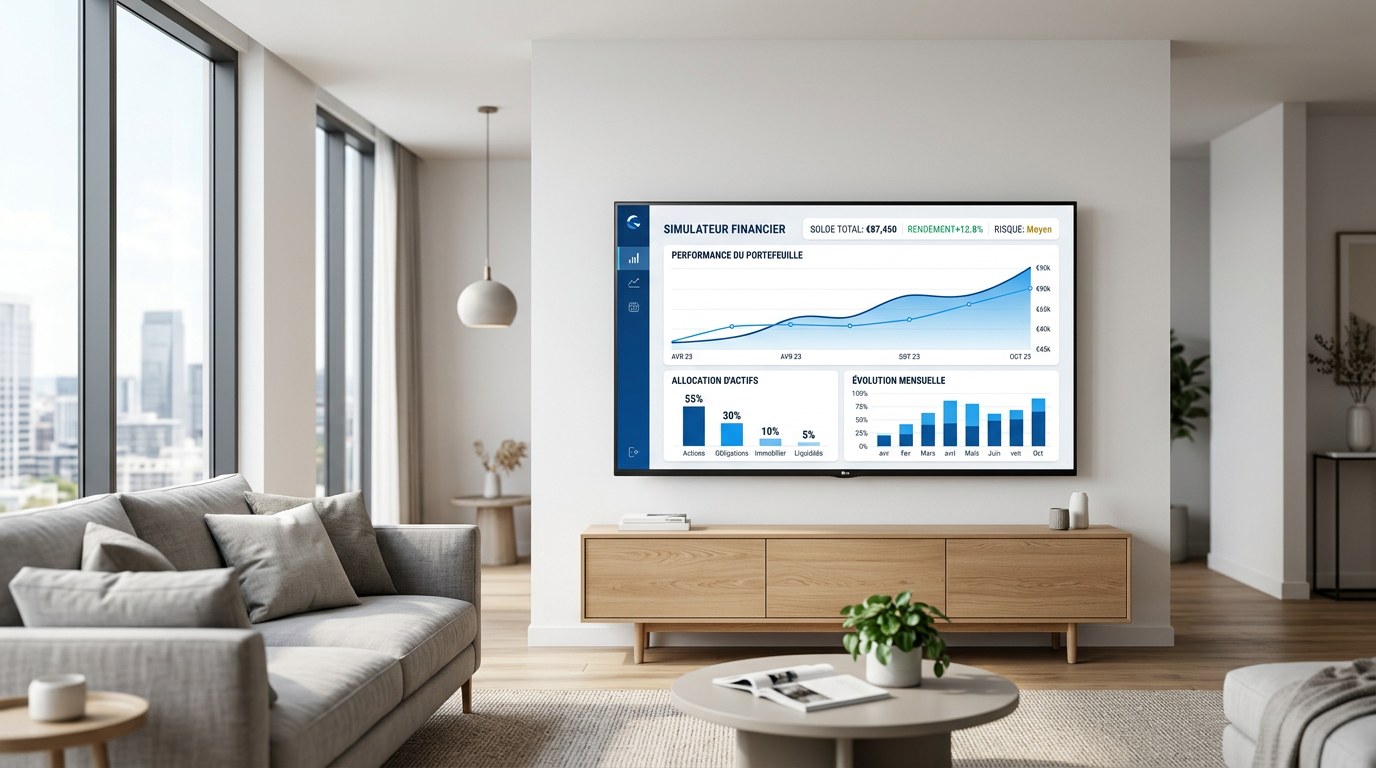
Our mashkanta simulator allows you to obtain an estimate of your monthly payments in 30 seconds. This tool is designed to give you a first realistic idea of what you can claim in 2026, taking into account the specificities of the Israeli market and of non-residents. Enter the price of the property in shekels, your down payment as a percentage or in shekels, the desired term in years, and the preferred type of rate (fixed, variable, or a combination). The simulator calculates instantly:
* The estimated monthly payment in shekels, including capital and interest.
* The total cost of the credit over the selected term.
* A simplified amortisation table showing the capital/interest distribution over time.
* The estimated amount of the annual borrower insurance, based on market averages for a non-resident profile.
This simulation is indicative and does not constitute a loan offer. It is a starting point for your thinking. Its accuracy depends on the average market rates at the given moment and does not take into account all the subtleties of your personal profile. To obtain a firm and personalised offer, contact our team, which will coordinate the requests with several banks on your behalf, taking into account all the parameters of your file.
IsraelStart negotiates for you
Acquiring a mashkanta in Israel, especially as a French-speaking non-resident, can prove complex without specialised support. The banking system, the Hebrew terminology, the documentary requirements, and the negotiation practices differ considerably from France. That is where IsraelStart steps in as your privileged partner.
IsraelStart mashkanta support includes a complete range of services designed to relieve you of all the administrative and linguistic constraints:
* Analysis of your borrowing capacity: Detailed evaluation of your income, of your down payment and of your financial profile to determine the maximum amount you can borrow and the realistic monthly payment.
* Putting together the complete file: Help with collecting the required documents, checking their compliance, and management of the sworn translations if necessary, guaranteeing you a "bankable" file from the first submission.
* Simultaneous approach to 3 to 5 banks: Presentation of your file to several major Israeli banking institutions, in order to optimise your chances of obtaining the best offer.
* Negotiation of the rates and of the early repayment conditions: Our experts, who know the market practices, negotiate on your behalf the most advantageous rates and the most flexible clauses on the different tracks (Masloulim). This can represent tens of thousands of shekels in savings over the term of the loan.
* Coordination with your lawyer [avocat-immobilier-israel-francophone]: The mortgage process is a crucial legal step. We liaise with your lawyer in Israel to guarantee that all the legal aspects of the registration of the mortgage and of the release of the funds are managed efficiently and with complete transparency.
* Follow-up until the release of the funds: Support at each step, from pre-approval to the signing of the loan offer, and up to the transfer of the funds to the seller or to the developer.
* Simplified communication: You do not need to speak Hebrew or to understand the subtleties of the Israeli banking system. Everything is managed from your home, in your language (French), with regular and clear updates on the progress of your file.
This service is part of IsraelStart's turnkey support. Our objective is to offer you a serene and efficient property purchase experience in Israel, maximising your chances of obtaining the best financing conditions.
Early repayment: what you need to know
Early repayment of a mashkanta in Israel is a right of the borrower, but it is governed by specific rules and may entail fees. Understanding these mechanisms is essential to plan your long-term financial strategy. Repayment flexibility is an important criterion to take into account when choosing the composition of your mashkanta.
For the fixed-rate tracks (Kvoua), whether they are indexed or not indexed, early repayment penalties (Amla) apply. These penalties are calculated on the difference between the contractual rate of your loan and the market rate at the time of repayment. If market rates have fallen since the signing of your loan, the cost for the bank is higher (it must re-lend the money at a lower rate), hence the penalties. These penalties can reach 2% to 5% of the capital repaid early if market rates have fallen significantly. The exact calculation formula is regulated and takes into account the remaining term of the loan, the outstanding capital and the gap between the rates. It is always recommended to ask for a precise simulation of these fees before making an early repayment on a fixed track.
For the variable-rate tracks (Prime, Libor/Euribor), early repayment is generally without penalty. That is why many non-resident borrowers include at least 33% (sometimes more if the bank's conditions allow it) of their mashkanta at a variable rate. This allows them to keep precious flexibility: in the event of an unexpected inflow of money (sale of another property, inheritance, bonus), they can repay a significant part of their loan with no additional fees. This is a common strategy for investors or for those who foresee a large fluctuation in their income.
The common early repayment scenarios for buyers from abroad are many:
* Full repayment at the time of Alyah: After making Alyah (immigrating to Israel), the borrower can renegotiate his mashkanta on resident conditions (LTV 70%, preferential rates for Olim, etc.) or repay the loan in full in order to take out a new one. The penalties on the fixed parts can then be offset by the better conditions offered to Olim.
* Partial repayment after the sale of a property in France: Many non-residents finance their initial down payment with savings, and plan to sell a property in France later to complete the repayment.
* Refinancing if market rates fall significantly: If interest rates in Israel fall drastically, it can be advantageous to settle your current loan (even with penalties on the fixed parts) in order to take out a new one on more favourable conditions.
Your mashkanta broker will analyse the best strategy according to the composition of your loan and your medium- and long-term objectives. He can also simulate the impact of the penalties to help you make an informed decision.
Borrower insurance: mandatory and negotiable
Mashkanta insurance (Bituach Mashkanta) is mandatory in Israel for any property loan. It is intended to protect the bank and your family in the event of an unforeseen event. This insurance mainly covers the death and the total and permanent disability (ITP) of the borrower. In the event of death or disability, the insurer repays the outstanding capital to the bank, thereby freeing your heirs from the debt.
The annual cost generally lies between 0.3% and 0.8% of the outstanding capital, according to your age, your state of health, your smoker/non-smoker status, and the insurance company chosen. The older you are or if you have a medical history, the higher the cost will be. The insurance is decreasing, that is to say that it decreases as the outstanding capital decreases.
Important point: you are not obliged to take out the insurance offered by your bank. Israeli law (insurance law) authorises you to choose an external insurer. This "insurance delegation" is an opportunity that is often very attractive because external offers are frequently 20% to 40% cheaper than the group contracts offered by the banks. This can represent substantial savings over the total term of the loan.
For French non-residents, Israeli insurers may request specific information or additional medical examinations, but the process is well honed. Your broker can direct you towards the most competitive offers on the market. It is crucial to compare the guarantees (extent of disability, excesses, waiting periods) as well as the price. Insurance is an item that is often neglected in the overall budget of the property loan, but which can represent thousands, even tens of thousands of shekels (15,000₪ to 30,000₪) of difference over the total term of the loan. Do not underestimate the importance of a renegotiation or of insurance delegation.
Taxation of the non-resident in Israel: taxes and benefits
Buying a real estate property in Israel as a non-resident involves understanding the tax implications, both in Israel and in France. Although you are not an Israeli tax resident, certain property transactions and income are taxable there.
In Israel:
* Acquisition tax (Mas Rechisha): This is the equivalent of French transfer taxes. For non-residents, the rate is generally higher than for residents. It is progressive and can vary from 8% to 10% of the value of the property in 2026, depending on the price bracket. It applies to the acquisition of any real estate property.
* Property tax (Arnona): This is an annual local tax collected by the municipality, calculated on the surface area of the property and its location. The amount varies considerably from one city to another and from one neighbourhood to another.
* Capital gains tax (Mas Shevach): If you sell your property in Israel and make a profit, this capital gain is subject to tax in Israel, at the general rate of 25% in 2026. Exemptions or special regimes may exist under certain conditions (for example, if the property is considered as a future main home after Alyah).
* Tax on rental income (Mas Sachar): If you rent out your property, the rent received is taxable in Israel. There are generally two options:
* A flat-rate levy of 10% on gross income, with no deduction of expenses. This is the simplest option for low rental income.
* Taxation on the progressive scale (up to 31% for the highest brackets), after deduction of actual expenses (loan interest, amortisation, works, property tax, etc.). This option is often more advantageous for significant rental income.
In France:
* Under the Franco-Israeli bilateral tax convention, property income and real estate capital gains on properties located in Israel are taxable in Israel. However, France may take them into account for the calculation of your effective tax rate (effective rate mechanism), although it does not directly tax this income already taxed in Israel.
* It is crucial to consult a tax specialist in international real estate in order to optimise your situation and avoid double taxation.
Purchase process and release of funds: key steps
The property purchase process in Israel for a non-resident, from the signing of the preliminary agreement to the release of the mashkanta funds, generally follows several steps:
1. Signing of the Reservation Contract / Heskem Ekar: This is the equivalent of the preliminary sales agreement. A down payment (5% to 10% of the price) is generally paid. This is the time to notify the bank of your intention to borrow.
2. Submission of the Mashkanta file: Once the Heskem Ekar is signed, you submit the complete file to your broker, who forwards it to the banks.
3. Conditional approval (Ishur Ekroni): The banks examine your file and give you an agreement in principle, often valid for 90 days, subject to the appraisal of the property and to certain conditions. It is crucial to obtain this approval before going any further in your commitments.
4. Appraisal of the property (Shomè): The bank mandates a real estate appraiser (Shomè Shamaï) who assesses the market value of the property. His report is decisive for the calculation of the final LTV.
5. Firm Offer (Hatzka'at Mashkanta): After validation of the appraisal, the bank issues a firm loan offer, detailing all the conditions (amount, rate, term, tracks, insurance). You have a time limit to accept it.
6. Signing of the bank documents: You sign the loan offer and the various insurance and guarantee contracts at the bank (or before the bank's lawyer). For non-residents, this can often be done by power of attorney or at a local notary in your country in the presence of an Israeli lawyer.
7. Registration of the mortgage (Rishum Mashkanta): Your lawyer registers the first-ranking mortgage on the property at the Tabo (land registry) for the benefit of the bank. This is a prerequisite for the release of the funds.
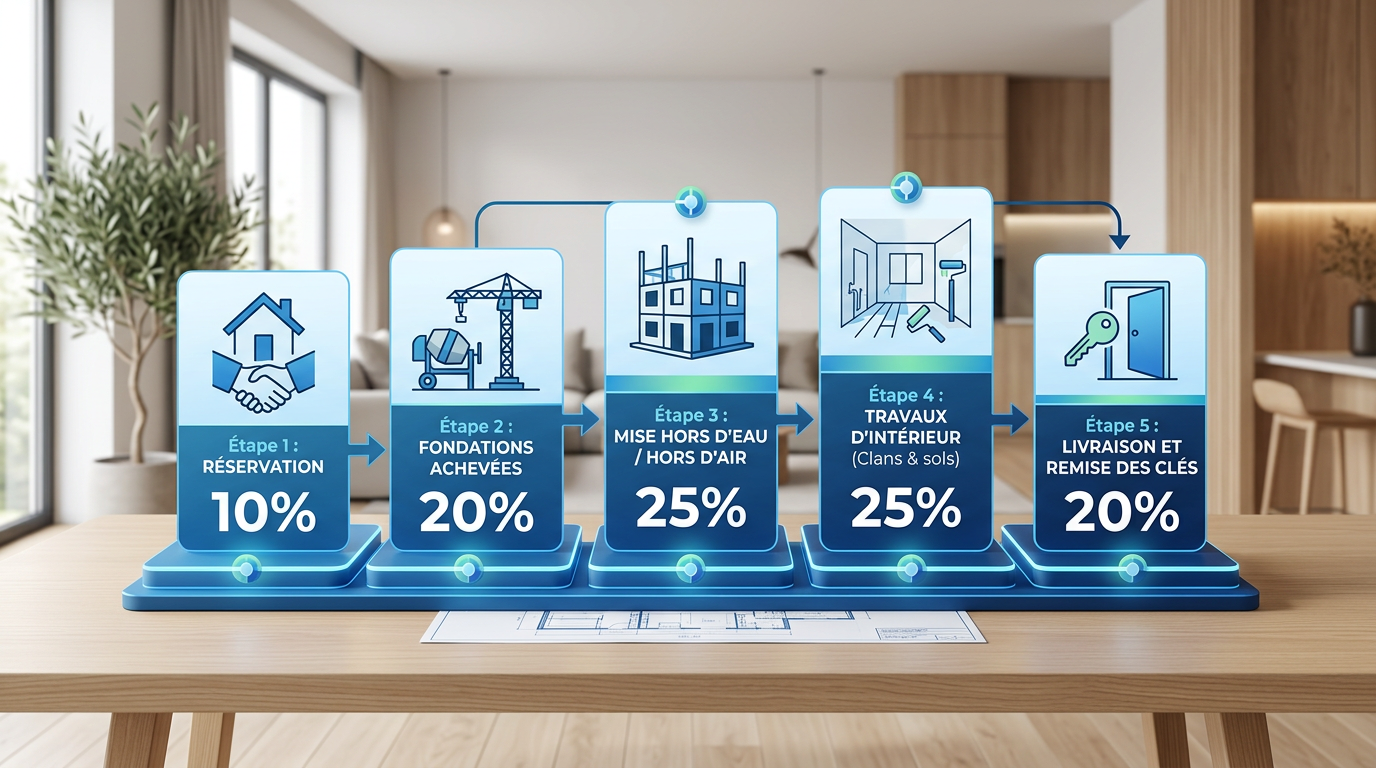
8. Release of the funds: The mashkanta funds are released by the bank according to the payment schedule provided for in the Heskem Ekar, generally in several tranches, and paid directly to the seller or to the developer. The last tranche is generally paid at the handover of the keys and the final transfer of ownership.
This process generally takes between 2 and 4 months. Fluidity depends a great deal on the preparation of your file and on the coordination between your broker, the bank and your lawyer.
Need personalized support?
An IsraelStart expert will call you within 24h with a personalized analysis of your project.