New Build Property in Yavne'el: Developments & Areas 2026
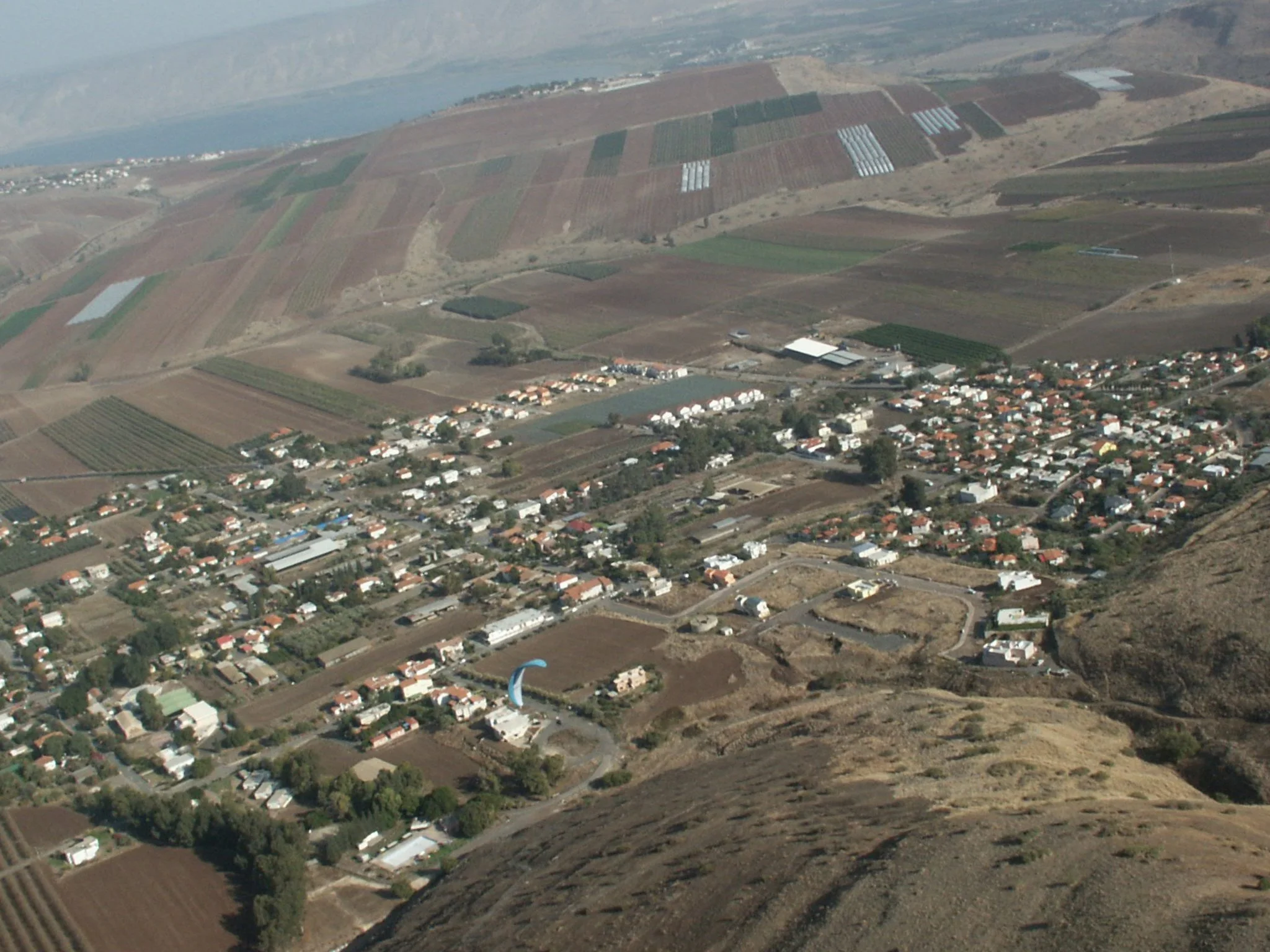
Yavne'el, a moshava founded in 1901 in the Yavne'el Valley in the eastern Lower Galilee, is one of the oldest rural Jewish communities in Israel. With 4,801 residents according to the Central Bureau of Statistics (CBS, 2024) and more than 31 square kilometres of land, it offers authentic village life, among orchards and hills, about ten kilometres from Tiberias and the Sea of Galilee.
Population: 4,801
Why invest in Yavne'el
Yavne'el carries more than a century of rural Jewish history. The moshava was founded on 7 October 1901 by ten families of pioneers from Russia, under the auspices of the Jewish Colonization Association, on land bought by Baron Edmond de Rothschild for agriculture based on private ownership and family farming. Its name comes from the biblical town of Yavne'el, mentioned in the Book of Joshua (19:33) on the southern border of the tribe of Naphtali, identified with the archaeological site of Tel Yin'am, at the north-western edge of the locality. Lack of water held back the village's growth for a long time, until substantial groundwater reserves were discovered in 1932 and then tapped in the 1940s, allowing irrigation and diversified farming. After the War of Independence, a ma'abara was set up nearby and its residents, mostly from Yemen and North Africa, were later absorbed into the moshava. In the 1950s, three neighbouring localities were merged into Yavne'el: the moshava of Bet Gan, founded in 1904, and the moshavim of Mishmar HaShlosha (1937) and Smadar (1953). A local council since 1951, Yavne'el has 4,801 residents in 2024 (CBS) on 31,680 dunams, or 31.68 square kilometres, in the Northern District, Kinneret subdistrict, in the eastern Lower Galilee. It is a rural community of detached houses, orchards and large plots, home to long-established farming families, a large Breslov Hasidic community — about 30% of the population — and an English-speaking community of some twenty families from North America, South Africa, France and Canada.
The neighbourhoods of Yavne'el. The historic centre of Yavne'el, around the moshava of 1901, holds the old houses, the community institutions and the memory of the pioneers: this is where the identity of a farming village founded by Baron de Rothschild reads most clearly. Bet Gan, an old moshava founded in 1904 and merged into Yavne'el in the 1950s, is a quiet residential sector dominated by detached houses with gardens. Mishmar HaShlosha, a moshav founded in 1937 and merged into the locality in the 1950s, keeps a marked agricultural character, with plots and orchards. Smadar, a moshav founded in 1953 and likewise merged into Yavne'el in the 1950s, is a family residential neighbourhood on the edge of the valley. The Breslov quarter, often called «Breslov City», founded in 1986 around Rabbi Eliezer Shlomo Schick, brings together more than a hundred Hasidic families, largely of Sephardic origin, and gives the locality an intense religious life, with synagogues and institutions. For a buyer, the diversity of the quarters is an asset: each sector has its own character, plot type and atmosphere, from the historic centre dense with memory to the Breslov quarter full of community life, via the farming sectors of Mishmar HaShlosha and Smadar.
Buying in Yavne'el with IsraelStart. IsraelStart currently lists no new development in the locality: this guide is therefore a buying guide, not a catalogue page. IsraelStart's personalised search lets you target detached houses and villas in Yavne'el as soon as a property becomes available, and compare with the neighbouring towns of Tiberias, Afula and Migdal HaEmek, where supply is broader. For a resale purchase, the resale guide explains the essential checks: title deed at the Tabu, condition of the property and its plots, and review by a specialist lawyer before signing — all the more important in a moshava where land rights and farm plots have a long history. The purchase tax, mas rechisha, depends on the price of the property and the status of the buyer: the legal guide and IsraelStart's tax and fees simulator explain the calculation, with no figures quoted here while the tax ruling is pending. Financing can be prepared with the financing simulator, which estimates a mashkanta mortgage, and the budget can be calibrated with the budget simulator by city. No price per square metre is shown on this page: there is no published reference price source for Yavne'el, and the value of a village house depends above all on its plot, its location and its condition. Local life, though, is an argument in its own right: the Yavne'el Valley and its stream, Nahal Yavne'el, offer hikes starting from the village, the Tel Yin'am archaeological site recalls three thousand years of history, and the Sea of Galilee is about ten kilometres away. For a first purchase from abroad, the 2026 buying guide and the page dedicated to aliyah complete this city guide.
- A century of history: Buying in Yavne'el means settling in one of the oldest moshavot in the country, founded in 1901, with a living heritage and memory.
- Shared nature: Valley, stream, orchards and hills: the living environment is that of a farming village in the Lower Galilee, a short drive from the lake.
- Space to live: Large plots, gardens and detached houses: Yavne'el offers a breathing space impossible in the city.
- A welcoming community: Long-time farmers, Breslov Hasidim, English-speaking families: the locality welcomes newcomers from every background.
- The lake within reach: The Sea of Galilee, its beaches and historic sites are about ten kilometres away, for everyday life as well as for visitors.
Key advantages
- One of the oldest moshavot: Founded in 1901 with the help of Baron Edmond de Rothschild, Yavne'el is one of the oldest rural Jewish communities in the country, with a documented history and a living historic centre.
- The nature of the Lower Galilee: The Yavne'el Valley, its stream, orchards and hills offer a preserved rural setting, with the Sea of Galilee about ten kilometres away.
- Large plots and detached houses: With 31.68 square kilometres for 4,801 residents, the locality offers what cities cannot: space, gardens and detached houses.
- A diverse and lively community: Long-established farming families, a Breslov Hasidic community making up about 30% of the population, and an English-speaking community: Yavne'el mixes ways of life without opposing them.
- About ten kilometres from Tiberias: Shops, services, Poriya hospital and the shores of the Sea of Galilee are a few minutes away by road, while living in the calm of a village.
Infrastructure & Transport
- Roads to Tiberias, Kfar Tavor and Afula: The locality is linked by road to Tiberias about ten kilometres away, to Kfar Tavor and to Afula. The car remains the main way to get around, with buses serving the regional routes.
- Tiberias: shops and services: About ten kilometres away, Tiberias holds the shops, administrative offices and Poriya hospital, which serves the whole lake region.
- Public transport: Bus lines link Yavne'el to Tiberias and the localities of the valley; for daily trips to Afula or Haifa, the car is recommended.
- Ben Gurion Airport: Ben Gurion international airport is about two hours away by road, via Tiberias and the northern roads.
Investment profile
- A rural market of detached houses: Supply consists of houses and villas on plots, often old or renovated. There is no new apartment development in the locality.
- Typical tenants: Families seeking village life, religious families of the Breslov community, and workers from Tiberias and the Sea of Galilee region.
- Capital growth potential: The value of a property in Yavne'el lies in its plot, its position in the valley and the scarcity of supply in a historic moshava; the proximity of the lake and tourism in the region support demand, with no quantified growth that can be stated.
Neighborhoods of Yavne'el
Historic Yavne'el (1901)
Bet Gan
Mishmar HaShlosha
Smadar
Breslov quarter
New build or resale in Yavne'el
In Yavne'el, you can compare the new developments listed in our catalogue or entrust us with the search for an existing property. The choice depends on your timeline, overall budget and target neighbourhood.
For resale, we define a brief with you — neighbourhood, number of rooms, mamad, lift, parking, outdoor space — then consult several sources and present an explained selection, with trade-offs and points to confirm.
Search in Yavne'el Buying resale property: the guideFrequently asked questions about Yavne'el
Where is Yavne'el?
Yavne'el is a moshava and local council in the eastern Lower Galilee, in the Northern District, Kinneret subdistrict. It lies in the Yavne'el Valley, about ten kilometres from Tiberias and the Sea of Galilee, between Kfar Tavor and Afula.
How many people live in Yavne'el?
Yavne'el has 4,801 residents according to the Central Bureau of Statistics (CBS, 2024), on an area of 31,680 dunams, or 31.68 square kilometres. The locality has been a local council since 1951.
What does the name Yavne'el mean?
Yavne'el takes the name of the biblical town mentioned in the Book of Joshua (19:33), on the southern border of the tribe of Naphtali. The Tel Yin'am archaeological site, at the north-western edge of the locality, is identified with this ancient town, occupied since the Bronze Age.
Can I buy a new property in Yavne'el?
IsraelStart currently lists no new development in Yavne'el. The local market consists of detached houses and villas on plots, resale or renovated. IsraelStart's personalised search alerts you as soon as a property becomes available, in Yavne'el as well as in Tiberias, Afula or Migdal HaEmek.
Is there a religious or English-speaking community in Yavne'el?
Yes, both. A Breslov Hasidic community, founded in 1986 around Rabbi Eliezer Shlomo Schick, makes up about 30% of the population. An English-speaking community of some twenty families, from North America, South Africa, France and Canada, also lives in the locality.
Similar cities
Discover other nearby cities or in the same price range.