New Build Property in Rekhasim: Developments & Areas 2026
Rekhasim (רכסים, “the ridges”) is a Haredi town in the Haifa District, between Kiryat Ata, Nesher and Kiryat Tiv'on, about twelve kilometres from Haifa. Founded in 1951, it has 15,086 residents according to the Central Bureau of Statistics (CBS, 2024) on 2,859 dunams, and daily life is organised around yeshivot, synagogues and community institutions. The town spreads over four hills — Alef, Bet, Gimel and Dalet — at the foot of Mount Carmel, along roads 70, 75 and 762. This guide brings together everything you need to know before buying in Rekhasim: the neighbourhoods, transport, schools, institutions and the buying process, with no invented prices and no promised developments. When a price can be sourced, it is quoted with its source; otherwise, the guide points you to the personalised search and the simulators.
Population: 15,086
Why invest in Rekhasim
Rekhasim was founded in 1951 by discharged soldiers and residents of the nearby ma'abarot, the transit camps of the time. The first residents were immigrants from India, Morocco, Romania, Russia and Yemen. The town's name comes from a verse in the Book of Isaiah (Isaiah 40:4): Rekhasim means “the ridges” or “mountain ranges”, because the locality is built on four hills. In 1955, the Knesses Chizkiyahu yeshiva moved here from Zikhron Ya'akov, onto a ten-dunam plot on the outskirts of the village, with a study hall, dining hall, dormitories and offices. A small Haredi community then grew around the yeshiva, but most residents remained non-Haredi until the 1990s. In 1995 the secular school closed, many non-religious residents left, and the village became majority Haredi, with Ashkenazi and Sephardi neighbourhoods. The population grew from 2,500 in 1972 to 6,000 in 1995, then 9,000 in 2008 and 15,086 in 2024: the town has grown sixfold in fifty years, driven by young Haredi families moving in.
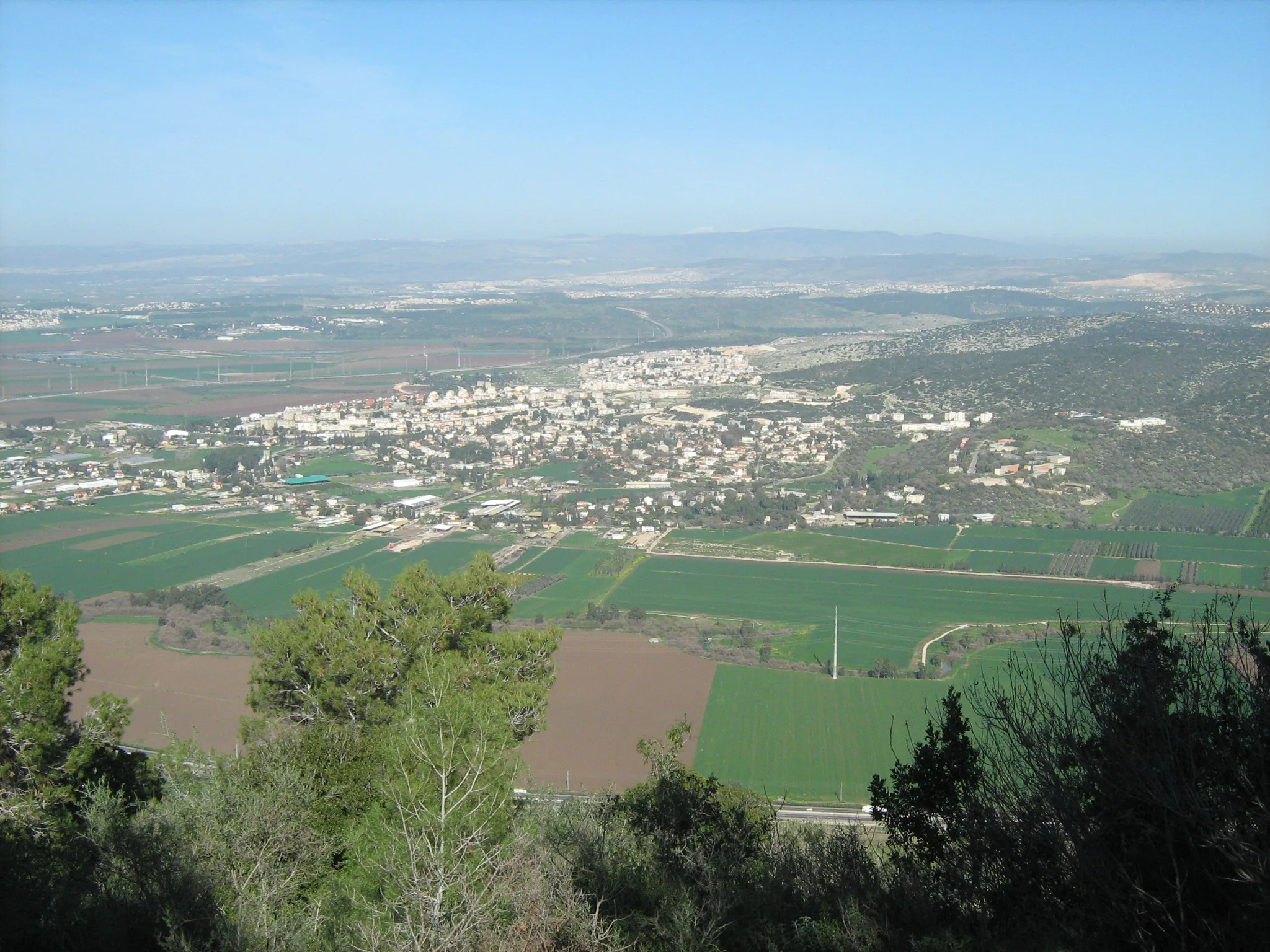
Rekhasim's geography explains how it is organised. The town sits on four hills named after Hebrew letters — Alef Hill, Bet Hill, Gimel Hill and Dalet Hill — near Mount Carmel, between Kiryat Tiv'on, Kiryat Ata and Nesher. Elevation ranges from 19.8 metres at the lowest points to 193.6 metres on the heights, so some homes enjoy open views over the Zevulun Valley. The climate is Mediterranean, with average temperatures of 11 °C in January and 27 °C in August, and around 650 millimetres of rain a year. Community life is dense: the town has more than 80 synagogues and many gemach organisations, which lend clothing, equipment and money to families free of charge. Education is entirely geared to religious study: dozens of kindergartens, six Talmud Torahs, three girls' schools, three yeshiva ketanas, three yeshiva gedolas and many kollels. The Sephardi yeshiva of Rekhasim alone has 400 students. For a buyer, this means the choice of home is made first by proximity to the synagogue, the children's school and the community you belong to.
On the housing market, Rekhasim is a resale market between private individuals, in low-rise buildings and family-sized apartments. No price per square metre is shown on this page, for lack of a sourced price for the locality at the time of writing: an average price quoted without a source would be misleading for a town where properties are compared on size, floor, condition, proximity to the synagogue and the neighbourhood community. IsraelStart currently lists no new development in Rekhasim, so this page promises none. The right method is to compare real properties: the personalised search lets you set a budget, a property type and a neighbourhood — Alef, Bet, Gimel or Dalet Hill — then receive matching properties, resale or new when available. For resale, which dominates the local market, the resale buying guide explains each step, from the agreement to registration at the Tabu. The budget-by-city, tax and financing simulators then let you check that the project works before making an offer.
For transport, Rekhasim is served by roads 70, 75 and 762, linking it to Kiryat Ata, Nesher and Kiryat Tiv'on, and by buses to Haifa and neighbouring towns. Haifa is about twelve kilometres away, with its jobs, hospitals and shops, and the car remains the most practical way to get around every day; there is no train station in the town itself, the nearest stations are in Haifa. Buying in Rekhasim from abroad follows the same rules as everywhere in Israel: verifying the title deed at the Tabu, a contract overseen by a lawyer, and paying the purchase tax, mas rechisha, whose amount depends on the price of the property and the status of the buyer. This page deliberately gives no numeric thresholds: the rules change, and the dedicated guide and the tax and fees simulator, kept up to date, give the exact calculation. Financing, the mashkanta, is prepared in advance with the financing simulator. Buyers considering Rekhasim should also take the measure of the town: an almost entirely Haredi locality, where neighbourhood life, hours and shops follow the rhythm of the community. That is exactly the setting that attracts young Haredi families — and it is something to come and see on the ground, on a weekday as well as on Shabbat, before signing.
- Living at the heart of a Haredi community: Synagogues, yeshivot, schools and charity: daily life unfolds inside a close-knit community, with its landmarks and its rhythms.
- Torah study two steps from home: The Knesses Chizkiyahu yeshiva, the kollels and the schools are in the town itself, with no daily commute to another locality.
- Family-sized homes: Apartments designed for large families, in low-rise buildings spread over the town's four hills.
- Haifa twelve kilometres away: The jobs, hospitals and shops of the northern metropolis stay close, while living in a quiet small town.
- A setting of green hills: Four hills at the foot of Mount Carmel, views over the Zevulun Valley and a Mediterranean climate, with hot summers and mild winters.
Key advantages
- A living Haredi community: Around 92.8% of the population is Haredi, according to the 2024 report on Haredi society. More than 80 synagogues, gemach charities and neighbourhood life organised around the community: this is the first criterion for buyers who move here.
- A centre for Torah study: The Knesses Chizkiyahu yeshiva has been based in Rekhasim since 1955. It is joined by three yeshiva ketanas, three yeshiva gedolas, many kollels and a Sephardi yeshiva with 400 students.
- Young, growing families: The population has grown sixfold since 1972, from 2,500 to 15,086 residents in 2024. The town is considered a sought-after place for young Haredi families.
- Close to Haifa: Only about twelve kilometres separate Rekhasim from Haifa, with its jobs, hospitals and services, while living in a small hillside town at the foot of Mount Carmel.
- A readable, community market: Here you buy a family apartment to live in, and properties are compared on concrete criteria: size, floor, condition, proximity to the synagogue and the school. This guide publishes no unsourced price, which protects buyers from misleading figures.
Infrastructure & Transport
- Roads 70, 75 and 762: Three roads serve the town and link it to Kiryat Ata, Nesher and Kiryat Tiv'on, and on to the Haifa District road network.
- Buses to Haifa and neighbouring towns: Bus lines connect Rekhasim to Haifa, Kiryat Ata and Nesher for work, study and shopping. The car remains the most practical option day to day.
- Schools and yeshivot: Dozens of kindergartens, six Talmud Torahs, three girls' schools, three yeshiva ketanas, three yeshiva gedolas and many kollels, from kindergarten to advanced study.
- Synagogues and community charity: More than 80 synagogues and many gemach organisations, which lend clothing, equipment and financial help to the town's families free of charge.
Investment profile
- Community rental demand: Demand comes first from young Haredi couples and large families moving to Rekhasim, as well as students at the yeshivot and kollels.
- Typical tenants: Young Haredi couples, large families, yeshiva students and avrekhim. A local rental market, driven by community life rather than tourism.
- A resale market, not new build: IsraelStart lists no new development in Rekhasim: resale dominates. The resale buying guide and the personalised search are the two ways in for a purchase here.
Neighborhoods of Rekhasim
Alef Hill
Bet Hill
Gimel Hill
Dalet Hill
Knesses Chizkiyahu yeshiva area
New build or resale in Rekhasim
In Rekhasim, you can compare the new developments listed in our catalogue or entrust us with the search for an existing property. The choice depends on your timeline, overall budget and target neighbourhood.
For resale, we define a brief with you — neighbourhood, number of rooms, mamad, lift, parking, outdoor space — then consult several sources and present an explained selection, with trade-offs and points to confirm.
Search in Rekhasim Buying resale property: the guideFrequently asked questions about Rekhasim
Does Rekhasim suit a non-Haredi family?
Rekhasim is an almost entirely Haredi town: around 92.8% of the population, according to the 2024 report on Haredi society, and neighbourhood life follows the community's rhythm — synagogues, religious schools and adapted shops. A non-Haredi family can buy here, but it should visit the town, on a weekday as well as on Shabbat, and understand this setting before signing. The personalised search helps clarify what really matters to your family before choosing a neighbourhood.
What kind of property can you find in Rekhasim?
Family-sized apartments in low-rise buildings, spread over the town's four hills, mostly resale between private individuals. No price per square metre is published on this page, for lack of a sourced price for the locality: properties are compared on size, floor, condition and proximity to the synagogue and the school. The personalised search lets you receive real properties that match your budget.
How do you get to Haifa from Rekhasim?
By roads 70, 75 and 762, by car or by bus, towards Haifa, Kiryat Ata and Nesher. Haifa is about twelve kilometres away. There is no train station in Rekhasim itself: the nearest stations are in Haifa. Plan on using the car for daily trips, especially with children.
Are there any new developments in Rekhasim?
No: IsraelStart currently lists no new development in Rekhasim, and this page promises none. The local market is a resale market. To buy resale, the resale buying guide explains the steps, and the personalised search supports buyers who cannot visit every property in person.
Similar cities
Discover other nearby cities or in the same price range.