New Build Property in Caesarea: Developments & Areas 2026
Caesarea, an upscale residential town on Israel's coast between Tel Aviv and Haifa, combines an exceptional ancient heritage — Herod's harbour, the Roman theatre, the aqueduct — with the country's only 18-hole golf course and villas set in greenery facing the Mediterranean.
Population: 5,783
Why invest in Caesarea
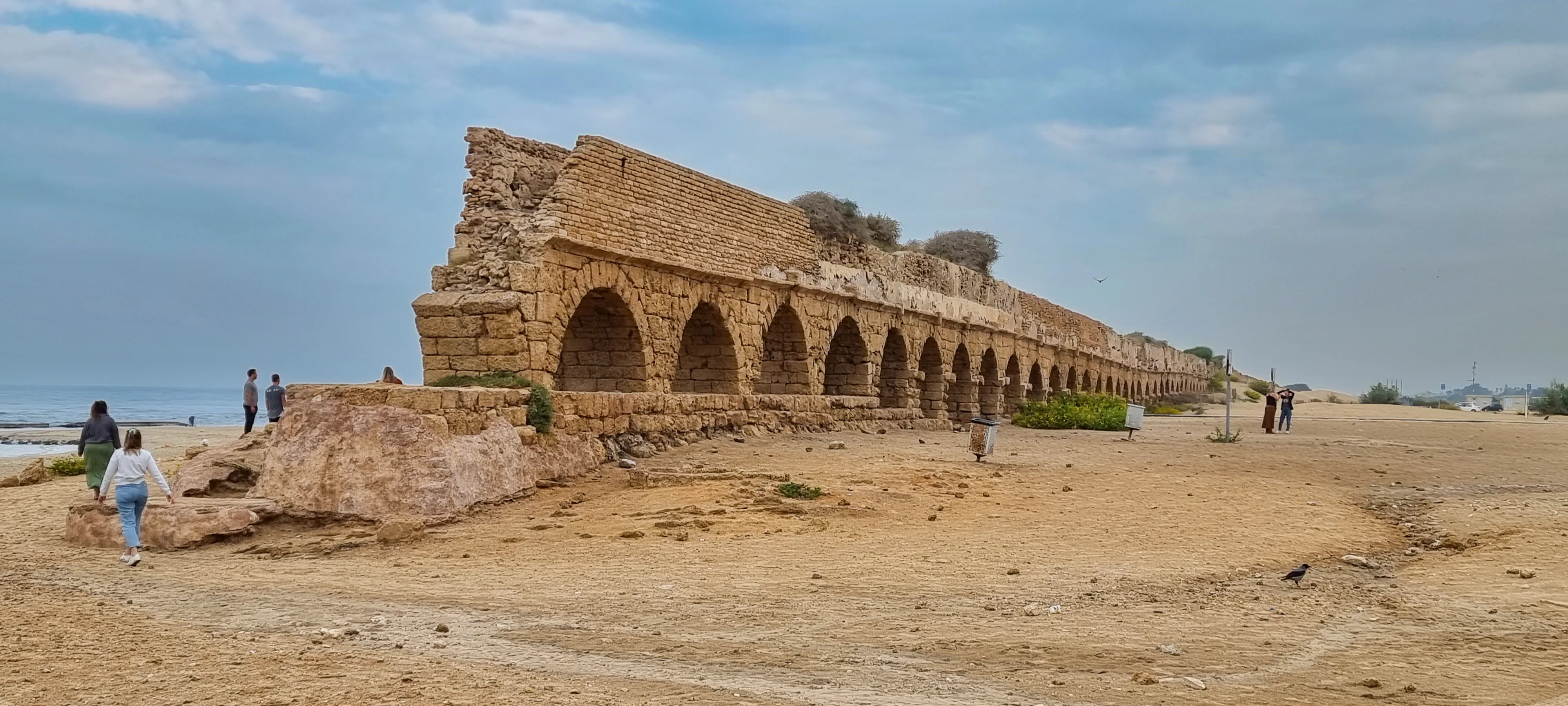
Caesarea is a town apart in Israel. Located on the coastal plain, halfway between Tel Aviv and Haifa — about 45 kilometres from each — and 5 kilometres northwest of Hadera, it has 5,783 residents according to the Central Bureau of Statistics (CBS, 2021). It is the only locality in the country run by a private organisation, the Caesarea Development Corporation, an arm of the Rothschild Foundation, under the jurisdiction of the Hof HaCarmel Regional Council. The modern town, founded in 1952, stands beside one of the greatest ancient cities of the Mediterranean: Caesarea Maritima, the harbour built by Herod the Great between 25 and 13 BCE, capital of Roman Judaea and then of Byzantine Palestine, and a Crusader fortress from the 12th to the 13th century. Its remains — theatre, hippodrome, aqueduct, Herod's palace — now form Caesarea National Park, one of the most visited archaeological sites in the country.
The areas of Caesarea. The residential town is divided into housing zones called 'clusters', each with its own character. Cluster 13, the Golf Cluster, the most recent, borders the Caesarea Golf Club course, Israel's only 18-hole golf course, designed by the famous architect Pete Dye: large plots, prestige villas and views over the greens. Cluster 6, HaYam, is the most sought-after seafront address, with villas facing the Mediterranean. Cluster 3, HaTzmarot, and Cluster 8, HaBikurim, are the family neighbourhoods, leafy and close to schools and parks. Cluster 12, HaTeva, the newest after the golf cluster, favours modern construction and an ecological approach. To the south, the ancient harbour and the national park concentrate restaurants, galleries and boutiques amid Roman and Crusader ruins.
Buying in Caesarea from abroad. Foreign buyers can freely purchase property in Israel, with the support of a specialist lawyer. The process involves verifying the title deed (Tabu), signing a contract overseen by the lawyer, and paying the purchase tax (mas rechisha), whose amount depends on the price of the property and the status of the buyer: the IsraelStart legal guide and the tax and fees simulator explain the calculation. At the time of writing, IsraelStart lists no new developments in Caesarea: this page is therefore a guide, and buying here means resale — existing villas and apartments — with the resale guide and personalised search. No sourced price per square metre is available for the town: no figure is given here, despite Caesarea's upscale reputation. Before deciding, compare with the neighbouring towns of Hadera, Or Akiva and Zikhron Ya'akov, estimate your financing with the financing simulator and your budget by city with the budget simulator.
Living in Caesarea means living between history and the seaside. The national park hosts concerts in the Roman theatre, including the International Opera Festival, and the ancient harbour has become a promenade with restaurants and galleries. The Ralli Museums exhibit Latin American and Spanish art, and the Birds Mosaic, the remains of a Byzantine palace, can be visited freely. Caesarea Beach and Aqueduct Beach offer sand and swimming steps away from the ancient arches. Caesarea–Pardes Hanna station, on the Tel Aviv–Haifa line, and Routes 2 and 4 connect the town to both metropolises in under an hour. Caesarea Business Park, east of the town, employs about 5,500 people in some 170 companies, notably in high technology and distribution. Many residents work in Tel Aviv or Haifa and come home in the evening to a calm, green and very well-kept town.
- Living history: A Roman theatre still in use, an ancient harbour and an aqueduct on the beach: heritage is part of everyday life.
- Sea and golf: Sandy beaches, a marina and the country's only 18-hole golf course, minutes from home.
- Calm and greenery: A green, quiet residential town, with no through traffic and no noisy nightlife.
- Access to both metropolises: Tel Aviv and Haifa under an hour away: two employment basins, two airports and two cultural scenes.
- A discreet market: Few properties, few transactions: a market to approach with local support and a personalised search.
Key advantages
- A unique ancient heritage: Herod's harbour, Roman theatre, hippodrome and aqueduct: living in Caesarea means living amid two thousand years of history.
- Israel's only 18-hole golf course: The Caesarea Golf Club is the country's only 18-hole course, a rare asset that shapes the whole identity of the town.
- Upscale living environment: Villas on large plots, leafy streets, beaches and a marina: Caesarea is one of the most sought-after residential addresses in the country.
- Between Tel Aviv and Haifa: Halfway between the two metropolises, with a station on the coastal line and Routes 2 and 4: the town is a balance point for workers in both employment basins.
- Private management and careful services: Run by the Caesarea Development Corporation, the town is known for the upkeep of its green spaces, beaches and facilities.
Infrastructure & Transport
- Caesarea–Pardes Hanna station: On the Tel Aviv–Haifa railway line, the station connects the town to both metropolises in under an hour.
- Routes 2 and 4: The coastal highway (Route 2) and Route 4 serve Caesarea towards Tel Aviv in the south and Haifa in the north.
- Intercity buses: Bus lines connect Caesarea to Hadera, Or Akiva, Tel Aviv and Haifa, with connections to the national park.
- Shops and schools: Local shopping centre, schools and kindergartens in the clusters, restaurants and galleries around the ancient harbour.
Investment profile
- Targeted rental demand: Demand comes from executives working in Tel Aviv or Haifa, families seeking calm and foreign residents, often for long-term rentals.
- Typical tenants: Senior executives, diplomats and expatriates, affluent families and foreign retirees drawn by the golf, the sea and the safe setting.
- Capital growth potential: Supply is scarce and land is limited: properties rarely change hands, which supports values over the long term. No sourced price or growth figure exists to date.
Neighborhoods of Caesarea
Cluster 13 — The Golf
Cluster 6 — HaYam (seafront)
Cluster 3 — HaTzmarot
Cluster 8 — HaBikurim
Cluster 12 — HaTeva
Ancient harbour and national park
New build or resale in Caesarea
In Caesarea, you can compare the new developments listed in our catalogue or entrust us with the search for an existing property. The choice depends on your timeline, overall budget and target neighbourhood.
For resale, we define a brief with you — neighbourhood, number of rooms, mamad, lift, parking, outdoor space — then consult several sources and present an explained selection, with trade-offs and points to confirm.
Search in Caesarea Buying resale property: the guideFrequently asked questions about Caesarea
Why buy in Caesarea in 2026?
For an address unique in Israel: an exceptional ancient heritage, the country's only 18-hole golf course, beaches and a very well-kept residential setting, halfway between Tel Aviv and Haifa. Supply is scarce and the market discreet: it takes a personalised search and a local lawyer.
Are there any new developments in Caesarea?
At the time of writing, IsraelStart lists no new developments in the town: this page is a guide. Buying here means resale — existing villas and apartments — with the resale guide and personalised search, which also lets you compare with Hadera, Or Akiva and Zikhron Ya'akov.
What is a 'cluster' in Caesarea?
The residential town is divided into housing zones called clusters, each with its own character: Cluster 13, the Golf Cluster, borders the golf course; Cluster 6, HaYam, faces the sea; Clusters 3 and 8 are family areas; Cluster 12, HaTeva, is the newest and most ecological. The business park and the national park stand apart.
Is Caesarea well served by transport?
Yes: Caesarea–Pardes Hanna station, on the Tel Aviv–Haifa line, connects both metropolises in under an hour, and Routes 2 and 4 serve the town by car. A car remains useful day to day, however, as internal buses are infrequent.
Can I visit Caesarea National Park?
Yes: Caesarea National Park is open to the public and holds the Roman theatre, the hippodrome, Herod's palace and the Crusader fortress. The theatre hosts concerts and the International Opera Festival. The aqueduct, on the beach north of the park, can be visited freely.
Similar cities
Discover other nearby cities or in the same price range.