New Build Property in Atlit: Developments & Areas 2026
Atlit is a coastal town in the Haifa District, about fifteen kilometres south of Haifa, between the Mediterranean and Mount Carmel. Founded in 1903 under the auspices of Baron Edmond de Rothschild, it has 11,611 residents (CBS, 2024) and combines beaches, a 13th-century Crusader fortress and the memory of clandestine immigration, with a railway station on the Haifa–Tel Aviv coastal line.
Population: 11,611
Why invest in Atlit
Atlit is a town where history can be read at every step. The modern town was founded in 1903 under the auspices of Baron Edmond de Rothschild, about two kilometres south of the historic site, then a small fishing village settled among the Crusader ruins. In 1911, the agronomist Aaron Aaronsohn set up an agricultural station there, and during the First World War Atlit became one of the centres of the NILI espionage network, which passed intelligence to the British. Under the British Mandate, the authorities set up a detention camp at Atlit for "illegal" Jewish immigrants: between 1939 and 1948, tens of thousands of Holocaust survivors were interned there on arrival, before a Palmach raid on 9 October 1945 freed 208 detainees. After 1948 the camp became an immigrant reception centre, then a museum, declared a national monument in 1987. Atlit was a local council from 1950 to 2003, then joined the Hof HaCarmel Regional Council. With 11,611 residents according to the Central Bureau of Statistics (CBS, 2024), it is a small coastal town on the rise, carried by its proximity to Haifa and its shoreline.
Atlit's past is older still. Off the coast lies Atlit Yam, a submerged Neolithic village some 9,000 years old, one of the oldest known sunken villages. On the rocky promontory stands Château Pèlerin (Castrum Peregrinorum), a fortress built by the Templars from 1218, one of the largest citadels in the Holy Land: King Louis IX of France stayed there in 1250 and strengthened its walls. The last Crusader stronghold after the fall of Acre, the castle was abandoned by its defenders on the night of 14 August 1291, who sailed secretly to Cyprus. Spared by the Mamluks, it remained in good condition until the earthquake of 1837, then served as a stone quarry. Today the fortress is a closed military zone, base of the Shayetet 13 naval commando unit, and cannot be visited: it is admired from the beach. A few hundred metres away, the Crusader cemetery, with more than 1,700 tombs from the 12th and 13th centuries, recalls the importance of the place. In 1980, a bronze ram from a 2nd-century BCE warship was found off Atlit: the "Atlit ram", displayed at the Haifa Maritime Museum, testifies to the ancient harbour.
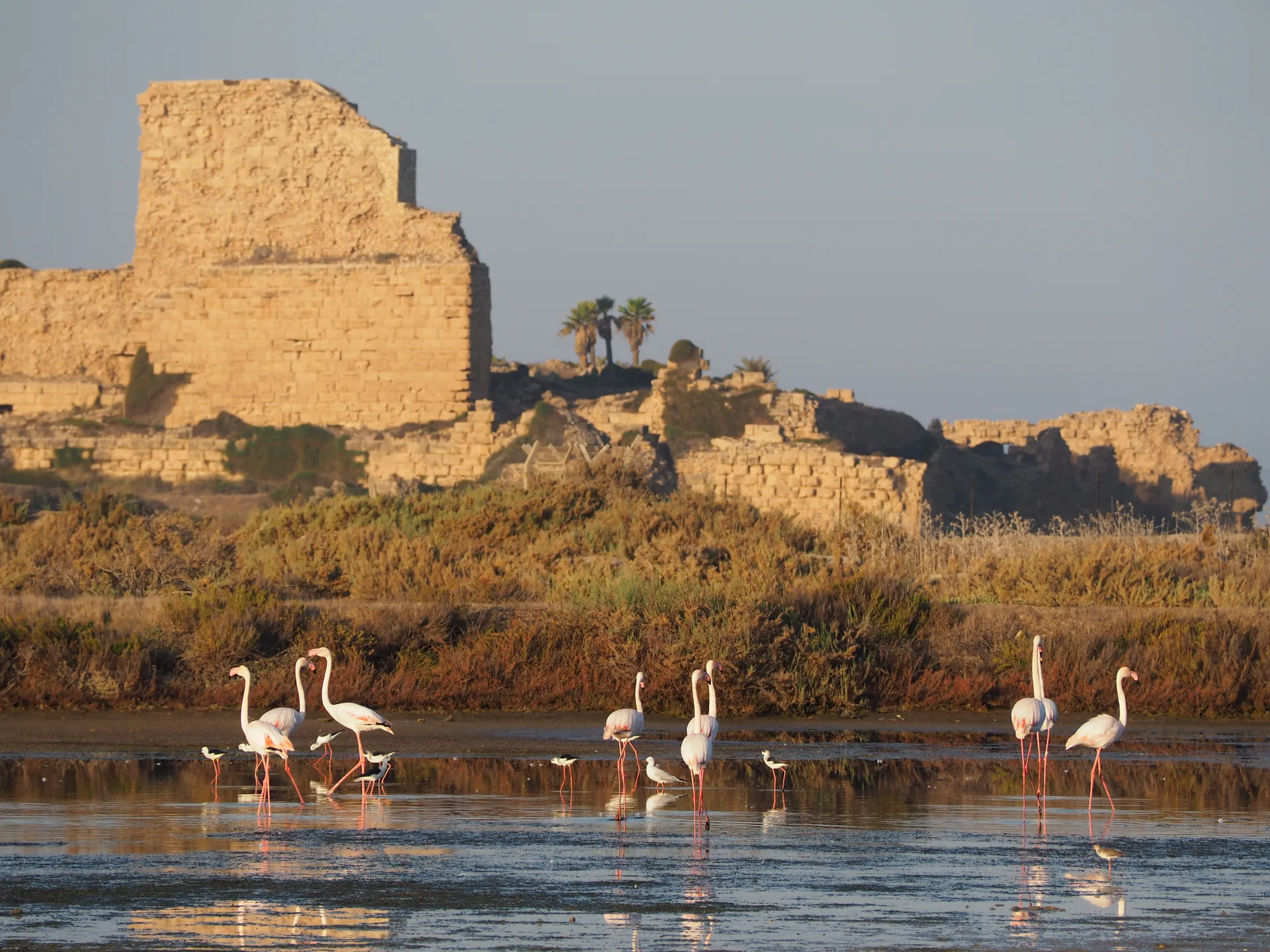
Where to buy in Atlit. The historic centre, around the old moshava founded in 1903, brings together older houses and quiet streets, close to the station and local shops. The station quarter, to the east, is the most practical area for commuters: the coastal line reaches Haifa in a few minutes and Tel Aviv in under an hour. The seafront and beach form the most sought-after area, with houses and small blocks facing the Mediterranean, Atlit beach and its kitesurfing spots. The Neve Yam area, to the south, with its family beach and salt ponds where flamingos stop, offers a quieter seaside setting. The northern quarter, towards Haifa and the castle, mixes housing and natural spaces at the foot of Carmel. No price per square metre is published here: no reliable source allows one to be established for Atlit, and unsourced figures shown elsewhere are not repeated.
Buying in Atlit from abroad or from within Israel. Foreign buyers can freely purchase property in Israel, with the support of a specialist lawyer. The process involves verifying the title deed (Tabu), signing a contract overseen by the lawyer, and paying the purchase tax (mas rechisha), whose amount depends on the price of the property and the status of the buyer: the IsraelStart legal guide and the tax and fees simulator explain the calculation, with no figures quoted here since the tax arbitration is still pending. For an off-plan purchase, the lawyer checks the developer's guarantees. Financing goes through the mashkanta, the Israeli mortgage: the financing simulator and the budget-by-city simulator help estimate the monthly cost before deciding. IsraelStart currently lists no new developments in Atlit: this page is therefore a guide, and support focuses on resale property, with the resale guide and the personalised search, which also lets you compare with the neighbouring towns of Haifa, Tirat Carmel and Zikhron Ya'akov, where new supply is larger. For a first purchase from abroad, the 2026 buying guide and the page dedicated to aliyah complete this town guide.
- Living by the sea: In Atlit, the beach, fishing and kitesurfing are part of the week, not just the holidays.
- Work in Haifa, live in calm: The train puts Haifa a few minutes away, without the density or the prices of the big city.
- An exceptional heritage: Crusader castle, museum of clandestine immigration, ancient remains: history gives the town a strong identity.
- A town on a human scale: Just over 11,000 residents, neighbours you know and a coastal village life.
- Nature between sea and Carmel: Salt ponds, flamingos, Carmel trails and wild beaches to the south: the living environment is Atlit's first asset.
Key advantages
- The sea on foot: Sandy beaches, kitesurfing and sunsets over the Mediterranean: in Atlit, seaside life is not a weekend, it is everyday life.
- Haifa a quarter of an hour away: The northern metropolis, its jobs, hospitals and university are about fifteen kilometres away, by train or by Highway 2.
- A unique history: Château Pèlerin, a detention camp turned museum, a submerged Neolithic village: few towns in Israel pack so much history into such a small area.
- A preserved natural setting: Between the sea, the flamingo salt ponds and the slopes of Carmel, Atlit has kept the character of a coastal village, without the towers of the big city.
- A growing town: From 4,440 residents in 2002 to 11,611 in 2024: Atlit attracts families looking for the coast without the prices of Haifa or the central coastal plain.
Infrastructure & Transport
- Atlit railway station: The station, on the coastal line, reaches Haifa in a few minutes and Tel Aviv in under an hour, with frequent trains all day.
- Highways 2 and 4: Highway 2 (coastal) and Route 4 serve Atlit towards Haifa to the north and central Israel to the south.
- Schools and services: Primary schools and kindergartens in town, middle and high schools in neighbouring localities of the Hof HaCarmel Regional Council, local shops in the centre.
- Beaches and museum: Atlit beach and Neve Yam beach, a coastal path, the Atlit detention camp museum, and salt ponds where flamingos can be watched in season.
Investment profile
- Coastal rental demand: Rental demand rests on commuters working in Haifa, families of the regional council and seasonal seaside letting, with limited vacancy in areas close to the sea and the station.
- Typical tenants: Employees of Haifa and the bay industrial park, Hof HaCarmel families, students of Haifa University and the Technion, holidaymakers in season.
- Capital growth potential: Fast demographic growth, proximity to Haifa and the scarcity of seafront land support demand, although no price growth can be quantified for lack of a reliable source.
Neighborhoods of Atlit
Historic centre
Station quarter
Seafront and beach
Neve Yam
Northern quarter
New build or resale in Atlit
In Atlit, you can compare the new developments listed in our catalogue or entrust us with the search for an existing property. The choice depends on your timeline, overall budget and target neighbourhood.
For resale, we define a brief with you — neighbourhood, number of rooms, mamad, lift, parking, outdoor space — then consult several sources and present an explained selection, with trade-offs and points to confirm.
Search in Atlit Buying resale property: the guideFrequently asked questions about Atlit
Why buy in Atlit in 2026?
Atlit offers seaside living a quarter of an hour from Haifa, with a station on the coastal line, beaches, the Crusader castle and a preserved village setting. The town grew from 4,440 residents in 2002 to 11,611 in 2024 (CBS), a sign of real appeal. No reliable price per square metre is published: compare properties one by one with IsraelStart's personalised search.
Are there new developments in Atlit?
IsraelStart currently lists no new developments in Atlit. Supply there is mainly existing houses and small blocks, especially by the sea and around the station. For new builds, compare with Haifa, Tirat Carmel and Zikhron Ya'akov, where developments are more numerous, via the catalogue and personalised search.
Can you visit Atlit Castle?
No: Château Pèlerin is a closed military zone, base of the Shayetet 13 unit, and cannot be visited. You can admire it from Atlit beach, and visit the detention camp museum, the Crusader cemetery and the beaches. The Neolithic village of Atlit Yam, meanwhile, lies under water off the coast.
How long does it take to reach Tel Aviv from Atlit?
By train, under an hour from Atlit station, on the Haifa–Tel Aviv coastal line. By car, Highway 2 connects Atlit to central Israel. Haifa is a few minutes away by train.
Can a foreigner buy in Atlit?
Yes, as anywhere in Israel: a foreign buyer can freely purchase property, with a lawyer who verifies the title deed at the Tabu and oversees the contract. The purchase tax (mas rechisha) depends on the price and the buyer's status: the legal guide and the tax and fees simulator explain the calculation.
Similar cities
Discover other nearby cities or in the same price range.