Pinui-Binui in Israel: Get Your New Apartment at Demolition
Reported by Globes on November 16, 2026: in pinui-binui projects, owners can now receive an already-built apartment in another development on the very day of demolition, instead of waiting years for construction.
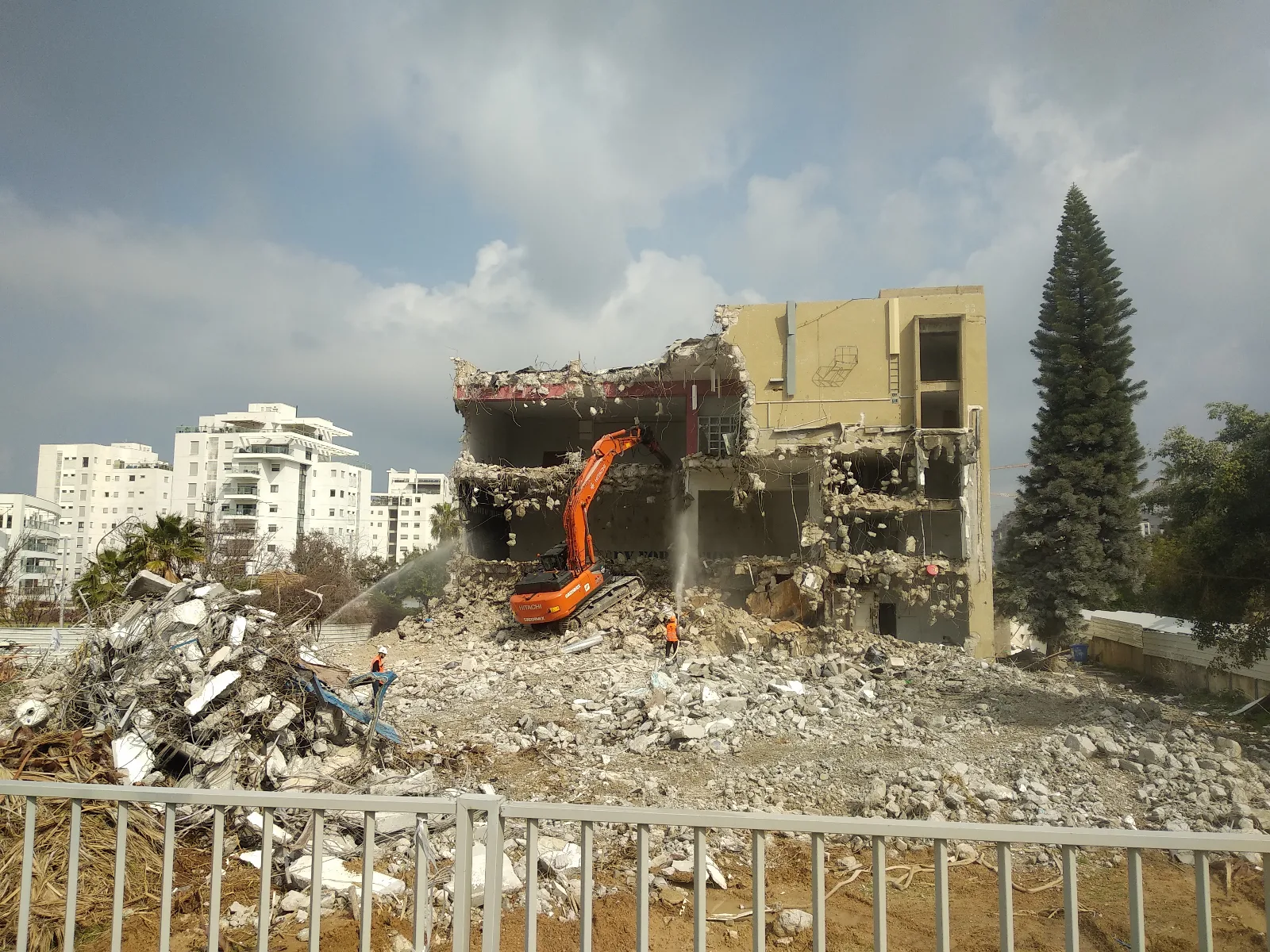
What if the day your building is demolished were also the day you receive the keys to a new, already-built apartment somewhere else? That is the formula being rolled out by at least two Israeli companies, Q Real Estate and Azorim, according to Globes (November 16, 2026). Under the classic pinui-binui scheme (from the Hebrew פינוי-בינוי, "evacuation-construction": demolition then rebuilding on the same plot), the owner lives in a rental paid by the developer while waiting for the works to finish — often four years for a tower. With the swap voucher, the construction wait disappears: the consideration becomes an existing apartment from the developer's inventory, or even from another developer.
A swap voucher whose value is set after the planning committee's decision
Until the planning committee has ruled, the sizes and plans of the future apartments are unknown: the consideration cannot be priced. Once the decision is issued and the sizes are set, a licensed appraiser (shamai in Hebrew) values the future consideration apartment as if it were already built, then applies an agreed discount rate — the price of the earlier schedule and the lower risk. The swap window runs from this decision to the fulfillment of the agreement's suspensive conditions. With the voucher in hand, the owner can choose a more expensive apartment and top up the difference, or a cheaper one and receive compensation for the gap. And the classic scheme remains open: "An owner who prefers to stay in the original complex and wait for construction to finish can do so fully, exactly under the original signed agreement," stresses Gil Winels, co-owner of Q Real Estate, in Globes.
Arlozorov in Tel Aviv, Azorim's "Pinui-Zikui": the two pinui-binui formulas
In Tel Aviv, at 129-131 Arlozorov Street, Q Real Estate is replacing 16 old apartments with about 115 small new homes without parking, plus commercial space. Their owners received vouchers to choose an apartment from the company's inventory — or another developer's — and receive it at demolition, on a nearby street or in another city. Nir Adri, the owners' lawyer (Matari, Meiri, Wacht law firm), explains that the appraiser valued each existing apartment and, consideration terms added, set the sum allowing each owner to choose a new home: rules close to those of the classic process, but an apartment received far sooner. Unlike binui-pinui (build first, rehouse afterwards within the same development), the replacement apartment can be located entirely elsewhere.
At Azorim, the formula is called "Pinui-Zikui" (פינוי-זיכוי, "evacuation-credit"): the voucher carries the price of the resident's future apartment, usable in another of the company's developments. "If building a tower is supposed to take four years, the resident can, at demolition, move into his pinui-zikui apartment, provided it is ready, and save himself that wait," describes Dan Gingis, Azorim's vice president for urban renewal. Residents have already made this choice. The years of plan processing remain, however: this is not a new apartment from day one.
| Item | Classic scheme | Swap voucher |
|---|---|---|
| Apartment received | After the works, in the rebuilt development | In another development, at demolition |
| Wait after demolition | About 4 years for a tower | None, if the chosen apartment is ready |
Why developers gain too
On the developer's side, the equation is twofold: no relocation rents to finance throughout construction, and no related guarantees, for a resident rehoused at demolition. And the design is set free: with no residents coming back, there is no need for large apartments with parking under a negotiated specification sheet; the developer builds what sells best, and the stock of already-built new homes becomes a way to pay the consideration. In return, the developer gives up selling an apartment from its inventory.
Owner in an urban renewal project, or preparing a purchase in Israel? Estimate your budget and costs with the budget simulator by city, then compare the catalogue of new developments in Israel.
Tax and real value: what to check before you swap
The tax watch-out
If such deals remain rare, it is first for tax reasons — the main watch-out, highlighted by Globes. In classic pinui-binui, capital gains tax (mas shevah) can fall under dedicated exemption tracks and purchase tax (mas rechisha) is regulated; the Tax Authority notes that these exemptions exist in pinui-binui and that each application is examined as part of the tax assessment — the project's declaration alone does not settle an individual case. The Government Urban Renewal Authority confirms an uncommon form of consideration, reviewed case by case.
At Arlozorov, Q Real Estate bears the tax aspects of the swap, purchase tax on the replacement apartment and VAT included, while respecting equal treatment among owners. A provision specific to this project, not a general rule: Nir Adri warns that a company buying apartments to hand over to owners is not exempt from purchase tax on those properties — at Arlozorov, the cost could be absorbed; not everywhere.
The wealth trade-off
Then comes the wealth trade-off: the voucher is worth the value of the future apartment, discounted for the earlier schedule and the lower risk. Before signing, compare the offered apartment against that value — size, location, floor, specifications — and against the market price of an equivalent property, as shown by apartment prices in Israel from recent transactions. For those who want to change city, downsize or be done with waiting, the swap can be a real liberation; for those attached to their address, the classic scheme remains open.
Sources
- Source 1