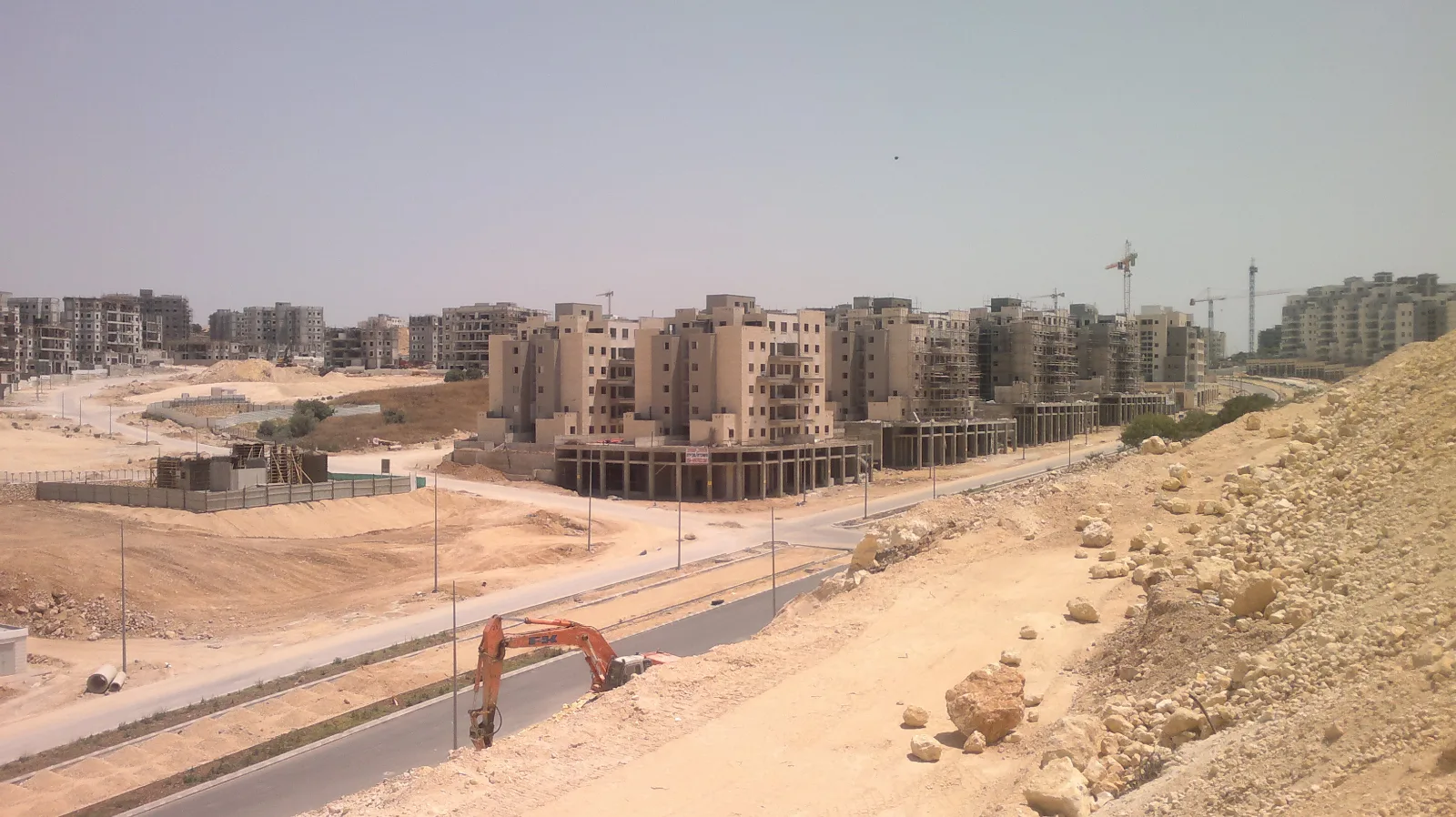
Public land: the Israel Land Authority markets half as much land, at a 13-year low
According to a Globes investigation, the Israel Land Authority is expected to market about 40,000 homes in 2026, less than half the 2025 figure. A fall linked to governance and to the pace of tenders, which will weigh on new-home supply in the coming years.
In Israel, most building land belongs to the State and is marketed by the Israel Land Authority through tenders. The pace of these sales determines, with a lag of a few years, how many new homes reach the market. On November 11, 2026, a Globes investigation showed that this pace has fallen to its lowest level in 13 years. This matters to buyers from abroad as well as to Israelis already in Israel, because it shapes tomorrow's supply.
The investigation's figures
| Year | Homes marketed by the Land Authority |
|---|---|
| 2013 | about 40,000 |
| 2016 to 2018 | about 70,000 per year |
| 2019 | about 56,000 |
| 2020 | under 51,000 |
| 2021 | about 102,000 |
| 2024 | over 113,000, a record |
| 2025 | about 92,000 |
| 2026, forecast | about 40,000, in about 90 tenders |
According to the State accounts cited by Globes, the Authority had marketed only about 35,000 homes by the end of September 2026. The annual forecast is a drop of more than half versus 2025, and of about 65% versus 2024.
Tender committees are slowing down
| Indicator | 2026 | Comparison |
|---|---|---|
| Tender committee meetings | 75 since January, 86 planned | 195 last year |
| Tenders planned but with no tender documents published | about 200 | — |
A tender with no published documents cannot move forward. These 200 pending tenders explain a large part of the drop.
Why the pace collapsed
Weakened governance
According to Globes, after the previous director left, the government was slow to appoint a successor. The appointed head, who according to the newspaper has no professional training in the field, serves on an interim basis following an appeal to the Supreme Court. Under the previous leadership, sales never fell below 90,000 homes a year.
Priority given to lotteries
Globes reports that the government is focusing its efforts on the lotteries of the reduced-price housing scheme, at the expense of other tenders. In September, the director general of the Ministry of Housing, which oversees the Authority, said at a conference that the gap would be closed by the end of the year. The end-of-September figures make that goal hard to reach.
Selective developers
Even when land is offered, developers are in no rush. In recent weeks, several tenders received a single bid, or none at all. In a market where sales are slow and inventory is high, they buy less, and more cheaply.
There are exceptions. In Yokneam, a target-price tender for 997 homes has just been awarded to six winners for about ₪511 million, development costs included. The land price there is slightly higher than in the city's previous tender, but the total cost per home falls thanks to lower development costs. Details in our article on Yokneam.
| Signal | Short-term effect | Medium-term effect |
|---|---|---|
| Less land sold | none on homes already on sale | fewer construction sites in two to three years |
| Selective developers | land awarded more cheaply | lower land cost in some projects |
| Falling housing starts | existing inventory sold off | fewer deliveries in three to five years |
IsraelStart analysis based on data published by Globes and Nadlan Center.
Housing starts are already falling: about 18,000 in the second quarter of 2026, down 9% year on year, according to the contractors' association cited by Nadlan Center. See our article on housing starts.
What this changes for buyers
Today, a buyers' market
In the short term, nothing changes for homes already on sale. Inventory remains high, developers offer financing deals and some are willing to negotiate. This is the time to compare, ask for discounts and check every project.
Tomorrow, scarcer supply
Land sold today generally produces homes delivered three to five years later. A year at 40,000 homes instead of 90,000 will leave a dip in deliveries at the end of the decade. If demand picks up again, especially with lower interest rates, that scarcity could support prices. This scenario is no reason to buy in a hurry, but it argues against betting indefinitely on a fall.
State land, a long-term lease
Homes built on Land Authority land are generally held on a long-term lease, often 98 years, renewable. The lawyer checks the conditions recorded in the land registry: see our Tabo guide.
From abroad or on the ground
For buyers from abroad
If you are planning a purchase with a two- to three-year horizon, follow the cities where land still sells — a sign that developers believe in them. Compare budgets with the city budget simulator.
For Israelis already in Israel
If you are waiting for a lottery in the reduced-price housing scheme, bear in mind that the time between the draw and moving in often exceeds five years. Compare with free-market projects that are already permitted.
Get support
Work out the full cost: 18% VAT included in the new-build price, ancillary costs (lawyer, registration), purchase tax (Mas Rechisha) to be confirmed according to your profile, with the tax and fees simulator. Three experts support you: lawyer · broker · architect.
IsraelStart lists 300+ new projects across Israel: request a personalized assessment, with no obligation.
Sources
- Source 1
- Source 2
- Source 3