Municipal Satisfaction: Petah Tikva, Rishon and Tel Aviv Leading, Ashdod at the Bottom
Price is not the only criterion for choosing a city. A national survey on residents' satisfaction with their municipality puts Petah Tikva at the top of the large cities, ahead of Rishon LeZion and Tel Aviv.
Choosing a city in Israel is about more than just comparing price per square meter. Residents’ satisfaction with their municipality says a lot about daily quality of life. A national survey, presented by Globes this week, ranks the country’s major cities. At the top: Petah Tikva, ahead of Rishon LeZion and Tel Aviv.
For families moving from abroad, as well as Israelis relocating within the country, this factor deserves a place in the decision-making process.
Ranking of Major Cities
| City | Residents satisfied with their municipality |
|---|---|
| Petah Tikva | 85% |
| Rishon LeZion | 81% |
| Tel Aviv | 76% |
| Beer-Sheva | 72% |
| Netanya | 71% |
| Jerusalem | 68% |
| Haifa | 56% |
| Bnei Brak | 56% |
| Ashdod | 51% |
Nationally, two thirds of residents (66%) consider their municipality's performance to be good or very good, compared to 59% in 2015. Overall, satisfaction is increasing.
Petah Tikva, the strongest improvement
The case of Petah Tikva is striking: 85% satisfied, compared to just 61% ten years earlier. This is the greatest improvement among the major cities.
Rishon LeZion has also made clear progress, from 71% to 81%. Tel Aviv, which topped the ranking in 2015 with 75%, remains at a similar level (76%) but has been overtaken.
For reference, the average prices in these three cities in the first half of 2026 were very different: around 2.538M ₪ in Petah Tikva, 2.589M ₪ in Rishon LeZion, and 4.45M ₪ in Tel Aviv. In other words, high municipal quality is not limited to the most expensive cities. See our analysis of Gush Dan.
What the Survey Measures
This is the national social survey on attitudes towards local communities, conducted last year. It measures residents' overall perception of how the municipality functions. It does not rate a specific service, but reflects daily experience: cleanliness, maintenance, schools, services, relationship with the administration.
Two points to consider:
- A perception is not an objective measure of service quality;
- The results may also reflect the social composition of each city and its expectations.
Why This Matters for a Buyer
The municipality plays a very concrete role in your life as a property owner in Israel:
- Arnona, the municipal tax, with rates that vary greatly from one city to another. See our arnona guide;
- Schools, daycares, and public facilities;
- Building permits and the speed of processing projects, including urban renewal;
- Maintenance of public spaces: parks, cleanliness, lighting, roads.
In the long run, a well-managed city attracts more residents and businesses, which supports demand and property values.
Balancing Quality of Life and Price
Here's a simple way to use this ranking:
1. Set your actual budget, including taxes and fees: 18% VAT on new properties, acquisition tax depending on your profile, closing costs ranging from 10 to 13%. The city budget simulator helps you compare.
2. List your lifestyle criteria: commute to work, schools, community, synagogues, access to the sea, transportation.
3. Match with municipal quality: for the same budget, a well-managed city often provides a better daily life.
4. Visit at different times: during the week, in the evening, on Friday. Nothing replaces on-the-ground observation.
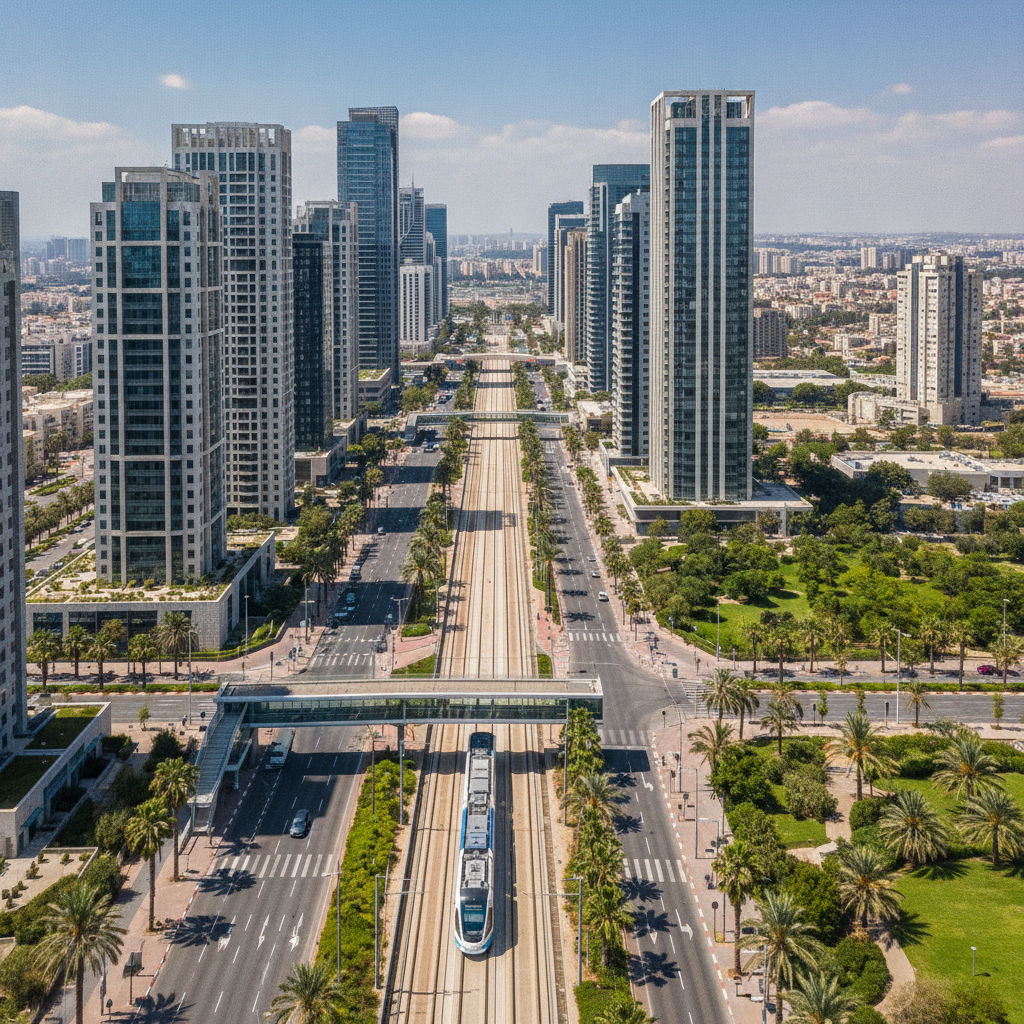
Petah Tikva, for example, combines prices below the Gush Dan average, high resident satisfaction, employment centers, and service by the red tramway line. Enough to put it on many buyers' lists. See the new projects in Petah Tikva.
Beyond the Rankings
Municipal satisfaction is just one indicator among many. A lower-rated city may offer a very pleasant neighborhood, an active community, or an attractive entry price. Conversely, a highly rated city may have struggling neighborhoods. The best approach is to look at the neighborhood level: local schools, parks, shops, synagogues, transportation, and upcoming projects.
For buyers from abroad, who may not always know the cities from the inside, this type of survey provides valuable insights from residents themselves. For Israelis moving to a new city, it confirms or nuances a reputation. In both cases, it usefully complements price data.
IsraelStart supports buyers from abroad as well as Israelis already in Israel in choosing their city, with a lawyer, a broker, and an architect, across more than 300 new projects throughout Israel. A personalized, no-obligation assessment helps find the right balance between budget and quality of life.
Sources
- Globes, survey on residents' satisfaction with their municipality (09/23/2026).
- Central Bureau of Statistics (CBS), social survey.
Figures and decisions reported by the Israeli economic press, rephrased and put into perspective by the IsraelStart editorial team. Indicative information, to be confirmed with a lawyer, broker, and expert before any decision.
Need personalized support?
An IsraelStart expert will call you within 24h with a personalized analysis of your project.