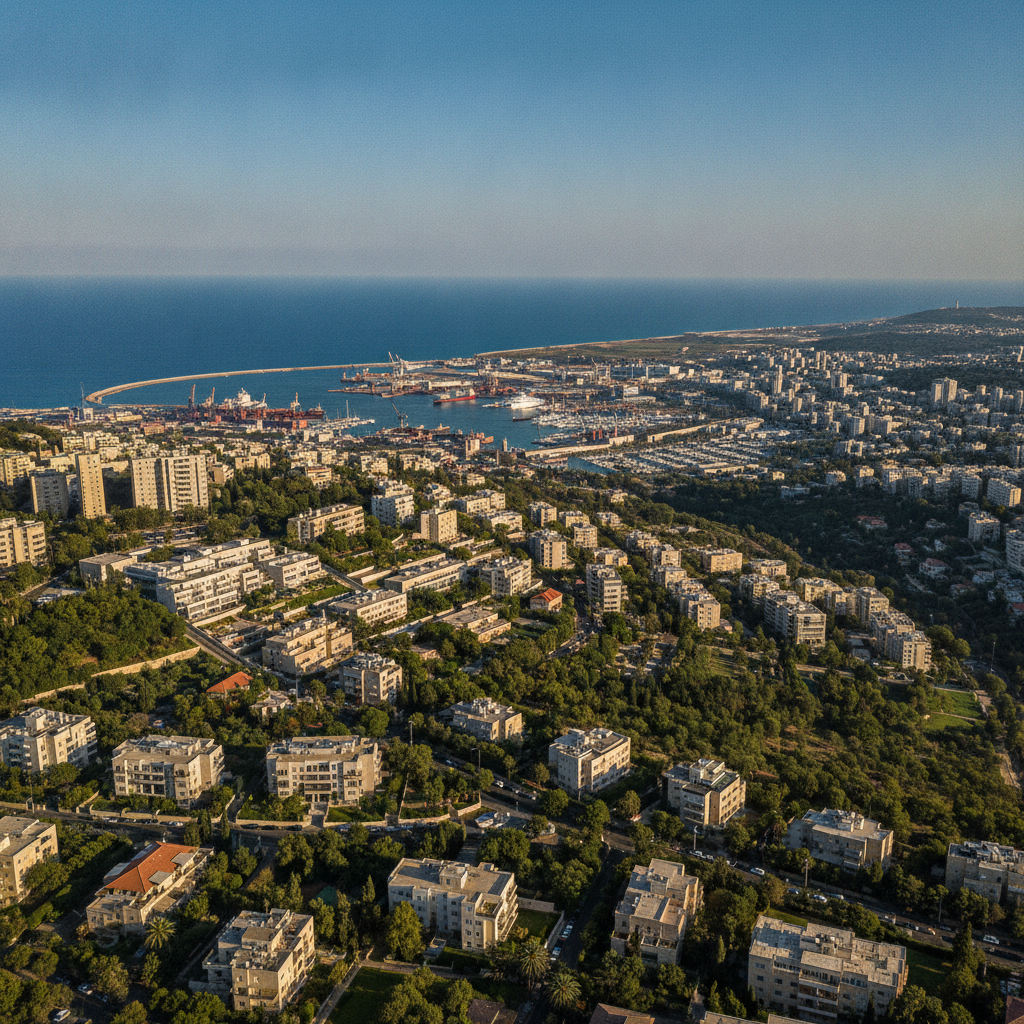
The Cheapest Cities in Israel in 2026: Beer-Sheva, Ashkelon, Haifa, Hadera
Four large cities post an average price below ₪2.1 million in the first half of 2026. Haifa is rising strongly, Beersheba remains the most affordable, and Ashkelon and Hadera are slipping slightly.
Buying for less in Israel is still possible in 2026, as long as you look beyond the center of the country. Among the 18 major cities analyzed using CBS data, four show an average price below 2.1 million shekels in the first half of the year: Beer-Sheva, Ashkelon, Haifa, and Hadera. However, their trends are very different.
For a first purchase, a family seeking more space, a buyer from abroad with a controlled budget, or an investor, this overview is a good starting point.
Ranking of Affordable Cities
| City | H1 2025 | H1 2026 | Change | Gap vs National Average |
|---|---|---|---|---|
| Beer-Sheva | 1.243 M ₪ | 1.248 M ₪ | +0.4% | -48% |
| Ashkelon | 1.691 M ₪ | 1.674 M ₪ | -1.0% | -30% |
| Haifa | 1.700 M ₪ | 1.780 M ₪ | +4.7% | -26% |
| Hadera | 2.093 M ₪ | 2.065 M ₪ | -1.3% | -14% |
| Ashdod | 2.047 M ₪ | 2.172 M ₪ | +6.1% | -9% |
For comparison, the national average price is around 2.392 M ₪, and in Tel Aviv it is 4.45 M ₪. With the average budget for an apartment in Tel Aviv, you could theoretically purchase more than three properties at the average price in Beer-Sheva.
Beer-Sheva, the Most Affordable
Capital of the Negev, Beer-Sheva has an average price of around 1.248M ₪, with a very slight increase of 0.4%. That’s almost half the national average.
Highlights:
- A major university and a student population driving rental demand;
- Growing employment hubs, especially in technology and around military facilities relocated to the south;
- New neighborhoods offering large spaces at prices unattainable in the center.
Points to check: distance from the country’s center, diversity of neighborhoods, and resale liquidity depending on the area.
Haifa, the accessible city on the rise
With +4.7%, or about 80,000 ₪, Haifa is among the leaders in price increases, on par with Kfar Saba. Yet its average price of around 1.78M ₪ remains well below the national average.
As Israel's third-largest city, Haifa offers:
- A strong job market (port, industry, technology, hospitals);
- Top-tier universities;
- A quality lifestyle between the sea and Mount Carmel, with neighborhoods of very different profiles.
For many buyers, Haifa today represents the best compromise between price, employment, and quality of life. The recent increase suggests that this potential is starting to be reflected in prices.
Ashkelon and Hadera, Slight Decline
Ashkelon, on the southern coast, drops by about 1%, to 1.674M ₪. This growing seaside city, with many new developments, offers apartments close to the sea at prices much lower than those in Ashdod (2.172M ₪), its northern neighbor.
Hadera, between Tel Aviv and Haifa, decreases by 1.3%, to 2.065M ₪. Well located on the coastal rail line, it attracts families working in the Sharon area or towards Haifa.
In both cities, the slight decline, combined with a significant supply of new properties, creates a favorable context for negotiation.
Reduced Budget: Smart Choices
A low purchase price is only attractive if it fits your needs. A few principles:
For Living
Check access to employment, real commute times, schools, and services. A cheaper apartment far from work can end up costing more in time and transportation.
For Investment
Gross rental yield is often better in accessible cities, but you must factor in vacancy, fees, and taxes. Areas near universities, hospitals, and train stations are generally the safest. Our article on property investment in Israel details the pitfalls to avoid.
For a Second Home
Ashkelon and Haifa offer sea access at prices that can't be compared to Tel Aviv, Herzliya, or Netanya.
In All Cases
Calculate the full cost: 18% VAT included in new property prices, purchase tax depending on your profile, closing costs around 10 to 13%. The city budget simulator allows for an initial comparison. Then, have each project reviewed by a lawyer, a broker, and an architect.
IsraelStart lists over 300 new projects across Israel, from the Negev to the north, and supports buyers both abroad and already in Israel. A personalized, no-obligation assessment helps you find the city where your budget goes furthest.
Sources and Method
- Ynet analysis of Central Bureau of Statistics (CBS) data, published September 15, 2026.
- Israel Central Bureau of Statistics (CBS) — average transaction prices by city and by number of rooms.
- Bank of Israel — real estate credit volumes (data from August 2026).
The prices for the first half of the year are an arithmetic average of the first two quarters, compared to the same calculation for 2025. The number of transactions is not weighted: a small sales volume can significantly affect a city's average. Indicative figures, to be cross-checked project by project before making any decisions.
Need personalized support?
An IsraelStart expert will call you within 24h with a personalized analysis of your project.