Israeli Health System: Koupat Holim, Supplementary and Emergencies
Koupat Holim, Supplementary Coverage and Emergencies
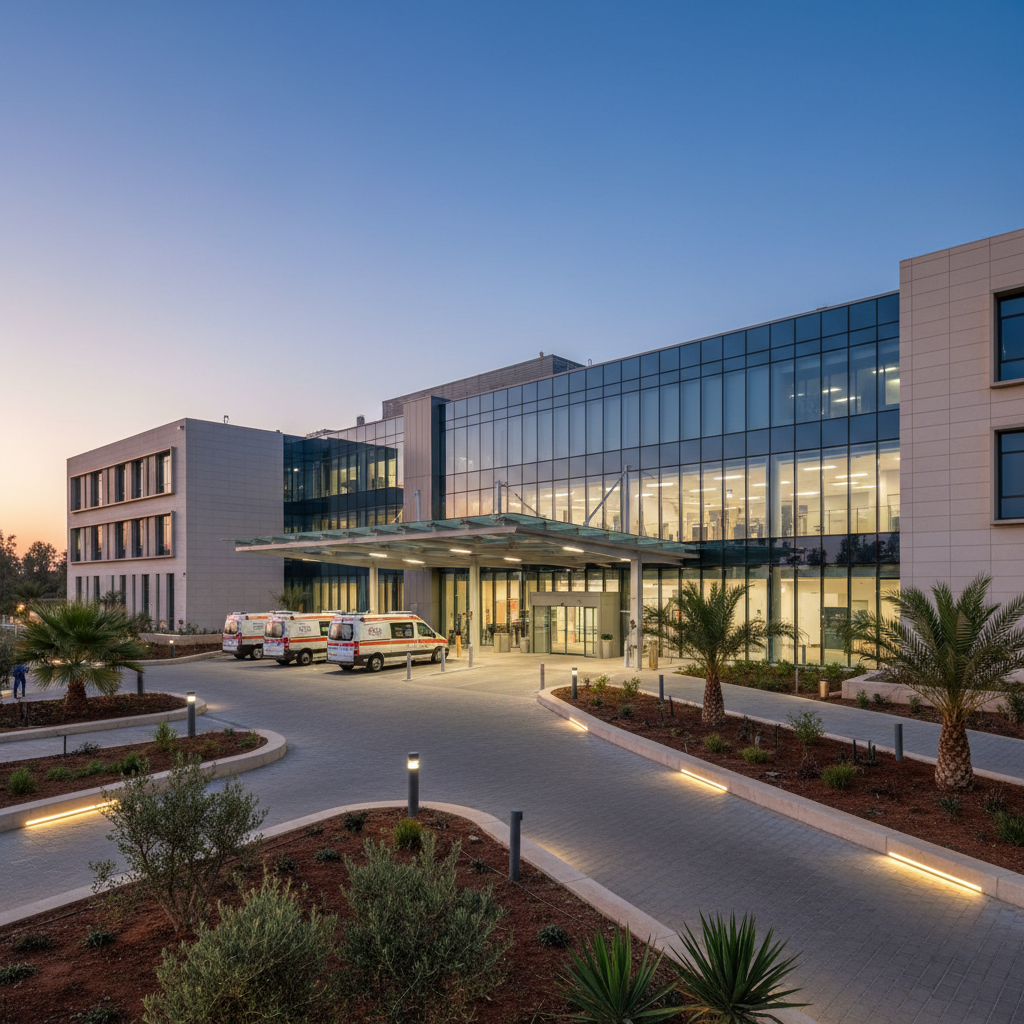
4 Koupot Holim (Clalit 52% market share, Maccabi 25%, Meuhedet 14%, Leumit 9%), contributions via Bitouach Leumi (~5% of income), universal coverage from the moment of Aliyah, 90-100% of care covered, supplementary (Mashlimat) 100-300₪/month, emergencies Terem/Magen David Adom, French- and English-speaking doctors by city. This is a topic our buyers from abroad raise regularly — and for good reason. It directly impacts the success of your real estate project in Israel.
Looking for concrete answers? This guide is based on verified 2026 data: CBS statistics, official tax scales (Israel Tax Authority), updated banking conditions, and feedback from IsraelStart. No theory — just facts and figures to help you make an informed decision.
The Israeli real estate market attracts international investors thanks to its strong fundamentals: resilience (no crash in 20 years), returns (3.2% to 6.5% gross depending on the city), capital appreciation (+4.2% national in 2025), and a protective legal framework. But there are many subtleties — that's why turnkey support makes all the difference.
In-Depth Analysis: Concrete Issues
4 Koupot Holim (Clalit 52% market share, Maccabi 25%, Meuhedet 14%, Leumit 9%), contributions via Bitouach Leumi (~5% of income), universal coverage from Alyah, care covered 90-100%, supplementary (Mashlimat) 100-300₪/month, emergencies Terem/Magen David Adom, French-/English-speaking doctors by city. For non-residents: mandatory travel insurance, no access to Koupat Holim without Alyah.
Market Context and Regulatory Framework 2026
The Israeli real estate market in 2026 offers a favorable environment for international buyers. No nationality restrictions for purchasing — any foreigner can acquire residential property in Israel. The land registry system (Tabo) protects property rights. Havtachat Milvia (mandatory bank guarantee for new builds) secures every payment.
Financing: banks lend to non-residents (LTV 50%, rates 4.8-6.5%). The Bank of Israel lowered its rate to 4.25% in November 2025. Tax: VAT at 18% since January 2025, Mas Rechisha 8-10% (brackets frozen until end of 2026). Closing costs: 10-13% of the price.
About 80% of residential properties in Israel are apartments (condos). Villas make up ~5%, penthouses ~5%, and houses/duplexes ~10%. Real estate is held either as freehold (Tabo, ~7% of land), or leasehold (Israel Land Authority, ~93% of land, leases for 49 or 98 years, renewable).
| Key Indicator | 2026 Value (verified) |
|---|---|
| VAT (since Jan. 2025) | 18% |
| BoI base rate | 4.25% (Nov. 2025) |
| Non-resident Mashkanta | 4.8% – 6.5% |
| Non-resident Mas Rechisha | 8% (→6.05M₪) then 10% |
| Total closing costs | 10% – 13% |
| Foreign share of TLV transactions | 30% (37% North Americans) |
Practical Implications for Your Project
Budget and Actual Costs
The total budget for a property purchase in Israel from abroad includes the property price + 10-13% in additional fees. Main items: Mas Rechisha (8-10%), lawyer (0.5-1.5% + 18% VAT), mashkanta fees (0.25-0.5%), Tabo (0.5%). Our taxes and fees calculator calculates the exact total budget.
Example: a 3-room apartment at 2,000,000₪. Mas Rechisha for non-residents: 160,000₪. Lawyer (1% + 18% VAT): 23,600₪. Bank fees: 7,000₪. Tabo: 1,500₪. Total fees: ~192,000₪ (9.6%). Total budget: ~2,192,000₪. With mashkanta LTV 50%: down payment 1,000,000₪, loan 1,000,000₪ over 20 years at 5.3% = monthly payment ~6,800₪.
7-Step Process from Abroad
Step 1: Personalized IsraelStart assessment (5 min online). Step 2: selection of 3-5 projects by an advisor in your language. Step 3: lawyer appointment via our network. Step 4: power of attorney (consulate or notary + apostille). Step 5: opening an Israeli bank account. Step 6: contract signing and first payment. Step 7: construction monitoring and delivery. The entire process is managed via WhatsApp, email, and video call — no need to travel.
Yield and Long-Term Outlook
Rental yield in Israel varies by city. Beer Sheva: 5.8-6.2% gross. Haifa: 5.0-5.5%. Netanya: 4.2-4.8%. Jerusalem: 3.5-4.2%. Tel Aviv: 3.1-3.6%. The most common tax regime for non-residents: flat 10% on gross rent, with no deductions or annual filing in Israel. Simple and predictable.
Capital appreciation adds 3-8% per year depending on the city. Over a 10-year horizon, a property bought for 2M₪ with a mashkanta LTV of 50% generates a total return on equity of 10-15%/year — combining rental yield and appreciation.
Outlook for 2026-2028: analysts expect +3-6% annually nationwide, driven by the housing shortage, demographics, and normalization of rates. Emerging cities (Beer Sheva, Kiryat Gat, Harish) are expected to outperform. Central cities (Tel Aviv, Herzliya) will offer more moderate growth but higher liquidity.
Experience Feedback and Mistakes to Avoid
Buyers supported by IsraelStart agree on three key lessons. First: never buy without an attorney — there is no notary in Israel, the attorney is your only legal safeguard. Second: do not underestimate the 10-13% additional costs — Mas Rechisha alone is 8% for a non-resident. Third: optimize the exchange rate — on a transfer of €500,000, the difference between a traditional bank and Wise/OFX exceeds €5,000.
The turnkey support from IsraelStart protects you from these pitfalls. Every step is secured, every professional is vetted, every cost anticipated. Our partner architect customizes your new property during construction. Check out our catalog and our city-by-city comparison.
Feedback from IsraelStart Buyers
Buyers supported from abroad share three recurring observations. First: the process is smoother than expected — power of attorney, video calls, and WhatsApp are enough to manage everything remotely. Second: the data (CBS prices by neighborhood, verified yields) allow for a rational decision. Third: there is no cost for the support — IsraelStart is paid by the developers.
Our partner architect customizes your new property. Our network of lawyers covers 6 languages. Our mashkanta coordination compares 3-5 banks. Everything is included, turnkey.
Common Mistakes to Avoid
Mistake #1: Buying without a lawyer. There is no notary in Israel—the lawyer is your only safeguard. Cost: 0.5-1.5% + 18% VAT. Mistake #2: Ignoring the 10-13% fees (Mas Rechisha 8% + lawyer + bank + Tabo). Mistake #3: Not comparing exchange rates—over €5,000 potential savings on a €500,000 transfer.
Updated Market Data
VAT 18% (from January 2025), BoI rate 4.25% (November 2025), non-resident mashkanta 4.8-6.5%, Mas Rechisha 8% then 10% (bracket freeze until end of 2026), closing costs 10-13%. The market is up +4.2% nationally, with Jerusalem +9.4%, Beer Sheva +8.5%, and a partial correction in Tel Aviv (-7 to -13% on certain segments 2023-24).
Your next step: the personalized IsraelStart assessment online (5 minutes), followed by a tailored selection from 300+ new developments across Israel.
Additional FAQ
How much does an average apartment cost in Israel in 2026?
Prices range from 800,000₪ (studio Beer Sheva) to 5,000,000₪+ (4-room Tel Aviv). The national average for a 3-room apartment is around 1,800,000₪. Our city-by-city comparison details updated CBS prices per sqm.
Can you buy property in Israel remotely?
Yes — this is actually the standard for IsraelStart buyers. Notarized power of attorney + WhatsApp + video call + email = 100% remote purchase. Your lawyer signs on your behalf, and your property manager handles the asset upon delivery.
Will the Israeli real estate market go down?
Analysts forecast +3-6% annual growth nationwide for 2026-2028. A crash is structurally unlikely (housing shortage, demographics, no subprime). Moderate local corrections (-5% max) remain possible in overvalued segments.
Need personalized support?
An IsraelStart expert will call you within 24h with a personalized analysis of your project.