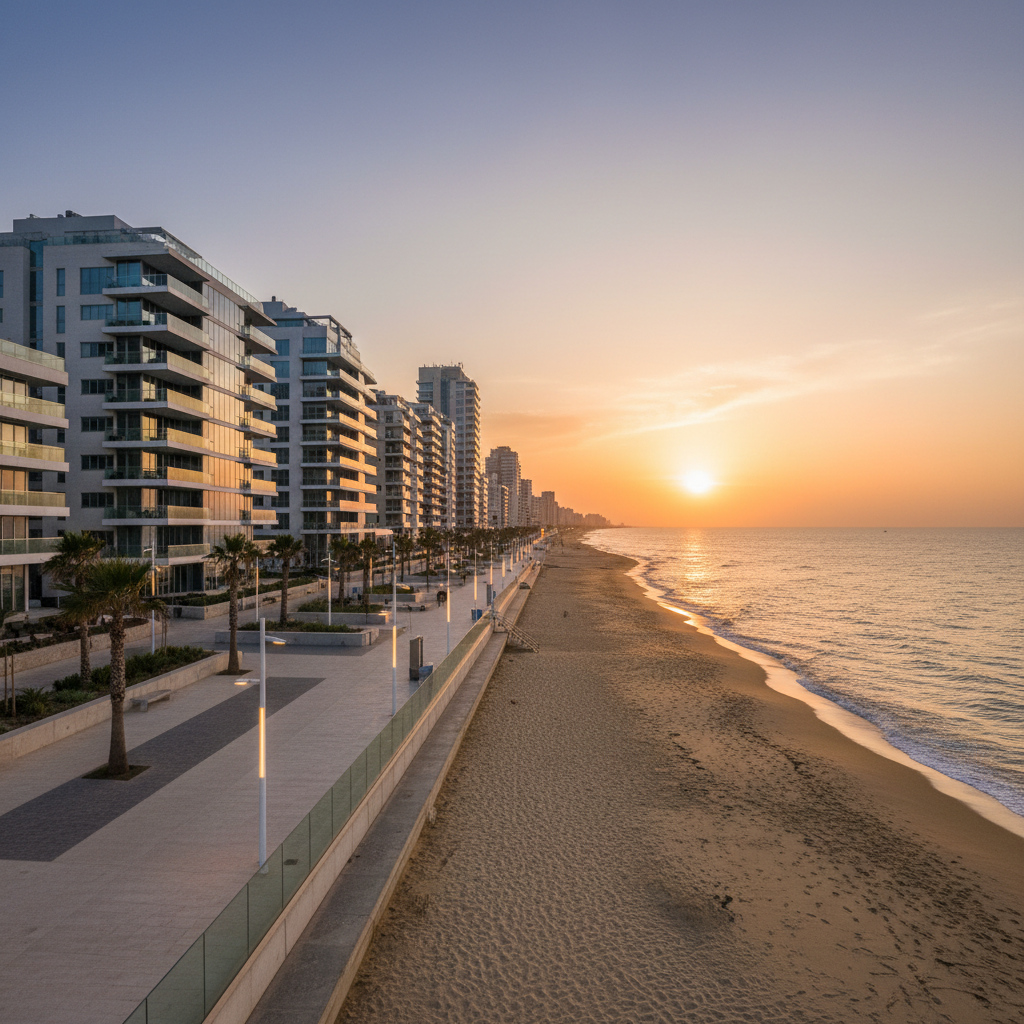
Bat Yam 2026: The Most Undervalued Waterfront in Gush Dan
The Most Underrated Seafront in Gush Dan: What Every Overseas Buyer Needs to Know
The Most Underrated Seafront in Gush Dan — this is a topic that comes up constantly in conversations with our overseas buyers. And for good reason: it directly impacts the success of your real estate investment in Israel.
Wondering what this means for your project? This guide breaks down every aspect, with updated 2026 data and real-life examples from our client experience. No abstract theory — just practical answers to help you make an informed decision.
The Israeli real estate market in 2026 offers real opportunities for international investors. But these opportunities only materialize if you understand the local specifics. That’s exactly what this article covers.
Context and Issues in 2026
The current Israeli market context sheds essential light on this topic. Real estate prices increased by an average of +4.2% nationwide in 2025, with marked disparities: +2.3% in Tel Aviv, +9.4% in Jerusalem, +8.5% in Beer Sheva. The structural housing deficit (estimated at 100,000 units) continues to support demand and prices.
For buyers from abroad, this dynamic is doubly relevant. On one hand, prices are rising—every month of waiting can cost thousands of shekels. On the other hand, the market remains regulated and protected, with a solid legal framework (Tabo, Havtachat Milvia, Hok Mecher Dirot) that secures your investment.
Concrete example: a buyer who signed for a 3-room apartment in Netanya in January 2025 at 1,600,000₪ now owns a property valued at around 1,700,000₪ (+6.2%). In one year, without doing anything, 100,000₪ in latent capital gain. That's why timing matters.
In-Depth Analysis: Key Points
What the Data Tells Us
Data from the Central Bureau of Statistics (CBS) confirms several structural trends. Rental demand remains strong in all major cities, driven by demographic growth (+1.8%/year) and urbanization. Rental yields hold between 3.2% (Tel Aviv) and 6.2% (Beer Sheva), offering risk/return profiles to suit every budget.
The supply of new developments is rising (+12% housing starts in 2025 vs 2024), but remains insufficient to absorb demand. In other words: the supply/demand imbalance supporting prices is not likely to resolve soon.
Impact for Your Investment
Practically, this means three things for a buyer from abroad. First, prices will continue to rise — the question is not "if" but "by how much." Analysts forecast +3% to +6% per year nationally for 2026-2028. Second, financing via mashkanta remains accessible to non-residents (LTV 50%, rates 4.5-6.5%). Third, professional support makes the difference: a good real estate lawyer, a competent broker, and a platform like IsraelStart to coordinate everything.
| Indicator | 2026 Value | Trend |
|---|---|---|
| National average price | +4.2% YoY | Moderately rising |
| Average rental yield | 4.5% gross | Stable |
| Fixed mashkanta rate | 4.8-5.8% | Slightly decreasing |
| Housing deficit | ~100,000 | Persistent |
| Foreign transactions | +15% vs 2024 | Recovering |
Practical Aspects and Implementation
Concrete Steps
To approach this topic in a practical way, here are the steps we recommend to our buyers from abroad. First, clarify your objective and your total budget (price + 12% additional fees). Next, identify 2-3 cities that match your profile using our city comparison. Then, appoint a French-speaking lawyer (IsraelStart will connect you). Finally, start searching for developments and compare banks for the mashkanta.
This process takes 4 to 8 weeks from the first contact to the contract signing. The turnkey support from IsraelStart covers every step, with a single contact person in your language.
Budget and Costs to Anticipate
The total budget for a purchase in Israel from abroad exceeds the listed property price by 8% to 12%. The main additional costs: Mas Rechisha (8% for non-residents), lawyer (0.5-1.5% + VAT), mashkanta bank fees (0.25-0.5%), broker (0.5-1%), Tabo (0.5%). Our tax and fee simulator calculates your exact total budget based on your profile.
Note: Not budgeting for these fees is the number one mistake for first-time buyers. A property at ₪2,000,000 actually costs ₪2,200,000 to ₪2,240,000 all included. Always plan for this margin.
Taxation: Key Points to Watch
Real estate taxation in Israel for non-residents has specific rules to understand. Mas Rechisha at the non-resident rate (8%) is the largest item. Rental income is taxable in Israel (3 regimes to choose from: flat 10%, actual 15%, progressive). The tax treaty with your country of residence (France, Belgium, Canada) avoids double taxation through a tax credit mechanism.
Example: For a property at ₪1,800,000 rented for ₪5,000/month, the annual tax under the 10% flat regime is ₪6,000 (10% × ₪60,000). It's simple, predictable, and often the most advantageous for a single rental property.
What IsraelStart Buyers Say
Feedback from our buyers supported from abroad converges on three key points. The time savings are significant — a process that would take 6 to 12 months on your own is completed in just 2 to 3 months with guidance. Legal security is strengthened — every document is checked by a specialized lawyer, and each payment is protected by a bank guarantee. And the peace of mind of buying remotely — power of attorney, WhatsApp, video calls, regular reports: you follow your project from your sofa, in your own language.
Our partner architect also assists buyers who wish to personalize their new property during the construction phase — choosing finishes, modifying layouts, and offering design advice. An additional service that makes all the difference.
Experience Feedback: What Our Buyers Say
Buyers supported by IsraelStart from abroad for this type of project consistently share three observations. First: the process is simpler than they imagined. Power of attorney, remote purchase, coordination with the lawyer—all happens via WhatsApp, email, and video conference, with no need to travel. Second: the numbers make a difference. Having access to real CBS prices, verified yields, and developer assessments allows for a calm, rational decision—not an emotional one. Third: the language barrier disappears. When your lawyer speaks French, your mashkanta broker explains every option in French, and your IsraelStart advisor coordinates everything—Hebrew is no longer an obstacle.
Wondering if your specific situation is compatible with buying in Israel? In 95% of cases, the answer is yes. The personalized IsraelStart assessment, available online in 5 minutes, gives you a first structured answer. Then, an advisor takes over to refine the analysis and present you with the most suitable programs.
The 3 Mistakes to Absolutely Avoid
Be careful—some mistakes are still far too common among unaccompanied buyers.
Mistake #1 — Buying without a lawyer. In Israel, there is no notary. The lawyer is your only legal safeguard. Their fee (0.5-1.5% of the price) is minimal compared to the risks of a poorly negotiated contract or an unverified property title.
Mistake #2 — Forgetting the 12% additional costs. The Mas Rechisha alone accounts for 8% of the price for a non-resident. Add the lawyer, bank fees, Tabo — your real budget is 108-112% of the listed price. Our tax and fee calculator gives you the exact amount.
Mistake #3 — Rushing under sales pressure. A developer saying "only 2 apartments left" wants to create urgency. A real estate purchase should be prepared over at least 4-8 weeks. IsraelStart protects you from this pressure by objectively checking availability and value for money.
Need personalized support?
An IsraelStart expert will call you within 24h with a personalized analysis of your project.